Use case analysis
We define which products to tag, where and how fast they must be read, and how the data will feed your processes. If a barcode meets the requirements at a lower cost, we will tell you at this stage.

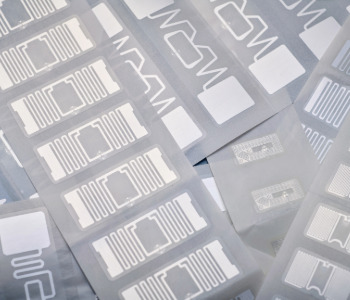
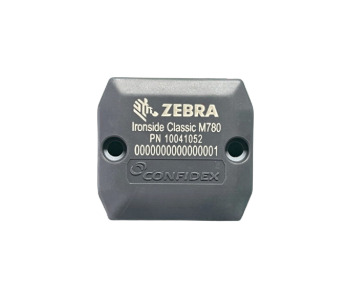
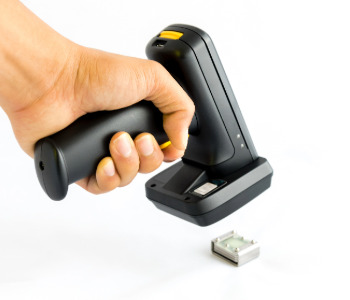
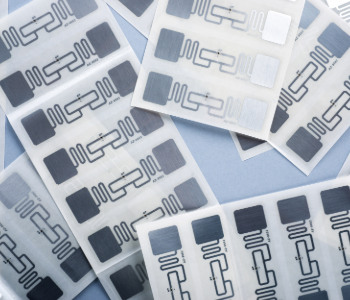
A project is the shortest way from an idea to RFID that works on your product and pays off in your process. Before you invest in labels, readers and a system, you know what you are buying and what it will cost.
An RFID label that works in a catalogue often does not work on a real product. Metal, liquid in the packaging, how goods are stacked, where the reader is mounted and how the data is processed can decide whether the whole solution succeeds.
Even when reliable reads are achieved, a second question remains: does the cost of the technology justify the benefits?
We know of a case where an RFID solution ran for a year. When its costs turned out to be about PLN 35,000 a month, the customer switched the system off and went back to paper barcode labels.
That is why we do not sell samples or kits for do-it-yourself testing. We run projects from application analysis, through technical tests and cost assessment, to deployment. Our goal is a solution that works in real conditions and whose costs are justified by the business.
The test shows whether RFID will work on your product. The next stages answer whether it will pay off and how to connect it with your process.
We take into account not only the cost of labels, but also readers, antennas, gates, software, integration, maintenance and running the process. Depending on the application, service, infrastructure and the cost of handling misreads may also matter.
We compare these costs with the expected benefits, such as less manual scanning, faster stocktaking, fewer errors and lower losses.
Not every project can be assessed upfront with full accuracy. It is, however, possible to set assumptions, estimate costs and check whether further investment makes sense.
We build custom software that connects the reads with your process and system: WMS, MES, ERP or a dedicated application. We cover not only the read itself, but also the process logic, error handling and how the data is presented.
We launch the solution and provide regular deliveries of labels proven in testing. We want the deployment to work not only at technical acceptance, but also in day-to-day operation.
Test billing: the test phase is paid. If the project proceeds to deployment, the cost of testing is credited against your orders in proportion to their size: the larger the order, the larger the share of the test cost you get back.
We lend RFID readers and antennas for the test phase. The equipment moves between projects, so we schedule tests in advance, depending on availability.
RFID is worth considering where automatic identification solves a specific operational problem and the cost of the technology is justified by the scale and value of the process.
Not every one of these applications will pay off in every company. Volume, frequency of operations, required read performance and the cost of the alternative all matter.
Metal reflects radio waves and can change the parameters of the label antenna. Specialist on-metal tags are used in such applications, but their size, price and mounting method must suit the specific product.
Water and water-rich products attenuate the UHF RFID signal. Bottles, containers and food require careful selection of the tag and its placement.
Labels inside a pallet or carton can shield each other, and radio waves can create zones with a weaker signal. Reading all labels at once is not guaranteed.
The position of the label relative to the antenna can significantly affect read performance. Some processes require multiple antennas or a change in how goods are stacked.
A label can be peeled off and stuck on a rack or another item. The reader may then report a product that is not actually there. The risk can be reduced, among other things, with tags that break when removed, tags built into the product and periodic visual checks.
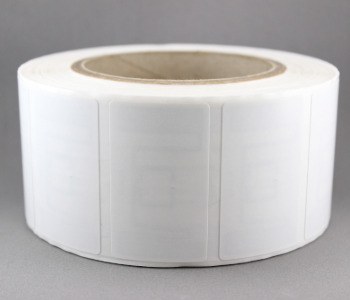
RFID labels cost many times more than barcode labels. A roll of 1,000 standard logistics labels costs about PLN 40 net, while a roll of 1,000 paper UHF RFID labels costs about PLN 500 net. A warehouse easily uses 40 rolls a year: that is about PLN 1,600 for barcode labels versus about PLN 20,000 for RFID labels. On-metal tags cost even more. Hardware, software and integration costs come on top.
With low-value products, high volumes and small operational benefits, the investment may not pay off.
That is why we assess the total cost of the solution, not just the price of a single label.
Indicative net prices as of October 2026. They depend on material, size, chip and volume.
RFID works on radio waves, and radio waves obey physics: metal reflects them, water absorbs them and a closed enclosure blocks them. Marketing materials do not show this; in daily operation it decides everything. Two examples from real enquiries from our customers show what this looks like in practice and how it can be handled.
The idea: RFID labels on tools, and the reader checks what is missing from the cabinet.
Physics sets several conditions here:
Such a solution can be designed, but it needs the right architecture. Possible options are on-metal tags, tags read at close range, antennas in individual drawers, or registration when a tool is issued and returned.
The choice depends on the cabinet design, how tools are stored, the required certainty of control and the budget. Tests show which option makes sense.
The idea: vials with RFID labels in a refrigerator, and the reader shows its contents in real time.
Several physical effects overlap here:
Possible options include reading the vial when it is put in or taken out, HF/NFC for close-range reading, a DataMatrix code scanned during each operation, or a refrigerator with a properly designed antenna system.
There is no single universal solution. It has to be tested on real vials, with real contents, in the target refrigerator, and then the cost of the whole process has to be assessed.
To make an initial assessment of whether RFID is feasible and cost-effective for you, it helps to prepare:
The last point is especially important. Without knowing the cost of the current process, it is hard to tell whether RFID will bring your company a real benefit.
We do not start by asking which labels to buy. We start by asking whether RFID will solve your problem and whether it will pay off.
If you have a specific idea for using RFID, let us check its technical and economic feasibility before you move to deployment.
Have questions about our products or need a tailored offer? Get in touch — we’ll be happy to advise you and help find the right solution for your needs.