Auto ID equipment shop
Mobile computers, label printers and barcode scanners to order in a specific variant, deployed together with HDF WMS, HDF MES, HDF Labels and HDF Inwentaryzacja.
Manufacturer:
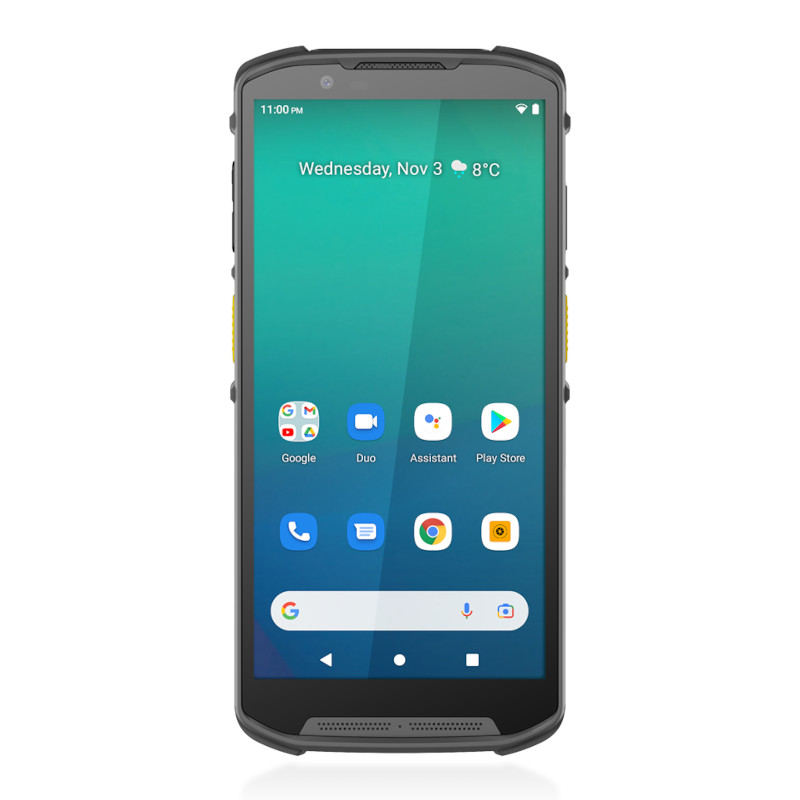 Newland MT93 Megattera (MT9300 and MT9356) and MT95 Kambur Pro III (MT9557) are Android mobile computers in a smartphone form factor. They are built for warehousing, retail, logistics and delivery, wherever staff scan barcodes for a whole shift and the device has to survive a drop onto concrete. MT93 has a 5.5-inch display and a 4G modem. MT95 is larger: it has a 6-inch display, a 5G modem and Android 15. 2D imager with laser aimer: reads EAN-13 from 7 to 60 cm and dense Data Matrix and PDF417 codes at close range. On the MT93 the CM66 engine with Acuscan picks the right barcode when several are printed next to each other. IP67 and 1.5 m drops to concrete: resistant to dust, water and the usual drops from hand or forklift. The exception is the MT9300 Standard, rated IP65. Operating from −20°C, up to 55°C on the MT93 and 50°C on the MT95: suitable for unheated halls, loading docks and outdoor work. Swappable battery and 18 W fast charging: 5000 mAh on the MT93 (up to 10 hours of use according to the manufacturer) and 5100 mAh on the MT95, where the battery is swapped without switching the device off. In multi-shift operation a spare battery is enough. Android with GMS, octa-core processor: the MT93 runs Android 13 with an Android 15 upgrade available (2.2 GHz), the MT95 ships with Android 15 (2.4 GHz). MT9356 and MT9557 are Android Enterprise Recommended. 4G LTE or 5G, Bluetooth 5.2, NFC, GPS: reliable connectivity on the warehouse network and beyond, e.g. for drivers or field reps. MT9300 Standard Plus and MT9356 have Wi-Fi 6E, MT9557 has Wi-Fi 6, and the basic MT9300 Standard has Wi-Fi 5. Remote management: the MT93 supports Ndevor (free MDM from the manufacturer) and is SOTI and 42Gears certified, so configuration, updates and kiosk mode are deployed without a service visit. Pistol grip use: the MT93 and the MT95 each have their own grip, so the same device works as a smartphone or as a classic gun-style mobile computer. MT9300 Standard PlusMT9356 ProMT9557 Kambur Pro IIIDisplay5.5-inch5.5-inch6-inchMemory4 GB / 64 GB6 GB / 128 GB6 GB / 64 GBOSAndroid 13, GMSAndroid 13, GMS, AERAndroid 15, GMS, AERCellular4G LTE4G LTE5GWi-FiWi-Fi 6EWi-Fi 6EWi-Fi 6SIM2 × nano-SIMnano-SIM and eSIMnano-SIM and eSIMBattery5000 mAh5000 mAh5100 mAhWeight277 g277 g314 g Model. MT9300 Standard Plus covers typical warehouse and retail apps. Choose MT9356 Pro when IT manages the fleet via Android Enterprise or your security policy requires it: AER is Google's confirmation that the device meets enterprise requirements and receives regular updates. Choose MT9557 when you need a larger display, 5G or a fingerprint reader. Scan head angle on the MT93. Straight Shooter (SS) scans straight ahead like a classic mobile computer. Angled Shooter (AS) has a tilted scan head, so you can read the barcode while looking at the screen. Over hundreds of scans per shift this reduces wrist strain. SIM. On the MT9300 the second slot takes a nano-SIM or a microSD card. eSIM on the MT9356 and MT9557 simplifies remote provisioning of data plans in large fleets. MT9557 with the -DO suffix supports cellular data only, without voice calls. Housing color. MT9300 Standard Plus is also available in white, intended for healthcare and hygiene-sensitive areas. Technical specifications are the same. MT9300 Standard. The basic variant with an angled scan head differs from Standard Plus in its IP65 rating and Wi-Fi 5. Reading the part number: MT9300, MT9356 or MT9557 is the model, AS or SS is the scan head on the MT93 (Angled / Straight Shooter), the -W suffix means a white housing, and -DO a data-only version.
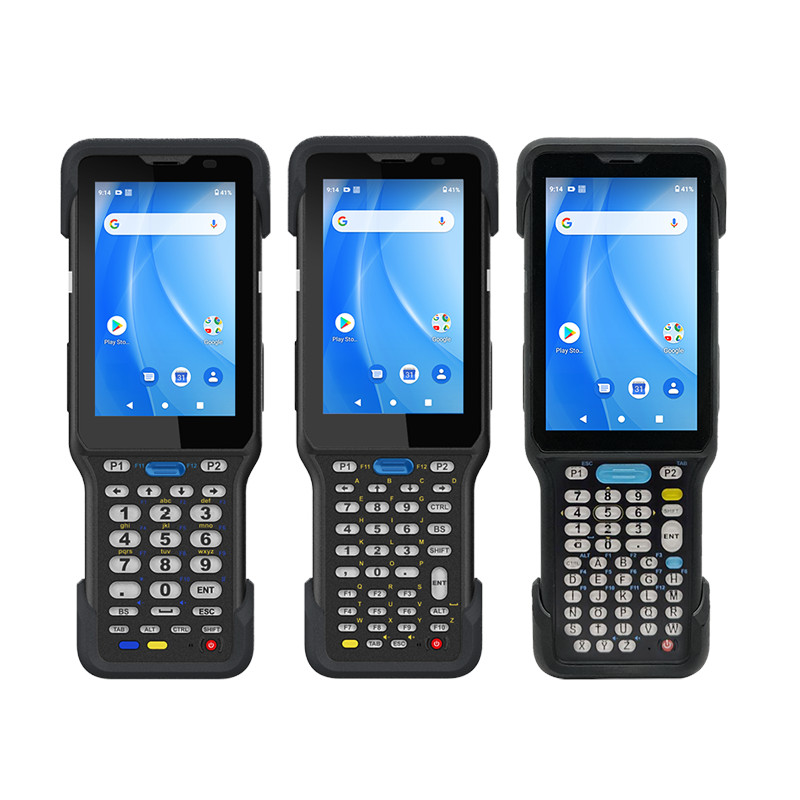 Unitech HT730 Plus is an Android 14 mobile computer with a 4-inch display and a physical keypad, built for one-handed use. It is designed for production halls, warehouses, freezers, cold stores and yards, where quantities are keyed in, barcodes are scanned from a forklift with gloves on, and the device regularly hits concrete. The manufacturer offers two connectivity versions: HT730 Plus Wi-Fi works on the company network, while HT730 Plus 5G adds a 5G modem, a micro SIM slot, eSIM and GPS. Its predecessor, the Android 10 based HT730, is no longer sold. 2D imager with a green laser aimer, reading up to 32 m in the long-range version: the SE5880 engine reads labels on the top rack levels without leaving the forklift. The standard SE4770 engine is enough for close-range scanning. The scan head is tilted 30° downward, which reduces wrist strain during intensive scanning. Backlit keypad with 29, 38 or 47 keys: quantities, lot numbers and locations are entered on physical keys instead of an on-screen keyboard. IP65 and IP67, 1.8 m drops to concrete, 2.4 m with a bumper (UHF version: IP65 and 1.8 m): the device withstands dust, water and the usual drops from hand or forklift. 6700 mAh battery swappable during work: after the battery is removed, apps stay active for up to a minute, so a swap does not interrupt the session. For multi-shift operation, a spare battery and a 4-slot battery charger are all you need. Qualcomm Snapdragon 4490 (octa-core, 2.4 GHz), 6 GB RAM, 128 GB storage, microSD up to 256 GB: Android 14 with GMS and Android Enterprise Recommended certification, upgradable to Android 16. Wi-Fi 6E and Bluetooth 5.2: three Wi-Fi bands (including 6 GHz), fast roaming between access points and dual-band simultaneous operation. The device also has NFC and a 16 MP autofocus camera. Freezer version down to −30°C: an integrated heater prevents condensation on the device when leaving the freezer. The 4-inch display (400 nits) works with gloves up to 4 mm thick and when wet. Dedicated bumpers and a pistol grip are available for the freezer version. Fleet management: the manufacturer's own MoboLink MDM, SOTI, AirWatch and 42Gears support, new device setup by scanning a barcode (StageGO) and kiosk mode that limits the device to selected apps. Connectivity. The Wi-Fi version is enough when the device stays within the company network. Choose the 5G version for yards, work between sites or field work. Scan engine. The SE5880 (long range) suits high-bay warehouses and scanning from a forklift. The SE4770 (standard range) is enough for shelf picking and production workstations. Keypad. The 29-key numeric keypad is for entering quantities. The 38-key function numeric keypad helps when the app uses function keys. The 47-key version is available only in the Wi-Fi version. Operating environment. The standard version operates from −20 to 50°C, which covers cold stores and unheated halls. For freezers choose the freezer version (from −30°C, with a heater). It is available with Wi-Fi and 5G and with both scan engines. UHF RFID reader. HT730 Plus UHF has a built-in UHF reader with an Impinj E710 chip and a read range of up to 25 m. It works on Wi-Fi only, with the standard scan engine. Package contents. Configurations differ in what is included (bumper, hand strap, second battery), so check the description of the selected variant.
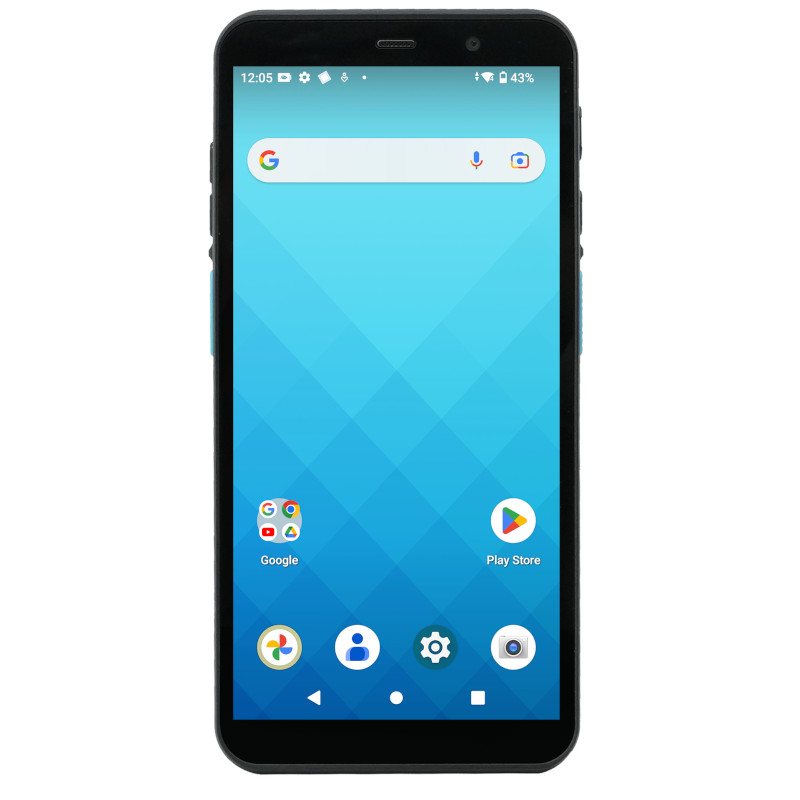 Unitech EA530 is an Android 15 mobile computer in a smartphone form factor with a 6-inch display. It is built for warehousing, quality control, fixed asset inventory and field work, where the device stays in hand for the whole shift, so weight matters, and it still has to survive drops, dust and rain. The series comes in two versions: EA530 with a barcode scanner and EA530 UHF with an additional built-in UHF RFID reader. Both have a 4G modem with a nano SIM slot and eSIM. 2D imager with DPM code reading: reads 1D and 2D barcodes in any orientation, from paper and phone screens, as well as codes marked directly on metal or plastic. Scanning is triggered by two side buttons. A third, programmable button can be assigned to an app function. IP65 and IP68, 1.5 m drops, 1.8 m in a rugged boot: the device withstands dust, immersion in water and the usual drops from hand. The manufacturer also confirms 300 tumble cycles from 0.5 m. 242 g and 14 mm thick: the device fits in a pocket and does not tire the hand over hours of work. The display is protected by Corning Gorilla Glass. 4250 mAh battery swappable without switching the device off (except the UHF version): a spare battery is enough for multi-shift work. The USB-C port supports fast charging. Android 15 with GMS and Android Enterprise Recommended certification, upgradable to Android 17: octa-core 2.2 GHz processor, 6 GB RAM, 64 GB storage and microSD up to 1 TB. 6-inch HD+ display (500 nits) and 16 MP camera: the display works with gloves, wet fingers and a stylus. The rear camera has autofocus and a flash, so it is suitable for documentation photos, e.g. of damaged deliveries. 4G, eSIM and GPS, Wi-Fi 6E, Bluetooth 5.2, NFC: the device works on the warehouse network and beyond, for drivers or field reps. eSIM is activated with a QR code, without swapping a physical card. Fleet management: the manufacturer's own MoboLink MDM, SOTI and VMware support, new device setup by scanning a barcode (StageGO) and kiosk mode that limits the device to selected apps. Barcode scanner or UHF RFID. EA530 is enough when goods and assets are labeled with barcodes. EA530 UHF adds a UHF RFID reader (Impinj E310, Gen2X) with a read range of up to 1.8 m, useful when RFID tags are already in use. The UHF version battery cannot be swapped during work. Pistol grip use. The back panel has contacts for a trigger grip. For intensive scanning, e.g. picking hundreds of lines per shift, the grip reduces wrist strain. Without it, the device works like a regular smartphone. Protection and charging. A rugged boot raises drop resistance to 1.8 m. For fleets there are 1-slot and 5-slot cradles, including Ethernet versions, which simplify charging and data transfer across many devices.
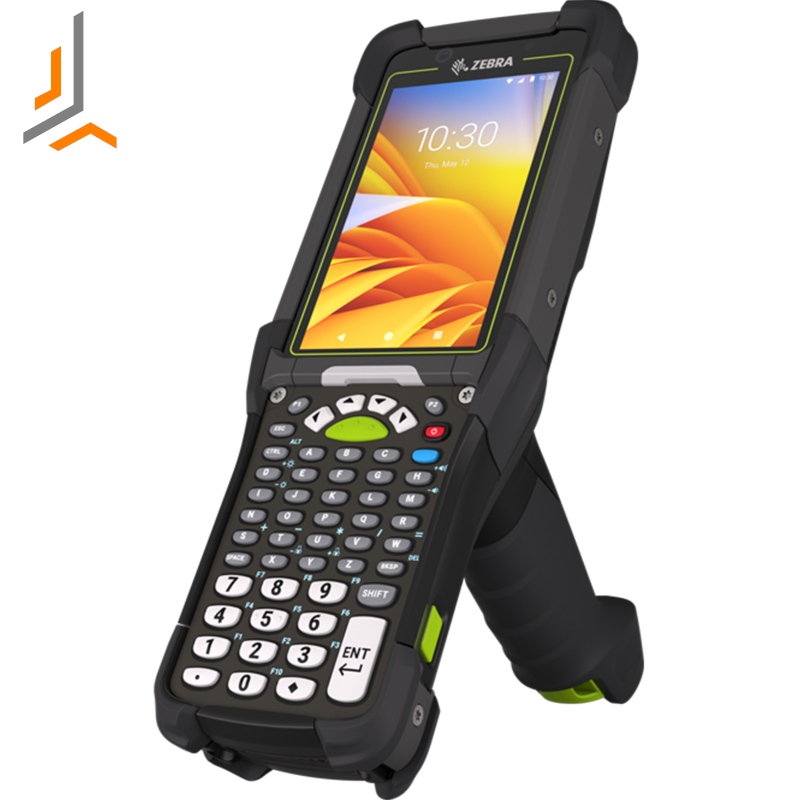 Zebra MC9400 and MC9450 are ultra-rugged gun-style Android mobile computers and the successors to the MC9300. They are built for high-bay warehouses, production halls, cold stores and yards, where barcodes are scanned from a forklift and with gloves on, and the device regularly hits concrete. Both models share the same housing, scanner, display and battery. They differ only in connectivity: MC9400 works on Wi-Fi, while MC9450 adds a 5G modem, nano SIM and eSIM slots and GPS. SE58 scan engine with IntelliFocus technology and a green laser aimer: reads barcodes from in hand to more than 30 m away. Range depends on print quality, contrast and ambient light. The green aimer dot stays visible on the top rack levels, so the operator does not need to leave the forklift or drive up to the label. IP65 and IP68, 2.4 m drops to concrete across the full operating temperature range: you can hose the device down, and a typical drop from a forklift or loading dock does not take it out of service. It survives 3.65 m drops per MIL-STD-810H. The display and scanner window are protected by Corning Gorilla Glass. 7000 mAh hot-swappable battery: the battery is replaced without switching the device off or losing the session, so one device can work through consecutive shifts. PowerPrecision+ shows the health of each battery, making it easy to retire those that no longer hold a charge. Qualcomm 4490 (octa-core, 2.4 GHz), 6 GB RAM, 128 GB storage, microSD up to 2 TB: according to the manufacturer, 2.5 times the processing power of the MC9300, with headroom for several apps running at once. The device is Android Enterprise Recommended, and the manufacturer lists an upgrade path to Android 17. Wi-Fi 6E and Bluetooth 5.3: the device uses three Wi-Fi bands (including 6 GHz) and supports fast roaming between access points, which matters in large halls. 4.3" display that works with gloves and when wet: 600 nits brightness keeps the screen readable outdoors. Terminal emulation included: Ivanti All-Touch TE comes preinstalled and licensed, so legacy text-based apps (5250, VT) run from day one without backend changes. Full backward compatibility with MC9300 accessories: charging cradles and other accessories bought for the previous generation remain in use. MC9200 and older charging accessories connect through an adapter. Connectivity. MC9400 is enough when the device stays within the company Wi-Fi network. Choose MC9450 for large yards, ports and outdoor areas: the 5G modem (data only) works on public and private networks, and two SIMs (nano SIM and eSIM) let you use both at once, e.g. for connection redundancy. Scan engine. The extended-range SE58 is the choice when labels sit high on racks or scanning is done from a forklift. The alternative is the SE4770 with a red aimer. Keypad. Backlit keypads are available in alphanumeric (58 and 53 keys), terminal emulation 5250/VT (53), numeric/function (43 and 34) and numeric (29) layouts. The keypad is swapped on site, without sending the device to a service center, when the device is repurposed. Operating environment. The standard version operates from −20 to 50°C. The freezer version operates from −30°C and has a heated touch panel and scanner window that do not fog up when leaving the freezer, plus a 5000 mAh battery for low temperatures. Battery. Besides the standard battery, a 7000 mAh battery with a BLE beacon is available. Combined with a Device Tracker license, it lets you locate a device even when it is switched off or discharged. Worth considering for large fleets.
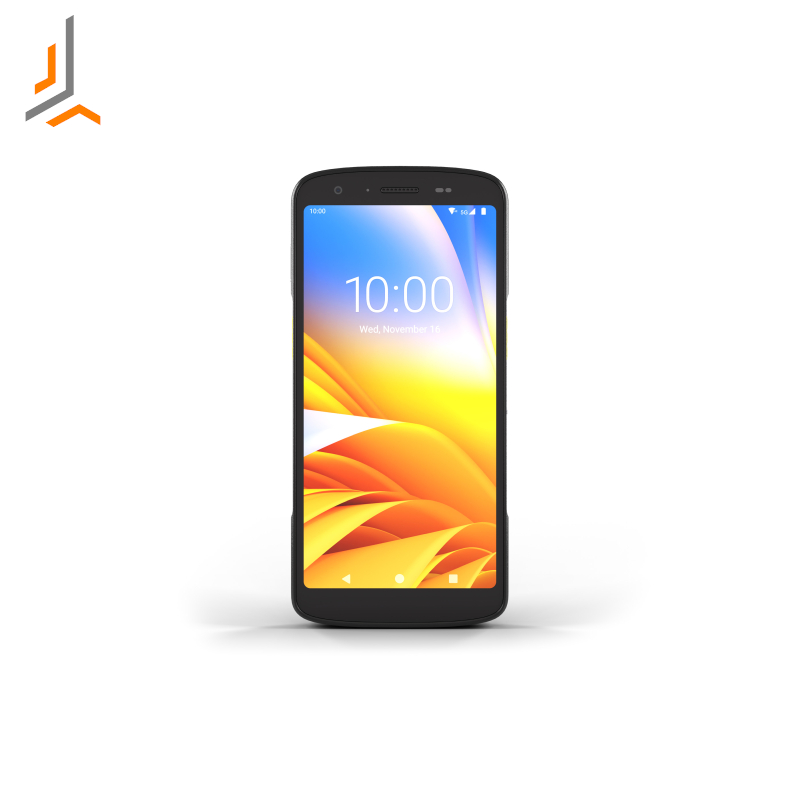 Zebra TC22 and TC27 are Android mobile computers in a smartphone form factor, the third generation of the TC2x series and successors to the TC21/TC26. They combine the look and feel of a phone with a built-in barcode scanner, a sealed housing and a swappable battery, which makes them a good fit for retail, lighter warehouse work, inspections, stocktaking and field work. TC22 connects over Wi-Fi, while TC27 adds 5G/LTE, two SIMs (nano SIM and eSIM) and VoLTE calling, so it can also serve as the employee's business phone. SE4710 or SE55 scan engine with IntelliFocus technology and two side scan buttons: a dedicated scanner reads barcodes much faster than a phone camera, including damaged ones. The SE55 reads both a barcode in hand and a label on the top shelf. 6-inch Full HD+ display (1080 x 2160), 450 nits, Corning Gorilla Glass: more data without scrolling and good readability outdoors. The screen works with a bare finger or a thin glove. 16 MP camera: photos of non-conformities, damage or the condition of a fixed asset are taken with the same device used for scanning. IP68 and IP65, 1.3 m drops to tile over concrete, 1.5 m drops to concrete with the protective boot: the device withstands rain, dust and a typical drop from hand, more than a regular smartphone does. Swappable 3800 or 5200 mAh battery: according to the manufacturer, the standard battery lasts a shift and the extended one several shifts. A depleted battery is swapped without taking the device out of service. PowerPrecision shows the health of each battery. Qualcomm 5430 (2.1 GHz), 6 GB RAM / 64 GB or 8 GB RAM / 128 GB, microSD up to 2 TB: according to the manufacturer, twice the performance of the TC21/TC26. Wi-Fi 6, Bluetooth 5.2, NFC: Wi-Fi 6E is available with a Mobility DNA Enterprise license. NFC supports contactless payments as well as cards and tickets from Apple and Google wallets. Android Enterprise Recommended and Mobility DNA Professional included: Zebra tools for fast device setup, sending scanned barcodes to any app without programming, and regular security patches. The manufacturer commits to supporting future Android versions. Connectivity. TC22 is enough when the device stays within the company Wi-Fi network, and it supports Push-to-Talk over Wi-Fi out of the box. Choose TC27 for field staff or when the device is to replace a business phone: it has 5G/LTE, two SIMs (nano SIM and eSIM), VoLTE calling, two noise-cancelling microphones and a proximity sensor that turns the screen off at the ear. Memory. 6 GB RAM / 64 GB covers typical business apps. 8 GB RAM / 128 GB gives headroom for many apps at once or a large number of photos stored on the device. Scan engine. The SE4710 suits close-range scanning in stores, offices and workstations. Choose the SE55 when barcodes are also placed high on racks. Battery. The standard 3800 mAh battery gives the lightest device (236 g). The extended 5200 mAh battery (262 g) is for multi-shift work. The 3800 mAh BLE battery, combined with a Device Tracker license, lets you locate a lost device even when it is discharged. Accessories. A snap-on trigger handle makes intensive scanning easier, an arm mount frees the hands, and the protective boot improves drop resistance. Reading UHF RFID tags requires an RFD40 or RFD90 sled, as the device has no built-in RFID reader.
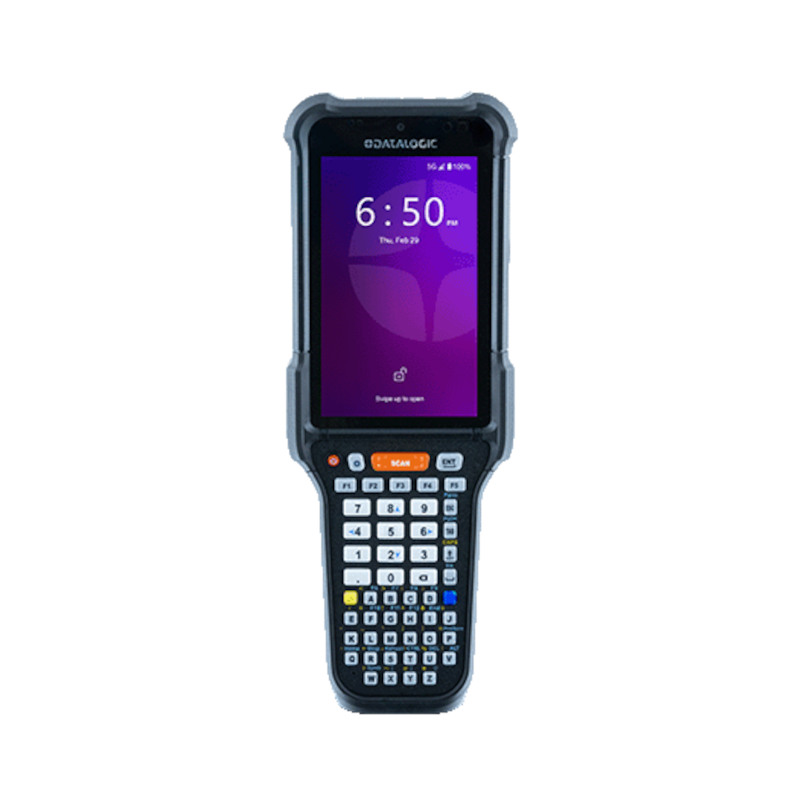 Datalogic Falcon X60 and Falcon X65 are ultra-rugged Android mobile computers with a physical keypad and the successors to the Falcon X4. They are built for high-bay warehouses, production halls, loading docks and yards, where barcodes are scanned from a forklift and with gloves on, and quantities are entered on the keypad. Falcon X60 works on Wi-Fi and comes in handheld and pistol grip versions. Falcon X65 adds a 5G modem, nano SIM and eSIM slots and GPS, and comes in the pistol grip version only. Three scan engines with Green Spot: standard, long range and XLR for reading from a distance. After a good read the device projects a green dot directly onto the label (visible up to 10 m on XLR), so the operator does not need to look at the screen. The TrueAim two-stage trigger makes aiming easier and reduces misreads. Backlit keypad with 31, 41 or 53 keys: large, well-spaced keys can be used with heavy gloves on. IP65 and IP68, 2.4 m drops to concrete across the full operating temperature range: per MIL-STD-810H the device survives multiple 2.8 m drops at room temperature and 4000 tumbles from 1 m. The manufacturer confirms resistance to industrial oils and cleaning agents based on alcohol, hypochlorite and hydrogen peroxide. 4.3-inch display with Corning Gorilla Glass Victus: 600 nits brightness keeps the screen readable outdoors, and the touch panel works with gloves and with water drops on it. 7000 mAh hot-swappable battery: the battery is replaced without losing application data, so one device can work through consecutive shifts. Qualcomm Dragonwing 4490 (octa-core, 2.4 GHz), 8 GB RAM, 128 GB storage, microSD up to 2 TB: headroom for several apps running at once. The device runs Android 15 with Google Mobile Services, and the manufacturer lists an upgrade path to Android 19. Wi-Fi 6E, Bluetooth 5.3 and NFC: three Wi-Fi bands (including 6 GHz) and 2×2 MU-MIMO provide a stable connection in large halls. NFC reads cards and tags compliant with ISO 14443, ISO 15693, Mifare and FeliCa. Datalogic Mobility Suite and MDM compatibility: device enrollment with Scan2Deploy, kiosk mode, remote management with SOTI MobiControl, Microsoft Intune, 42Gears, Ivanti and other OEMConfig-compliant systems. The device is compatible with the Ivanti Velocity and StayLinked Smart TE terminal emulators. Connectivity. Falcon X60 is enough when the device stays within the company Wi-Fi network. Choose Falcon X65 for large yards, ports and outdoor areas: the 5G modem (data only) works on public and private networks, and the device also has nano SIM and eSIM slots and GPS. Handheld or pistol grip. The handheld version is available only as Falcon X60, with a 31-key keypad and the standard scan engine. It weighs 550 g, compared with 700 g for the pistol grip version with XLR. The pistol grip is more comfortable for hundreds of scans per shift and for long-distance scanning. The handle can be detached on site. Scan engine. The standard engine is enough for barcodes scanned at close range. The long range engine (Falcon X60 only) and XLR are meant for labels higher up on racks. Choose XLR when labels are scanned from a forklift on the top levels. Keypad. The 31-key numeric keypad suits scanning with quantity entry, the 41-key functional numeric keypad suits apps that use function keys, and the 53-key alphanumeric keypad suits text entry and terminal emulation. Wireless charging. Selected variants support Qi wireless charging (10 W) in addition to charging through contacts. When the device goes back to the charger often, this means less contact wear and cleaning.
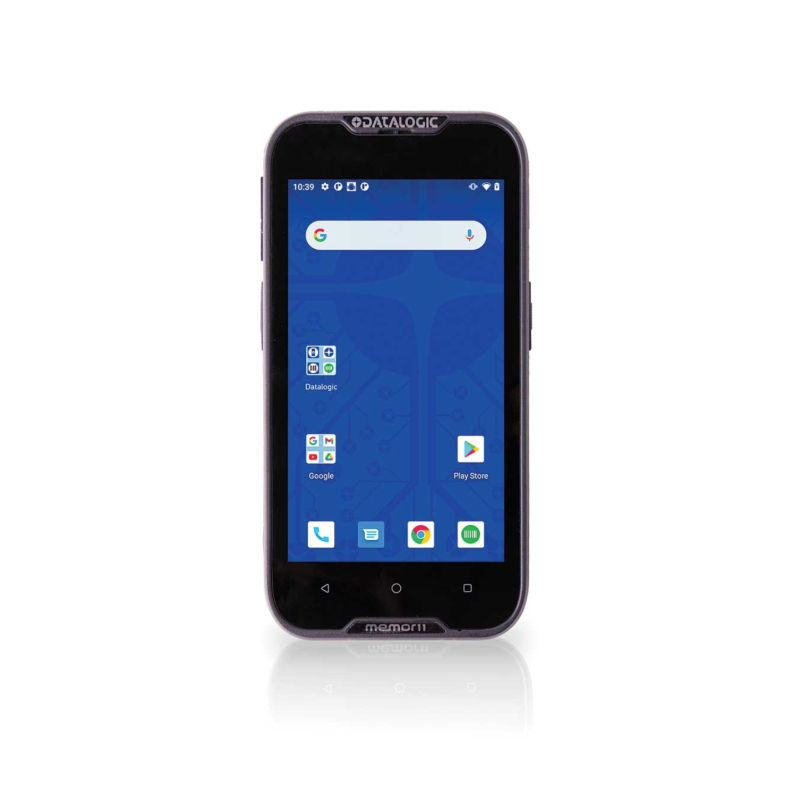 Datalogic Memor 11 is a compact Android mobile computer in a smartphone form factor, with a 5-inch display and a built-in 1D and 2D barcode scanner. It is made by Datalogic, an Italian company based in Bologna and one of the longest-standing barcode scanner manufacturers in Europe. It is a proven model that has been on the market for several years, and at HDF we have very good experience with it, especially for fixed asset stocktaking and physical inventory counts. It is light, easy to use and rugged enough for work in offices, warehouses and on the shop floor. It is available with Wi-Fi only or with Wi-Fi, LTE and GPS. 2D scanner with Green Spot indicator: reads 1D and 2D codes, including QR Code and Data Matrix, also in poorly lit rooms. A green spot projected onto the code confirms a good read, so in noisy areas there is no need to look at the screen or listen for a beep. 5-inch HD display (720 × 1280) with hardened glass: comfortable for browsing item lists and entering quantities, while the device still fits in a hand and a pocket. Octa-core 2 GHz processor, 4 GB RAM, 32 GB storage: enough for warehouse and stocktaking apps running through a whole shift. Android 11 with Google services, upgradeable to Android 13: the manufacturer provides official Android 13 firmware and delivers security patches under the Datalogic Shield programme. IP65, 1.5 m drops onto concrete in a rubber boot, operation from −20 to +50°C: the device handles dust, splashes, a typical drop from the hand and work in unheated warehouses. Replaceable 4100 mAh battery and wireless charging: a drained battery is swapped for a charged one during the shift, and the device charges in a cradle with no connectors to wear out. 13 MP camera with autofocus and flash: photos of rating plates, damage and storage locations without a separate camera. Wi-Fi 5, Bluetooth 5.0, NFC, optional LTE with GPS: work on the company network, pairing with mobile printers and scanners, and on the LTE model also outside Wi-Fi coverage. 285 g with battery: a light device that does not tire the hand during a count lasting several hours. Resistance to cleaning agents: the housing can be wiped with isopropyl alcohol and hydrogen peroxide, and the manufacturer declares resistance to industrial oils. Physical inventory counts and fixed asset stocktaking mean handling many items in a short time. What matters is a fast label read, a clear display, low weight and a battery that lasts the whole day. Memor 11 meets these needs without paying for specifications required in harsh production environments. To run a count, all you need is the device with the HDF Inwentaryzacja app, and the results go straight into the system. A European manufacturer is an extra advantage for companies that prefer to buy equipment from suppliers based in the European Union. Accessories from the previous Memor 10 series fit the Memor 11, so existing docks and chargers can be reused when the fleet grows. Wi-Fi or LTE. The Wi-Fi model is enough when counts take place in buildings with a company network. Choose the LTE and GPS model when stocktaking covers several sites, storage yards or field work. Pistol grip. For counts with many scans, for example in a warehouse, a pistol grip relieves the wrist and speeds up work. Charging cradle. With several devices, choose a multi-slot cradle with room for spare batteries so that every count starts fully charged. When to choose another model. If the device is to work for years in production, cold stores or dusty areas, a more rugged model from our mobile computers range is a better choice.
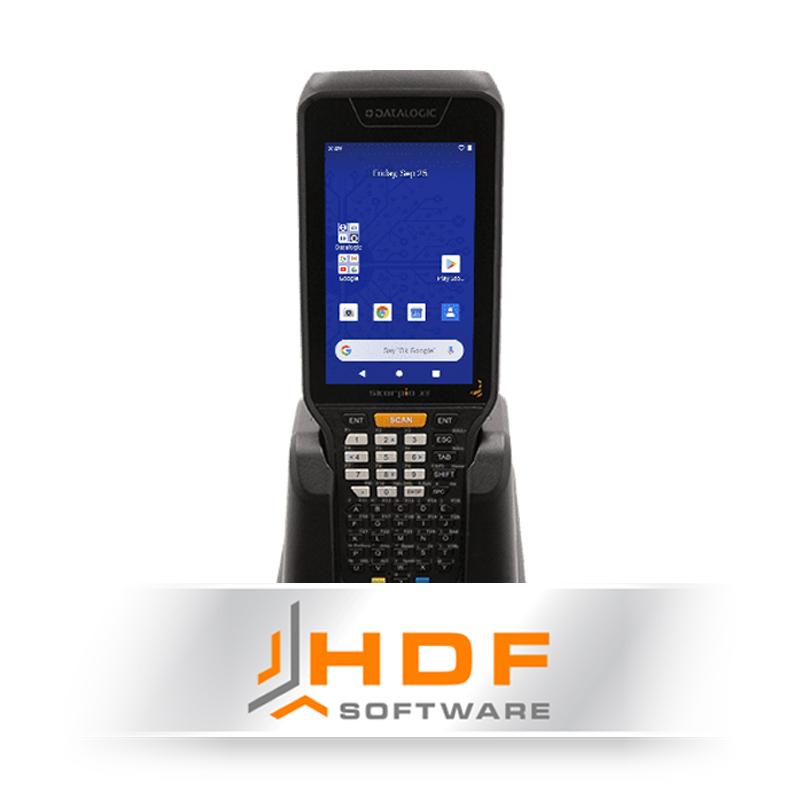 Datalogic Skorpio X5 is an Android mobile computer in the classic form factor with a physical keypad, designed for intensive warehouse work. It is made by Datalogic, an Italian company based in Bologna, so it is equipment from a European manufacturer. The Skorpio X5 combines a touch display with a keypad, fast scan engines reading from up to 20 m, and battery swapping without switching the device off. In our view it is one of the best value-for-money mobile computers for goods receipt, picking, transfers and dispatch in a WMS. Physical keypad: 28, 38 or 47 keys: numeric, functional or alphanumeric. Quantities and locations are entered faster than on a touch screen, also with gloves. Four scan engines: linear imager, standard 2D, mid-range 2D and 2D XLR, which reads large labels from up to 20 m. The Green Spot indicator projects a green spot onto the code after a good read. Pistol grip or handheld version: the grip relieves the wrist during hundreds of scans per shift, while the handheld version is lighter and easier to put in a holster. Hot-swappable battery: standard 3500 mAh or extended 6200 mAh battery. In multi-shift work the battery is swapped on the go, with no restart and no data loss. A wireless charging option is also available. IP65, 1.8 m drops onto concrete, 1000 tumbles from 1 m, operation from −20 to +50°C: the device handles dust, water, drops from a forklift and work in unheated warehouses. The XLR version is protected by an additional rubber boot. 4.3-inch display with Gorilla Glass 3: touch-enabled and scratch-resistant, though with a lower resolution (800 × 480) than smartphone-style devices. For warehouse apps with large buttons and clear lists, it is enough. Qualcomm Snapdragon 660 (octa-core), 3 or 4 GB RAM, 32 or 64 GB storage, microSD up to 256 GB: smooth WMS apps through the whole shift. Android with Google services, upgradeable to Android 13: Android 13 is the currently supported version, with regular firmware releases from the manufacturer. The device is Android Enterprise Recommended. Wi-Fi 5 with MIMO, Bluetooth 5.0, NFC, USB-C: a stable connection in large halls and pairing with mobile printers. NFC is not available on the XLR version. In a typical WMS process the operator scans the location and the item, then enters the quantity. The physical keypad speeds up that last step and reduces errors, especially with gloves and in the cold. With the XLR version a forklift operator reads labels on high racks without leaving the seat. Hot swap pays off where devices pass from hand to hand between shifts. The Skorpio X5 is not the lightest: it weighs from 488 g for the handheld version to 665 g for the XLR pistol grip. In return you get the ruggedness and ergonomics of a classic warehouse terminal at a lower price than many competitors in this class. Scan engine. Standard 2D for scanning in hand at the rack and on the table. Mid-range 2D when some labels are higher up. XLR for forklift operators and high-bay storage. Keypad. 28 numeric keys are enough for quantities and location codes. Choose 47 alphanumeric keys when the operator often types text, for example delivery notes. Pistol grip or handheld. A pistol grip for intensive scanning through the whole shift. The handheld version for lighter tasks and two-handed work. Battery. For more than one shift choose the 6200 mAh battery and spare packs in a multi-slot charger.
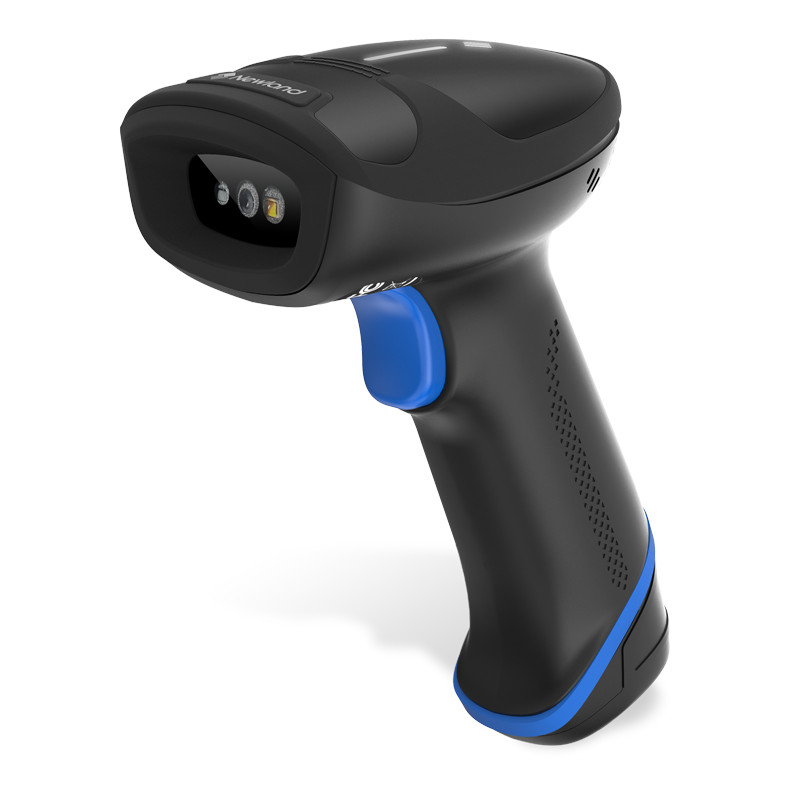 Newland HR33 Marlin AI is a handheld 1D and 2D barcode scanner for production, warehouse and packing stations. It succeeds the HR33 Marlin and is a bestseller among Newland scanners. It comes in two models with the same scan engine and the same dimensions: HR33 Marlin AI Corded works over a USB or RS-232 cable, while HR33 Marlin AI Bluetooth connects wirelessly to its cradle and has a swappable battery. 1280 × 800 pixel sensor and AI-Powered Barcode Detection: the scanner reads 1D and 2D codes, including DotCode and Digimarc, from 3 mil density and 15% print contrast. According to the manufacturer it also handles damaged and distorted codes and codes on reflective and curved surfaces. Laser aimer and Acuscan: when several codes sit next to each other on a label, one trigger press reads the one the aimer points at. The operator does not have to cover neighbouring codes by hand or scan twice. Reading range from a few centimetres to over 50 cm: EAN-13 (13 mil) is read from 3.5 to 53.5 cm and Data Matrix (10 mil) from 2 to 24.5 cm. That covers work at a bench, a conveyor and a pallet next to the station. IP52 and 1.8 m drops to concrete: the scanner withstands dust, dripping water and a drop from the hand or the bench. It operates from −20 to 50°C, so also in an unheated hall. 5-year manufacturer warranty: longer than the typical replacement cycle of station equipment, so repair costs over that period are predictable. Lua scripts (Advanced Scripting) and the EasySet tool: scan data can be processed inside the scanner, e.g. cutting out part of a code or adding a prefix, with no changes in the system that receives it. Scan confirmation by beep, LED and vibration: in a noisy hall the operator feels a good read in the hand and does not need to look at the screen. Cable or Bluetooth. The corded model weighs 140 g, is powered from the port and needs no charging, which suits a fixed station. Choose the Bluetooth model (210 g) when the operator walks from the computer to a pallet, machine or rack: the manufacturer states a range of at least 100 m in open space, and the cradle charges the scanner and links it to the computer over USB. Interface. Both models work over USB as a keyboard, a virtual serial port or HID-POS. Only the corded model is also available with an RS-232 cable and power adapter. That is the variant for machine controllers, scales and older devices without a USB port. Stand. The corded model can be ordered with an adjustable stand that moves from upright to flat, on a desk or on a wall. The Bluetooth model always ships with a charging cradle. Battery and shift work. The 2600 mAh battery in the Bluetooth model lasts, according to the manufacturer, at least 15 hours at one scan every 6 seconds and charges in up to 6 hours. It is replaced without tools, and a two-colour indicator warns of a low charge. Working out of range. The Bluetooth model can store scans in memory (at least 16,384 codes) and send them once it is back in range of the cradle. Spare batteries and a four-battery charger are available for the Bluetooth model, useful in multi-shift work. For the corded model you can add an adjustable stand, an RS-232 cable with power adapter or a USB cable. Both models fit a wall mount clip that gives the scanner a fixed place at the station.
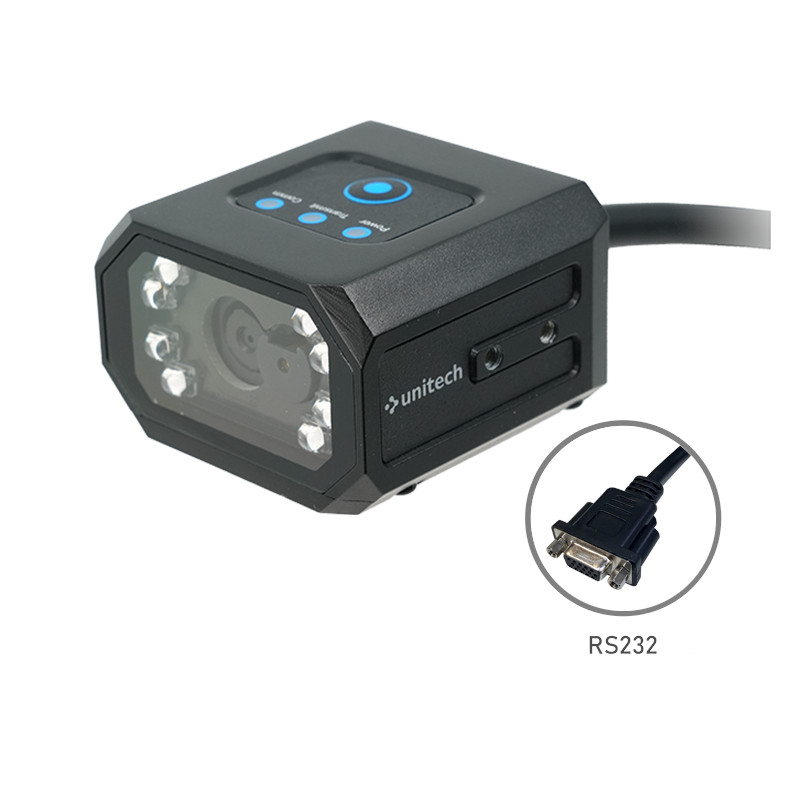 Unitech FC80 is a compact fixed-mount barcode scanner for production lines, conveyors and packing stations. It reads 1D and 2D codes on labels as well as DPM codes (Data Matrix and QR) that are laser etched, dot peened or inkjet printed directly on metal and plastic. It sends the result over Ethernet or RS232, including the Profinet, Modbus TCP and EtherNet/IP automation protocols, so it can talk directly to a PLC. It reads automatically, with no operator involved: mounted above a roller conveyor, it captures the code of every item passing under its window. DPM reading: reads Data Matrix and QR codes marked directly on parts, including low-contrast codes on textured and curved surfaces. Parts can be identified throughout the process without a label that could peel off or get damaged. 1920 × 800 pixel sensor, 60 frames per second: the wide field of view (52° horizontal, 23° vertical) helps when parts do not always stop in exactly the same place. Ethernet (TCP/IP, Profinet, Modbus TCP, EtherNet/IP) and RS232: the scanner connects to the plant network and directly to the controller, with no PC in between. The serial port also lets you connect it to older machines. 45 × 47 × 30 mm, 133 g: fits tight spaces next to a conveyor or inside a machine enclosure. It is installed on a dedicated mounting bracket. Trigger and presentation modes: the scanner reads on demand after a trigger signal, or works hands-free and reads a code presented in front of its window. IP54 housing, multiple 1.2 m drops: protected against dust and water splashes. Operates from −10 to 50°C at up to 85% non-condensing humidity. Reads in ambient light up to 100,000 lux: works under strong shop-floor lighting. Connection. Choose Profinet, Modbus TCP or EtherNet/IP when the read should go straight to the line controller. TCP/IP is enough when an application on a PC or server receives the data. RS232 is for machines without a network. The scanner has no USB port. Reading distance. Match it to the code size: 10 mil Data Matrix reads from 5.5 to 27.5 cm, 20 mil Data Matrix from 5 to 56 cm, and 15 mil Code 128 from 5 to 68 cm. Small codes such as 4 mil Code 39 need 6 to 16 cm. Operating mode. Trigger mode suits conveyors where the read has to happen at a defined moment. Presentation mode suits stations where the operator holds a part or carton up to the scanner. Power. The scanner runs on 24 V DC. The manufacturer offers a 24 V / 2.5 A power supply, a 3 m Ethernet cable and 2 m and 3 m RS232 cables.
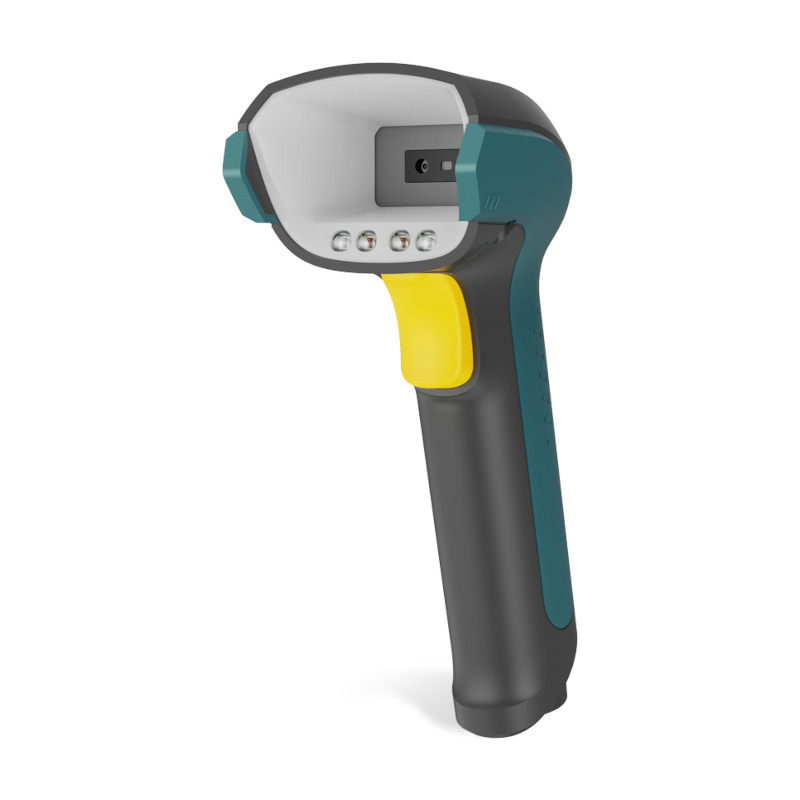 Newland NVH220 Lophius AI is an industrial 2D handheld scanner for direct part marking (DPM): codes laser-etched or dot-peened on metal, plastic and curved surfaces. It fits production workstations, quality control and warehouses, wherever barcodes are damaged, distorted or printed on shiny surfaces. Both versions share the same housing, image sensor, illumination and ruggedness. They differ in how they connect: NVH220 is corded, while NVH220 Bluetooth has a battery and a docking station. 1280 × 800 image sensor and DPM decoding: reads laser-etched and dot-peened codes as well as damaged or distorted 1D and 2D barcodes (Data Matrix, QR, Micro QR, PDF417, Aztec). It is GS1 Ready, so it handles GS1-128 and GS1 DataMatrix codes on logistics labels. Three illumination types with auto-learning: direct red and blue light plus diffuse white light. A button on top of the housing starts automatic adjustment of brightness and light source to the material: reflective, curved and low-contrast surfaces and colored codes. Cross laser aimer and wide scan angles: ±50° pitch and skew, 360° roll. Operators do not have to line up the part so the code faces the scanner head-on. Close-range reading: EAN-13 from 15 to 220 mm, QR codes (20 mil) up to 225 mm, small 2D codes (10 mil) up to 160 mm. IP64, 1.8 m drops, operation from −20 to 50°C: withstands dust, water splashes and drops at the workstation. ESD protection is ±16 kV air and ±8 kV contact discharge. USB, RS-232 and Ethernet in both versions: connects to a PC, an operator panel or directly to the network (TCP/IP). According to the datasheet, the Bluetooth version also supports the industrial protocols ModbusTCP, Profinet and MELSEC/SLMP, so scans can go to a PLC. Bluetooth 5.0 and a battery for more than two shifts: up to 150 m range in open space, more than 17 hours of continuous use or up to 60,000 scans per charge, 3-hour charging (Bluetooth version). Beep, LED and vibration feedback: operators know the scan succeeded even in a noisy hall. Configuration with the free EasySet software. Connection. The corded version suits a fixed workstation: no charging and a lighter device (160 g without cable). Choose Bluetooth when the operator moves between workstations, racks or the loading dock. It weighs 218 g with the battery, and the docking station is included. The station is rated IP42, so place it in a sheltered spot. The battery charges between 0 and 45°C. Automation integration. If scans must go straight to a PLC (Profinet, ModbusTCP, MELSEC/SLMP), the datasheet lists these protocols for the Bluetooth version only. A scanner connected via RS-232 can be put on the network with the Newland EX232 Remora converter. It converts RS-232 to Ethernet, powers the scanner via PoE or a 6–31 V supply and mounts on a DIN rail in a control cabinet. It has power and signal isolation and two-way communication, so the system can also send commands back to the scanner. Warranty and service. The corded version has a 5-year warranty, the Bluetooth version 3 years, extendable to 5. Manufacturer service packages for 3 or 5 years are available for both. They cover repair within 5 working days, wear and tear (scratched window, worn trigger, charging contacts) and accidental damage in normal use, such as a cracked housing. For scanners used every day on the shop floor, it is worth adding a package with the device.
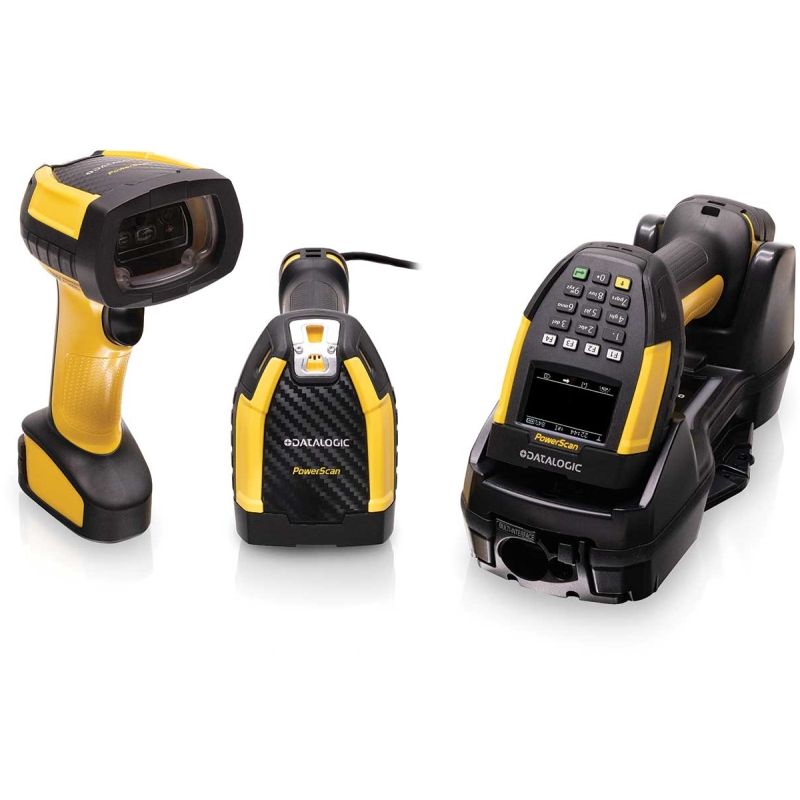 Datalogic PowerScan 9600 is a series of industrial 1D and 2D barcode scanners for production halls, warehouses and cold stores. It is the top line in the PowerScan family from Datalogic, an Italian company based in Bologna, recognisable by its yellow and black housing. The scanner withstands 2.5 m drops onto concrete, dust, water and washing, and the trigger is rated for 10 million presses. The series includes a corded version, two cordless versions and several optics, from standard, through reading from 20 m, to DPM codes marked directly on parts. 2.5 m drops onto concrete, IP65 and IP67 sealing: the scanner keeps working after falling from a workstation or a forklift, after dust and after washing. Operation from −30°C for the corded version, from −20°C for cordless, up to +50°C: for cold stores, unheated warehouses and loading docks. Three connection options: the corded PD9630, the cordless PBT9600 with Bluetooth 5.0 (up to 100 m range) and the PM9600 with the Datalogic STAR radio system (up to 150 m range, many scanners on one base station). 3350 mAh Li-ion battery for more than 80,000 reads: on cordless versions one charge lasts several shifts. The battery charges inductively in the cradle, with no contacts to wear out. Green Spot indicator: a green spot projected onto the code confirms a good read, which helps in noisy halls. USB, RS-232, Ethernet, EtherNet/IP and Profinet: connect the scanner to a PC, a mobile computer or directly to the machine network on the line. Versions with display and keypad: on cordless models the operator sees a confirmation or message from the system and can enter a quantity without walking to the PC. 3-year manufacturer warranty: standard on a scanner built for intensive use. Corded or cordless. PD9630 for a fixed production workstation and the lowest temperatures. PBT9600 with Bluetooth to connect to a PC, tablet or mobile computer. PM9600 with the STAR system when several scanners work in the hall and a longer range is needed. Optics. SR for typical labels at close range. HP for dense and small codes with a wider distance range. AR (Auto Range) reads from 3 cm to more than 20 m, so it suits forklifts and high racks. DC has a colour sensor for capturing documents and signatures. DPX reads DPM codes that are dot-peened, engraved or laser-marked on parts. Display and keypad. Worth choosing when the scanner is to act as a simple terminal, for example to confirm quantities on a forklift. Workstation without a PC. The scanner can be connected to our Bilberry xT micro kiosk, which guides the operator through the process at the production workstation and sends data to the system. We supply the PowerScan 9600 as part of a workstation: on the production line in HDF MES, on a forklift in HDF WMS or together with the Bilberry xT micro kiosk. We configure the scanner for the application, set up communication and train operators, so the workstation works in the process right after deployment.
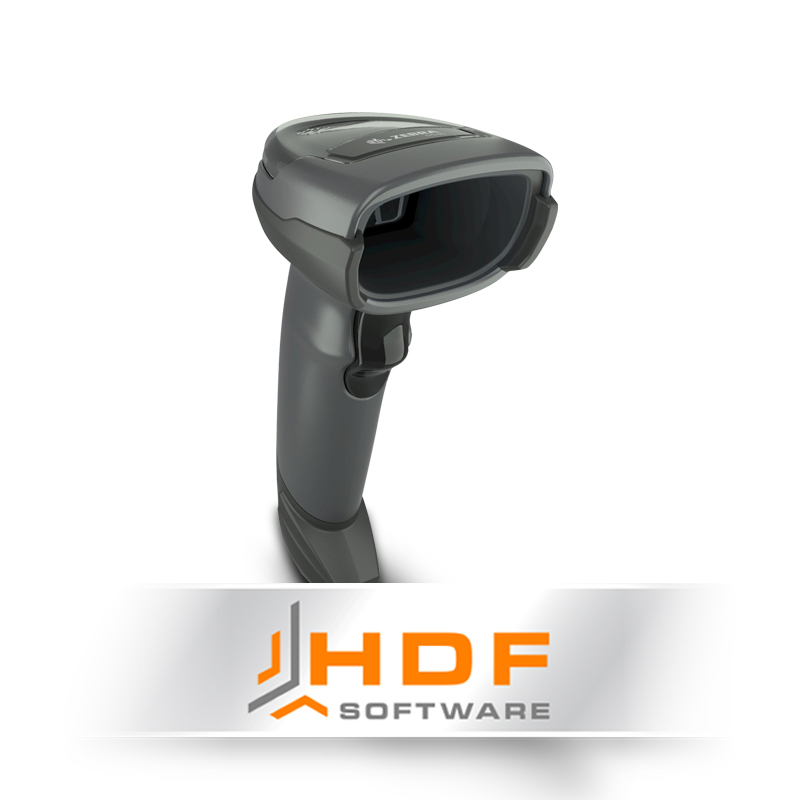 Zebra DS4608 and DS4678 are handheld 1D and 2D barcode scanners from the DS4600 series for workstations: goods receipt and issue in the warehouse, packing, offices, checkouts and production stations. The DS4608 is corded, while the DS4678 connects over Bluetooth and charges in a cradle, so the operator can walk up to a pallet or machine with the scanner. Both share the same sensor and read codes from labels, including damaged and poorly printed ones, and from phone screens. The DPE versions also read DPM codes, marked directly on parts. The DS4608 is the successor to the DS4308. 1280 × 800 pixel sensor and PRZM technology: the scanner handles dense, damaged and low-contrast barcodes. A good read is confirmed by illuminating the barcode, by LEDs and by a beep. SR and HD optics: SR reads an EAN code from up to about 71 cm and HD from up to about 46 cm, but HD reads smaller codes, for example 4 mil Data Matrix instead of 5 mil. Range depends on print quality, contrast and ambient light. DPE version for DPM codes: white illumination with a diffuser and a green aimer read small laser-marked codes on plastic and metal, including shiny surfaces, as well as ink-printed and chemically etched codes. A read is also confirmed by vibration, useful in a noisy hall. 1.8 m drops to concrete and IP52 sealing: the scanner survives everyday drops from the workstation and dust. The manufacturer also specifies 2000 tumbles from 0.5 m. Handheld and presentation mode: placed on a stand or in the presentation cradle, the scanner scans automatically, leaving both hands free for receiving goods or packing. DS4678: 2500 mAh battery and Bluetooth 5.2: according to the manufacturer one charge covers 50,000 scans, more than 13 hours at one scan per second. Radio range reaches up to 100 m, and Virtual Tether alerts when the scanner goes out of range or is not returned to the cradle. USB, RS-232, keyboard wedge and IBM 46XX (RS-485): auto-host-detect cables set the scanner up for a PC, mobile computer or POS without manual configuration. Settings are loaded with the 123Scan tool. Multiple codes in one scan: the scanner captures several codes from a label at once and passes only the required ones to the system, in a set order. Label Parse+ splits GS1 label data into fields. FeatureDS4608DS4678ConnectioncableBluetooth 5.2, corded cradleOptics versionsSR, HD, DPESR, DPEPowerfrom the host port or a power supplyreplaceable 2500 mAh batteryFreedom of movementcable lengthup to 100 m from the cradleWeight162 g225 gColorblack or whiteblackManufacturer warranty5 years3 years Corded or Bluetooth. The DS4608 is enough for a fixed workstation where goods come to the scanner. Choose the DS4678 when the operator walks up to pallets, large cartons or machines. SR, HD or DPE. SR is enough for logistics and product labels and on-screen codes. Choose HD for very small, dense codes; this optics version is corded only. DPE is for codes marked directly on parts, for example laser marks on circuit boards and electronic components. The manufacturer positions it for electronics and light manufacturing, including clean rooms; the same scanner also reads regular carton labels. Kit. Some variants are the scanner only, without a cable or cradle, and some are kits: the DS4608 with a USB cable and optionally a stand, the DS4678 with a USB cable and a standard or presentation cradle. For a first workstation a kit is more convenient. Interface. USB is enough with a PC or mobile computer. RS-232 and IBM 46XX help with POS terminals and older devices without USB. For the DPE versions the manufacturer lists USB, RS-232 and IBM 46XX, without keyboard wedge. EAS. Variants with EAS work with checkout EAS deactivation systems and matter only in a store. When to choose another device. When the worker scans on the move across the warehouse and needs a screen, a mobile computer with a built-in scanner is a better choice.
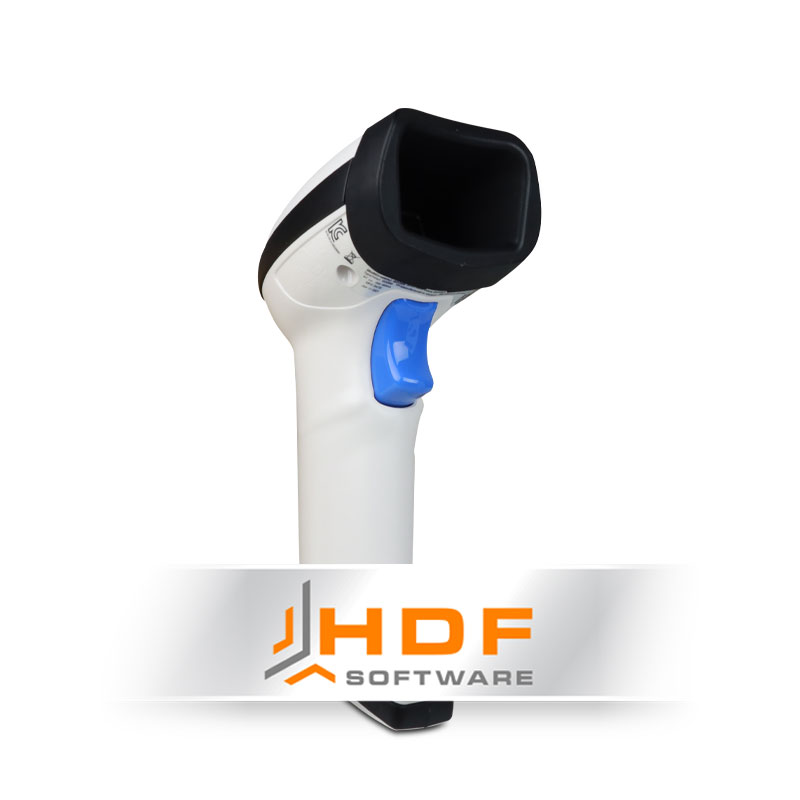 Datalogic QuickScan QD2590 is a corded 1D and 2D barcode scanner for everyday work at a desk, counter, packing station or label printing station. It reads codes from labels, documents and smartphone screens, and scans at any angle, without lining up the code with the scanner. It is a simple, proven model from Datalogic, an Italian company based in Bologna, with a five-year manufacturer warranty. It belongs to the QuickScan 2500 series, which also includes cordless versions. Omnidirectional 2D imager: 1D and 2D codes, including QR Code, Data Matrix, postal and stacked codes. The operator does not have to turn the product or document. Reading from smartphone screens: codes from apps, emails and tickets are scanned just like from paper. Aiming with two blue triangles and Green Spot indicator: the triangles show where the scanner aims, and a green spot on the code confirms a good read. 1.5 m drops onto concrete, IP52, trigger rated for 10 million presses: the scanner survives a fall from the desk and daily intensive work. USB, USB-C, RS-232 and Keyboard Wedge: depending on the version. Connected via USB, the scanner works like a keyboard, so the code goes into any field in a program without installing drivers. Black and white versions, kits with cable and stand: a stand allows scanning without holding the scanner, for example at a packing station. 5-year manufacturer warranty: long coverage for a scanner in this price class. The QD2590 is a general-purpose scanner. It works well at a label printing station, at a goods receipt desk, in offices handling documents, at a service counter and when packing shipments. Anywhere the operator scans codes at close range and does not need an industrial scanner. It is not a scanner for cold stores or outdoor work: it operates from 0 to +50°C, and IP52 sealing only protects against dust and dripping water. For production halls, forklift warehouses and low temperatures, choose an industrial scanner. With or without a stand. Choose a kit with a stand when the operator scans many items held up to the scanner. The scanner with a cable is enough for occasional scanning. Interface. The USB version is enough for a PC and most POS systems. Choose the multi-interface version when the scanner must work with older equipment over RS-232. Corded or cordless. If the operator walks away from the station, for example to a pallet or rack, consider the cordless version from the same series. Colour. The white housing suits bright offices and service points, the black one suits workstations. We supply the QD2590 together with the workstation: with a label printer and HDF Labels, or with a PC in the goods receipt and dispatch process. We configure the scanner for the application, so from day one it scans into the right field in the right format.
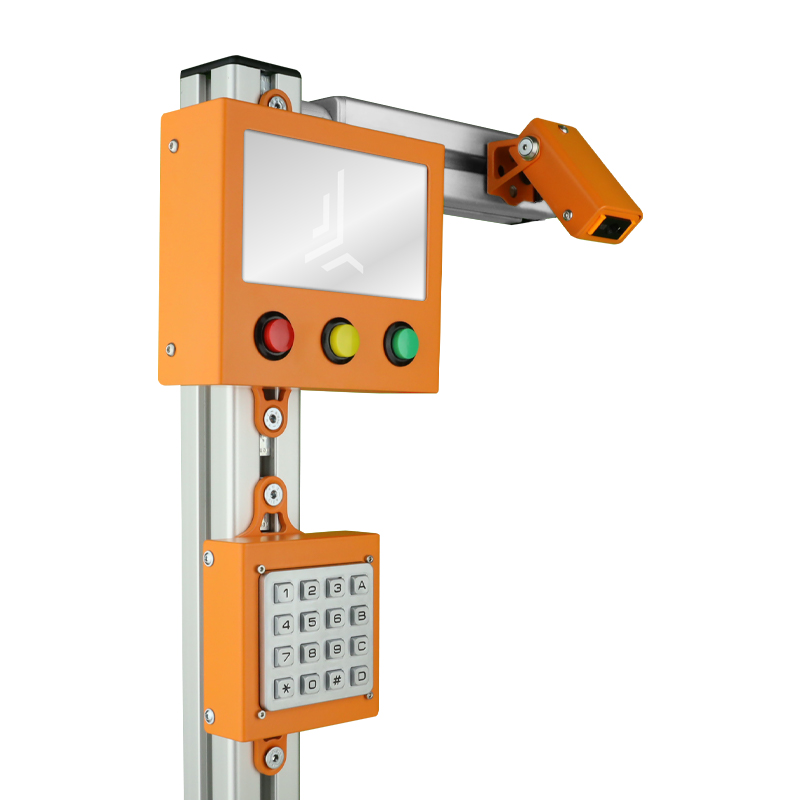 Bilberry xT is an industrial micro-kiosk by HDF: a small single-board computer in a metal housing with a 4.3-inch color display and three programmable buttons. It works as a simple workstation controller. It is mounted at the operator's eye level: the operator sees on the display what to do and confirms with one of the three buttons or by scanning an order barcode. The data goes straight to the system. It replaces a PC where space is tight and drives a barcode scanner, a keyboard, a label printer, the Waga xT scale and even machines. It has been working at our customers for 10 years: scanning components and printing logistics labels in valve production, counting and packing gaskets, tracking work time in hose production and kitting furniture parts. Three buttons instead of a keyboard and mouse: the display is not a touchscreen, and all operation comes down to three programmable buttons. The operator has nothing to learn, and the buttons work with gloves and dirty hands. Eye-level mounting: the device hangs at the workstation, takes no desk space, and the operator sees the message without stopping work. App connected to HDF MES or HDF WMS: operator screens are built quickly, and the device runs in client-server mode with central management. We also connect the same app to customer systems, such as ERP, as custom development. 4 USB ports (2 x USB 2.0, 2 x USB 3.0) and Gigabit Ethernet: a barcode scanner, keyboard, scale and label printer work at the same time. Control of Zebra, TSC, Sato, Brady and other label printers over USB or Ethernet: the shipping label prints right after the operation is completed. One customer uses Bilberry xT as a print request point for the printer next to it, because there was no room for a PC. Works with Waga xT: counting small parts by piece (screws, nuts, gaskets) and passing the quantity to the warehouse document or production report. Metal housing, IP20 as standard: resistant to typical shop-floor damage. On request we seal it to IP54 or IP65 when the workstation is dusty or exposed to water. Programmable like a computer: we adapt the workstation logic to the customer's process, from simple scanning and work time tracking to multi-step packing with weighing and printing. Bilberry xT alone. When a scanner or printer is already at the workstation, or the kit is configured individually. Keyboard xT. An industrial numeric keypad with 10 digit keys and function keys. Useful when the operator types quantities, batch numbers or codes manually. Glow xT scanner. An industrial 1D and 2D barcode scanner measuring 2.2 x 3.6 x 6.3 cm, mounted at workstations with no room for a standard scanner. Kit with Waga xT 1 kg or 5 kg. Bilberry xT with a piece-counting scale, power adapter and USB cables. Choose capacity by the weight of the counted batch: 1 kg for the smallest parts, 5 kg for heavier parts or larger portions. Sealing. The standard IP20 version is enough in a dry, clean hall. For dust and splashes choose the IP54 version, and IP65 when the workstation is washed with water. Connectivity. We recommend an Ethernet cable. Wi-Fi can be added with a USB adapter, but on a shop floor it performs poorly.
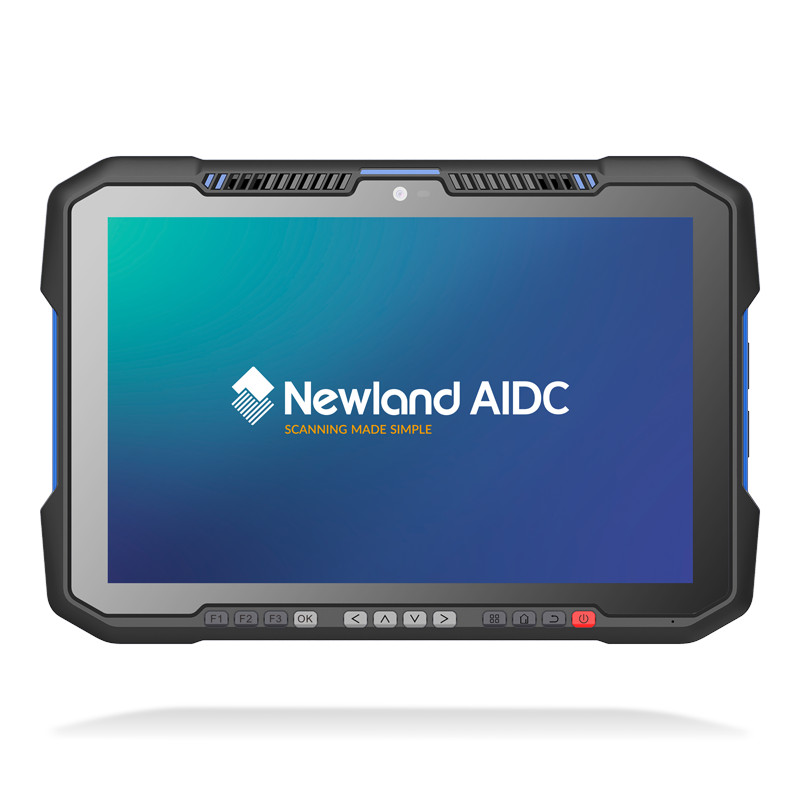 Newland NQuire 10 Trygon is an industrial Android tablet with a 10.1-inch screen and a built-in barcode scanner. It fits where a mobile computer screen is too small: quality inspections with checklists and photos, goods receiving with long item lists, and rounds across the plant or yard where 4G connectivity is needed. Unlike a consumer tablet, it has an IP65 housing, survives 1.2 m drops to concrete, uses a removable battery and has a 2D scanner that works independently of the camera. 10.1-inch sunlight-readable screen (1200×1920): an inspection form or a full delivery item list fits on one view. Tempered glass and capacitive touch. Built-in 1D/2D scanner with laser aimer: reads EAN-13 from 7 to 60 cm and QR codes from 5.5 to 40 cm. Supports GS1-128, Data Matrix, PDF417, DotCode and more, so no separate scanner is needed. 13 MP rear camera with autofocus and LED flash: photos of non-conformities, damaged deliveries or completed work go straight into the document in the app. 5 MP front camera. IP65 and 1.2 m drops to concrete: the housing is dust-tight and protected against water jets, and the manufacturer tests drops on each of the six sides. Operating range from −20 to 50°C. Removable 9000 mAh battery: over 12 hours of continuous use according to the manufacturer, 18 W fast charging. In multi-shift operation you insert a charged battery instead of taking the tablet out of service to charge. Android 15 with GMS and Android Enterprise Recommended certification: octa-core 2.2 GHz processor, 4 GB RAM and 64 GB storage with a microSD slot. AER is Google's confirmation that the device meets enterprise requirements and receives regular updates. Wi-Fi 6, 4G LTE, Bluetooth 5.4, GPS and NFC: the tablet works on the company Wi-Fi and switches to 4G outside its range, e.g. in the storage yard or for field service. Two nano-SIM slots (the second shared with microSD). Ndevor and SOTI, 42Gears, Ivanti certification: the manufacturer's free MDM lets you configure tablets, install apps and push updates remotely without collecting devices from staff. Mounting and charging. A vehicle mount, e.g. for a forklift, and a desktop charging cradle for a desk or workstation. Power. Spare 9000 mAh batteries and power supplies. The box includes a USB-C cable, a power adapter with interchangeable plugs and a hand strap. Screen protection. A protective film made for this model. Warranty and service packages. The standard manufacturer warranty is 2 years. It can be extended to 3 or 5 years, or replaced by a comprehensive coverage package for 3 or 5 years. Comprehensive coverage also includes wear and tear and accidental damage in normal use, such as a cracked screen or housing, and cuts repair time from 10 to 5 working days.
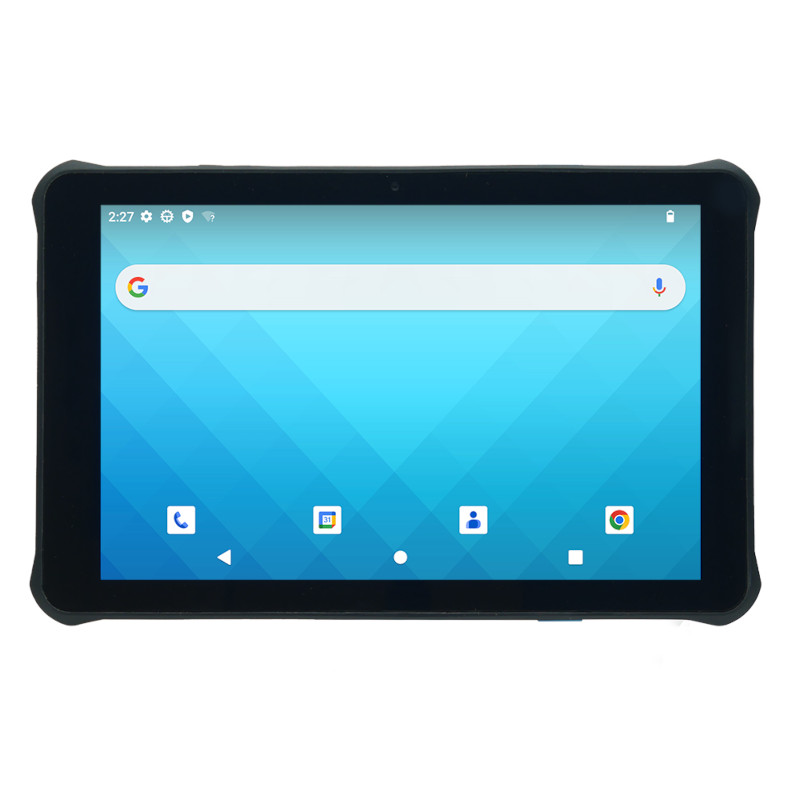 Unitech RT112 is a rugged Android tablet with a 10.1-inch display for warehouses, forklift work, quality control and field service. At 12 mm thick and 690 g it has an IP67 housing and survives 1.5 m drops. It comes in a Wi-Fi version and a version with a 5G modem and GPS, each with or without a 2D imager. The manufacturer offers vehicle and forklift mounts, an office cradle and VESA mounting, so the same tablet works in hand, on a forklift and at a workstation. 10.1-inch display, 1920 × 1200, 450 nits, Gorilla Glass: the large screen makes forms, item lists and instructions easy to work with. Touch works with gloves up to 4 mm thick, with wet fingers and with a stylus. IP67, 1.5 m drops, MIL-STD-810H: the tablet is dust-tight, survives immersion in 1 m of water for 30 minutes and the usual drops from hand or forklift. Operates from −20 to 55°C. Swappable 8800 mAh battery: up to 17 hours of use according to the manufacturer, depending on the application. In multi-shift operation you swap the battery instead of taking the tablet out to charge. Qualcomm 5430, 6 GB RAM, 128 GB storage: a platform with an extended lifecycle. Android 13 with GMS and Android Enterprise Recommended certification, with an Android 16 upgrade listed by the manufacturer. 2D imager and two scan buttons: versions with a scanner read 1D and 2D codes without an extra reader. 13 MP camera with autofocus and flash: photos for documentation, e.g. of a damaged delivery or a nonconformity found during inspection. Wi-Fi 6E, Bluetooth 5.2, NFC: reliable connectivity on the plant network across three bands. The 5G version adds a 5G modem, a nano SIM slot (the second slot takes a nano SIM or microSD) and GPS. Fleet management via MDM: the tablet works with SOTI, VMware, Ivanti Wavelink and the manufacturer's MoboLink. Configuration, apps and updates are deployed remotely, without collecting devices from staff. Connectivity. The Wi-Fi version is enough when the tablet stays within the company network. Choose the 5G version for yards, routes and customer sites: it has a 5G modem, a SIM slot and GPS, which the Wi-Fi version lacks. Scanner. The 2D imager version makes sense when the tablet is the main scanning tool. The version without a scanner is enough when codes are read by a separate Bluetooth scanner or the tablet is used mainly for forms and photos. Mounting. On a forklift, choose the vehicle cradle with USB host or the MagConnect arm. At a workstation, use the office cradle, POS mount or VESA plate. Through the USB-C port with DisplayPort Alt Mode you can send the image to an external monitor. For work on the move, use the rotating hand strap or shoulder strap.
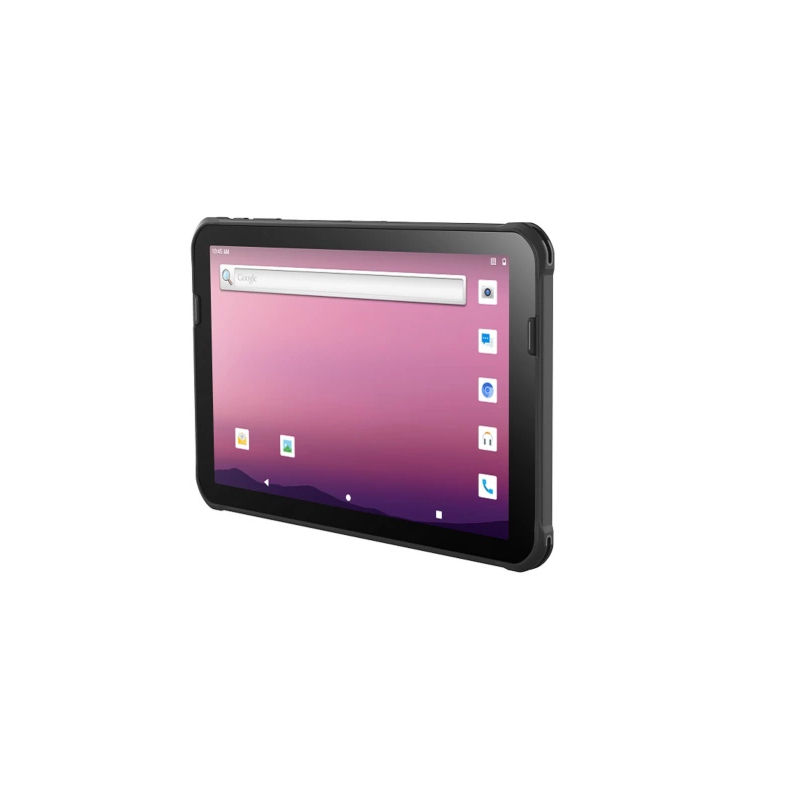 The Honeywell ScanPal EDA10A tablet is a ruggedized device with a 10-inch Full HD screen, which will find use primarily in retail and on warehouse floors, but also in outdoor and field work. Despite its performance and reinforced housing, it is extremely lightweight, as it weighs only 674 grams! The solidly constructed case provides IP65 protection, and resistance to drops to concrete up to 1.3 meters (data measured at room temperature, without additional housing). With the protective case for the Scan Pal EDA10A tablet, its resistance to falls from heights increases up to 2 m! It has a sizable 8000 mAh battery, which you can easily replace with a new charged one, so that the tablet's work is uninterrupted. The ScanPal EDA10A tablet is equipped with a 1 and 2D barcode scanner, which speeds up data reading on this device. It benefits from wireless communication, using WLAN, Bluetooth 5.1/2.1 + EDR 2 (Bluetooth LE) and NFC. It runs on Android 12, which can be upgraded to Android 14, and is capable of operating in temperatures from -20°C up to +50°C and humidity from 5 to 95%. With Wi-Fi 6, your employees will use the device to its full potential, as it guarantees extremely fast internet connectivity.
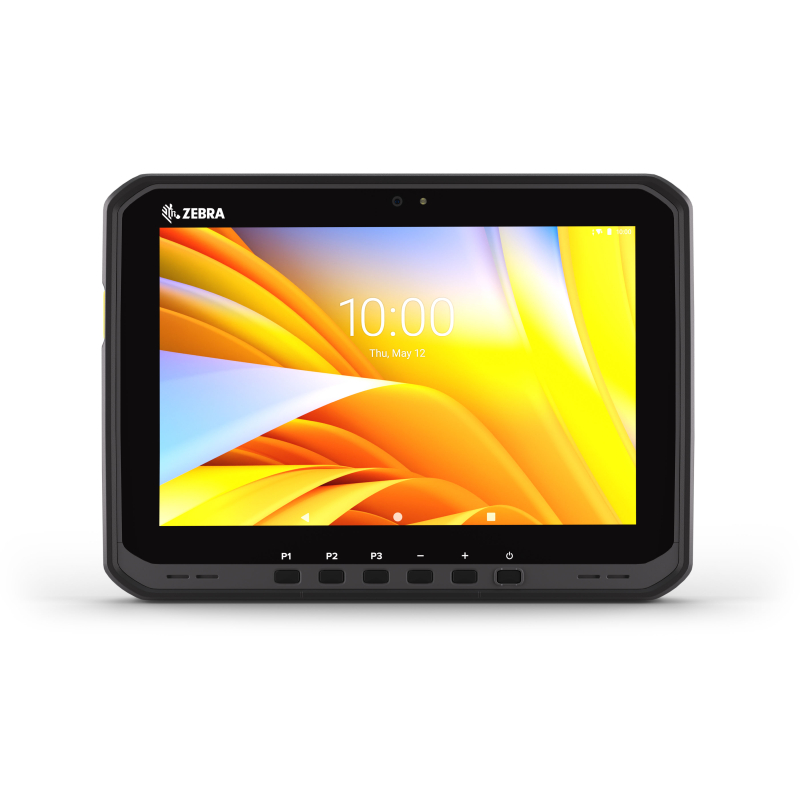 The Zebra ET6x series are ultra-rugged 10-inch tablets for forklifts, cold stores, yards and field work. ET60 and ET65 run Android, ET60W and ET65W run Windows 11, and the ET65 and ET65W add a 5G modem. All four models share the same dimensions, display and sealing and use the same forklift dock and keyboards, so tablets with both operating systems can work in one fleet. The Android versions replace the L10 Android tablets, and the Windows versions replace the ET80 and the L10 Windows models. 10.1-inch WUXGA display with 1000 nits, Gorilla Glass: readable in full sunlight in the yard and under strong hall lighting, and usable with gloves. IP66 and 1.5 m drops to concrete: the tablet withstands water jets, dust and a drop from a forklift, and can be hosed down when dirty. Locking forklift dock: locked in the dock, the tablet works as a vehicle-mounted computer. The dock is IP66 sealed and has heated contacts plus 2 USB-A ports and RS232 for peripherals such as a scanner or keyboard. Undocked, the same tablet is used for inspections. Runs on forklift power, without a battery: the manufacturer designed the Android versions to be powered from the vehicle, which removes the need to buy and replace batteries. A super capacitor then keeps the tablet running for about 5 minutes, depending on conditions. A battery housing without cells for fixed-mount installations is available for both versions. Hot-swappable batteries: a super capacitor keeps power during the swap. On the Android versions the 8920 mAh battery gives 10 hours of work according to the manufacturer, and the 17,840 mAh battery 20 hours (indoors, Wi-Fi on, 50% backlight). The Windows versions use 36 or 72 Wh batteries. ET60 with a heated display for freezers: the touch panel is heated when locked in the vehicle dock, so it does not fog up when moving between temperature zones. This version is rated for condensing humidity. Wi-Fi 6E or Wi-Fi 7, plus 5G on the ET65 and ET65W: the modem with nano SIM and eSIM works on public and private networks, and GPS reports position across a wide yard. On the ET65 the modem is data only. Optional SE55 scan engine and external scanners: the built-in SE55 reads barcodes from up to 12 m according to the manufacturer, and actual range depends on the label and lighting. You can also connect a scanner over USB or Bluetooth, and on the Android versions the rear camera reads barcodes as well. FeatureET60 / ET65ET60W / ET65WOperating systemAndroid, supported up to version 16Windows 11 Pro or IoT Enterprise LTSCProcessorQualcomm 6490, octa-coreIntel Core Ultra 5 or 7Memory8 GB RAM, 128 GB8, 16 or 32 GB RAM, storage from 128 GBWi-FiWi-Fi 6EWi-Fi 75GET65ET65WBattery8920 or 17,840 mAh36 or 72 WhOperating temperature−20 to 55°C, from −30°C with the extended battery−29 to 63°CCameras16 MP and 8 MP13 MP and 5 MP, Windows Hello cameraPorts2 × USB-A, 1 × USB-C1 × USB-A, 2 × Thunderbolt 4 Operating system. The Android versions are meant for mobile apps such as HDF WMS. Choose the ET60W and ET65W when desktop Windows software must run on the tablet. Connectivity. The ET60 and ET60W are enough within company Wi-Fi. Choose the ET65 and ET65W for yards, ports and field work. Battery. The standard battery covers a shift, the extended one covers multi-shift work. Variants without a battery are meant for permanent forklift mounting. On the Android versions the battery also sets the temperature range: with the extended battery or without a battery the tablet operates from −30°C. Freezer. Choose the ET60 with a heated display. It is sold without a battery and runs on forklift power through the vehicle dock. Scanner. The built-in SE55 helps when the operator scans rack labels without leaving the forklift. For occasional scanning the camera or an external scanner is enough. Windows configuration. Options include Core Ultra 5 and 7 processors, also with vPro, 8 to 32 GB of memory and an optional fingerprint reader in the power button. The manufacturer covers the tablets with a 3-year warranty.
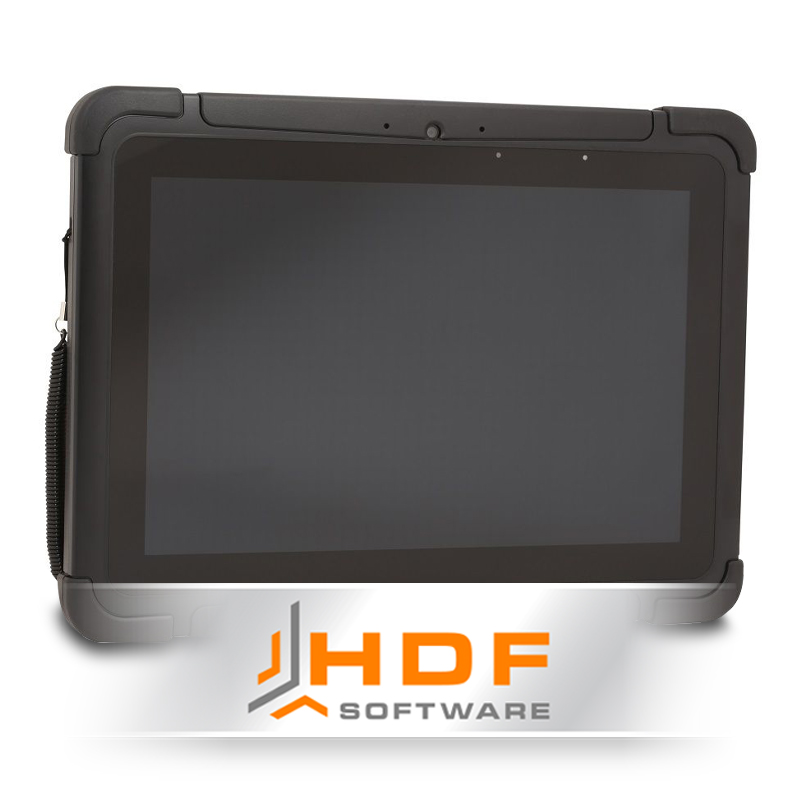 Honeywell rt10 tablet offers a choice of Windows or Android operating systems and Wi-Fi or 4G connectivity. Thanks to its flexibility and the ability to customize it to fit your daily work, it is perfect for shop floor workers, supervisors, maintenance workers and managers, among others. With the RT10A and Smart Talk, you can connect with your employees via secure PTT, text, voice and video communications. The camera is equipped with two FlexRange lenses, so it scans barcodes from near, mid and long range with instant autofocus. The design of the device withstands drops to concrete from a height of 1.2 m and is resistant to dust and water (IP65 rating).
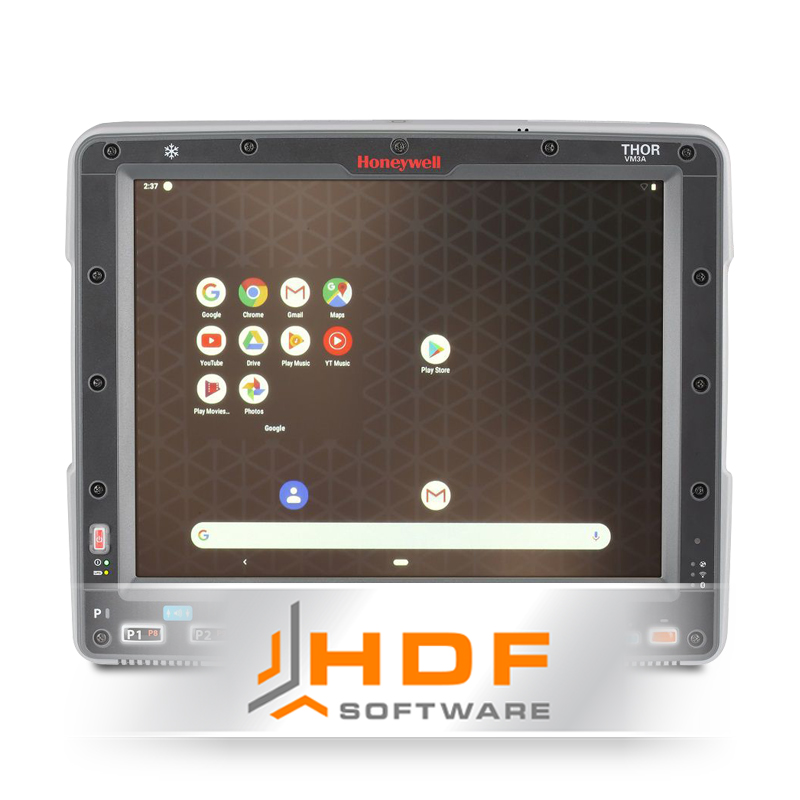 The Honeywell VM3A is a mobile data terminal for installation in forklift trucks. Designed specifically for use in the harshest environments, it is ideal for use in distribution centers, manufacturing plants and freight transportation. The device is compact, ergonomic, and powerful with a Qualcomm 660 processor, integrated keyboard, and 2x2 MIMO WLAN communication to keep workers reliably connected. The 12-inch display will ensure readability both indoors and outdoors. It guarantees resistance to extreme temperatures, making it suitable for cold stores and freezers.
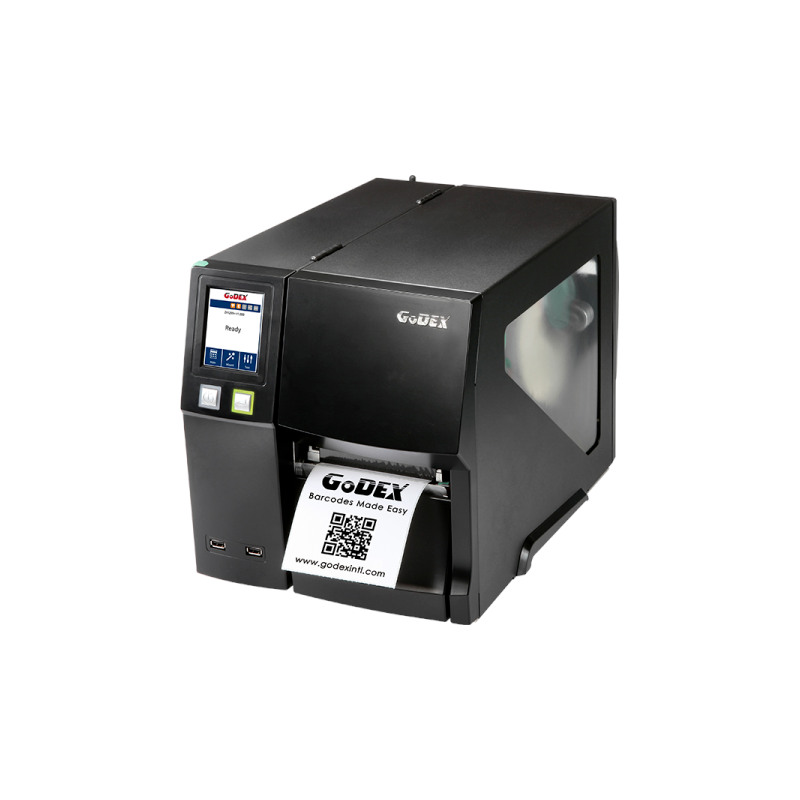 Godex ZX1200i PRO, ZX1300i PRO and ZX1600i PRO are industrial label printers in a metal housing, printing thermal transfer and direct thermal labels up to 118 mm wide. They are built for production lines, warehouses and shipping departments, where labels are printed in large runs throughout the shift. All three models share the same housing, mechanism, interfaces and options. They differ only in printhead resolution: 203, 300 or 600 dpi. Metal frame and die-cast print mechanism: built for continuous operation in production halls and warehouses. The printhead and platen roller are designed for easy removal, so replacing them does not mean long downtime. Ribbon up to 450 m and label rolls up to 203 mm in diameter: in long runs, media is changed less often. The printer detects ink-in and ink-out ribbons automatically. ZPL emulation (GZPL) plus EZPL, GEPL and GDPL with automatic switching: the printer accepts print jobs from systems set up for other popular label printers. It is worth testing your own label formats before ordering more printers. Direct PDF printing: a PDF document goes to the printer without installing a driver on the computer. Gigabit Ethernet with IEEE 802.1X, USB 3.2, RS-232 and three USB host ports (two front, one rear): the printer fits into a secured corporate network or connects to legacy equipment over the serial port. Wi-Fi and Bluetooth work through a USB dongle from the compatibility list in the manufacturer's manual. 3.2-inch colour touchscreen and a dedicated calibration button: the operator adjusts settings and calibrates media at the printer, with no software on a PC. 16 GB flash and 2 GB RAM: room for label formats, fonts and graphics stored in the printer. Options: cutter (rotary, guillotine, perforation, high-speed, paper card), label dispenser with internal liner rewinder, DSUB-15 applicator interface, external label rewinder and unwinder. The manufacturer offers an RFID module as a project option. Resolution and speed. ZX1200i PRO (203 dpi, up to 254 mm/s) covers logistics, pallet and shipping labels. ZX1300i PRO (300 dpi, up to 178 mm/s) suits product labels with finer text and 2D codes. ZX1600i PRO (600 dpi, up to 102 mm/s) prints the smallest details: small labels, fine text and dense 2D codes. Maximum print length. It depends on resolution: up to 10,160 mm on ZX1200i PRO, 8,890 mm on ZX1300i PRO and 2,540 mm on ZX1600i PRO. This matters for long labels and continuous marking. Label output. By default labels are torn off. Choose a cutter when labels must be cut one by one or in batches, a dispenser with liner rewinder when the operator applies each label right after printing, and the applicator interface when the printer works with an automatic applicator on the line. Wireless. The printer has no built-in Wi-Fi. If there is no network socket nearby, you need a USB dongle from the compatibility list.
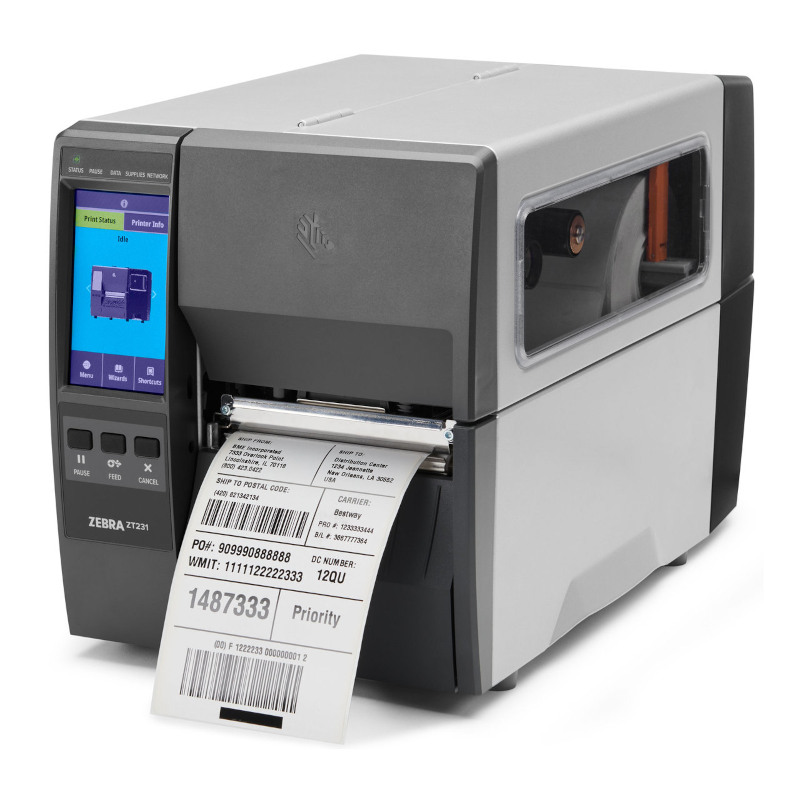 Zebra ZT231 is a semi-industrial label printer with a metal frame and a 104 mm print width, the successor to the ZT230. It works at warehouse, packing and light-industry stations where logistics, shipping and product labels are printed throughout the shift. ZT231R is the same printer with a built-in UHF RFID encoder: it prints the label and encodes the chip in a single pass. 203 dpi at up to 305 mm/s or 300 dpi at up to 203 mm/s: 203 dpi is enough for logistics and shipping labels, while 300 dpi helps with small text, small 2D codes and product labels. Metal frame and housing in a compact size: 432 × 241 × 279 mm and 9.1 kg, so the printer takes little space at the workstation. The bi-fold cover with a window needs less clearance above the printer when opened. 4.3-inch color touch display: printer status and settings, including RFID settings on the ZT231R, are changed from the on-screen menu without a computer. Three-color LEDs show the status at a glance. Large label and ribbon rolls: label rolls up to 203 mm in diameter on a 76 mm core and 450 m ribbons mean fewer media changes during a shift. The printer takes media from 19.4 to 114 mm wide and from 0.076 to 0.25 mm thick. Standard connectivity: USB 2.0, RS-232, 10/100 Ethernet, USB host and Bluetooth Low Energy. Wi-Fi 802.11ac comes factory-fitted in some variants or as a card added later. Wi-Fi 6 is not available. ZPL and ZPL II, plus EPL on 203 dpi models: ZPL is shared across Zebra printers, so label formats from earlier printers of this brand can still be used. EPL makes it easier to work with legacy systems. Upgrades after purchase: the peeler, cutter, Wi-Fi card, second Ethernet card, applicator interface and UHF RFID module are installed on site. The exception is the peeler with liner take-up, which is factory-fitted only. Print DNA: Zebra software for configuring, updating and remotely managing networked printers. Feature availability depends on the model, and some features require a license. Print method. Thermal transfer prints through a ribbon, so print durability is matched to the material by choosing the ribbon, including for film labels. Direct thermal needs no ribbon and is enough for short-life shipping labels. Thermal transfer operates from 5°C, direct thermal from 0°C, both up to 40°C. Resolution. 203 dpi gives higher speed and EPL support. Choose 300 dpi when the label carries a lot of small content or small 2D codes. Media handling. Tear-off is standard. The peeler presents a label ready to apply at the packing station, and the version with liner take-up also rewinds the liner. The cutter cuts tags and continuous media. Wi-Fi. Choose a Wi-Fi variant when there is no network outlet at the workstation. A Wi-Fi card can also be added later. RFID. The ZT231R variants on this page are thermal transfer with tear-off, 203 or 300 dpi. The RE40 encoder supports UHF EPC Gen2 v2.1, ISO/IEC 18000-63 and RAIN RFID tags, and Adaptive Encoding selects the encoding settings automatically. The minimum RFID label pitch is 16 mm. For a different RFID configuration, add the UHF RFID module to a ZT231.
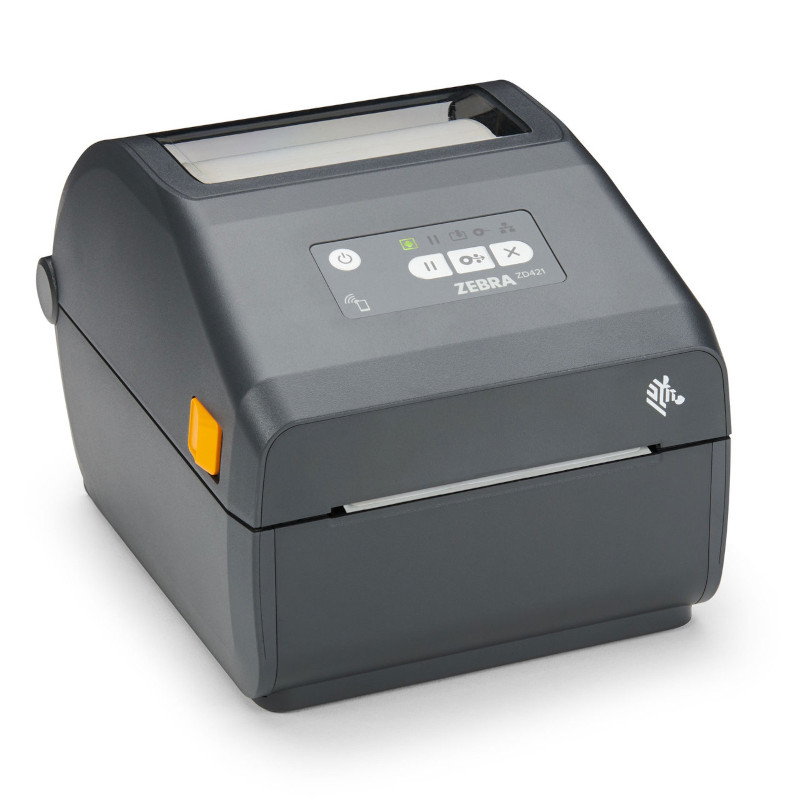 Zebra ZD421d and ZD421t are desktop label printers with a print width of up to 108 mm. They print shipping, product and warehouse labels as well as asset tags, e.g. at packing stations, in goods receiving or in the office. ZD421d prints direct thermal, without ribbon. ZD421t also prints thermal transfer, with ribbon, on paper or synthetic (film) labels, which gives a durable print. 203 dpi at up to 152 mm/s or 300 dpi at up to 102 mm/s: 203 dpi covers shipping and logistics labels, 300 dpi suits small labels with fine text and dense 2D barcodes. Rolls up to 127 mm in diameter, 12.7 and 25.4 mm cores, 38, 51 and 76 mm with adapters: the printer takes rolls from various suppliers as well as fan-fold media fed through the rear slot. Media width from 15 to 108 mm (ZD421d) or up to 112 mm (ZD421t). Movable media sensor: detects gaps, black marks and notches, so non-standard labels and tags are positioned correctly. ZPL II, EPL2 and PDF Direct: templates made for older Zebra printers work without changes, and PDF files can be sent straight to the printer. Field upgrades: the Ethernet module, RS-232 port, 802.11ac Wi-Fi with Bluetooth 4.1 module, cutter and dispenser (peeler) are installed in a printer already in use, with no trip to a service center. Battery power: the optional battery base with a 2750 mAh battery lets you print without a power outlet, e.g. on a cart moved between racks. Link-OS and Print DNA: remote configuration, firmware updates and printer monitoring. Initial setup is done from a phone (app over Bluetooth Low Energy or by tapping the Print Touch tag). 3-year manufacturer warranty, printhead 1 year or 1 million inches: the printhead and platen roller are user-replaceable parts, so the printer does not have to be sent away. Coverage can be extended with Zebra OneCare. Print method. ZD421d (direct thermal) is smaller and lighter (1.35 kg) and needs no ribbon. Direct thermal print fades over time until the label becomes unreadable, so choose ZD421d for shipping labels and other short-lived labels. ZD421t (thermal transfer, 2.05 kg) prints with 300 m or 74 m ribbons on paper and synthetic labels. Choose it when the label has to stay readable for a long time, e.g. on fixed assets, finished goods or warehouse locations. Resolution. 203 dpi means higher speed (up to 152 mm/s) and a 104 mm print width, the standard for logistics labels. Choose 300 dpi (up to 102 mm/s, 108 mm print width) for small labels, fine product text and dense Data Matrix or QR codes. Connectivity. Every variant has USB, USB Host and Bluetooth Low Energy for setup from a phone. The Ethernet version fits workstations on the company network. The Wi-Fi 6 and Bluetooth 5.3 version prints wirelessly, including from mobile computers. Ethernet and 802.11ac Wi-Fi with Bluetooth 4.1 can be added later as modules, while Wi-Fi 6 is best chosen factory-installed.
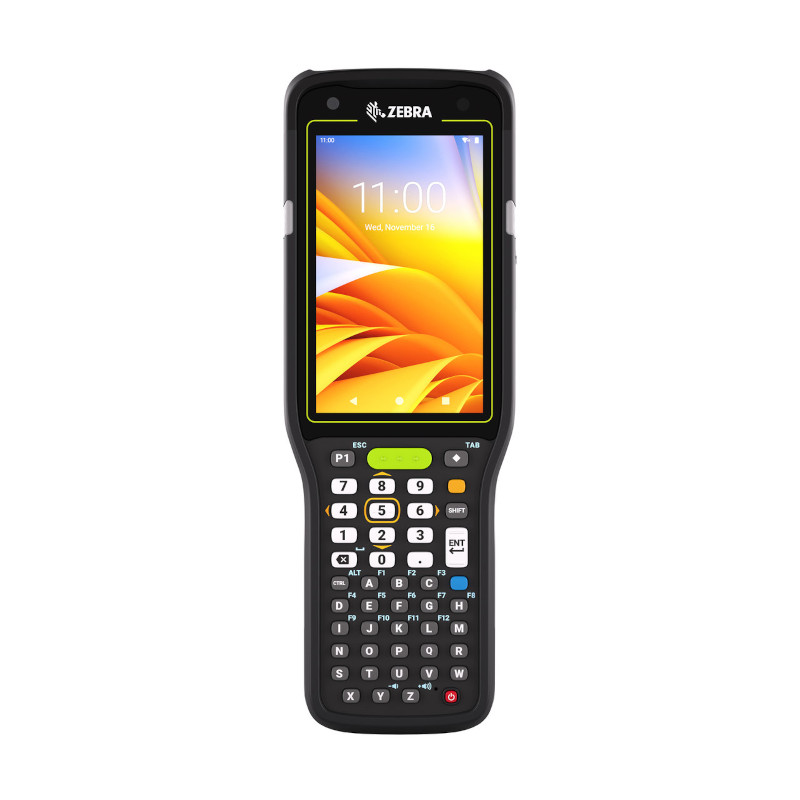 Zebra MC3400 and MC3450 are Android mobile computers with a physical keypad and the successors to the MC33 series, built for warehouses and light manufacturing: receiving, picking, stocktaking and shop-floor reporting. They come in a gun-style version and a straight-shooter version, and their look and handling are nearly identical to the MC33, so workers switch over without retraining. MC3400 works on Wi-Fi, while MC3450 adds a 5G modem, GPS and nano SIM and eSIM slots. Qualcomm 4490 (octa-core, 2.4 GHz), up to 6 GB RAM and 128 GB storage: according to the manufacturer, nearly 2.5 times the processing power of the previous generation, with headroom for several apps running at once. Storage can be expanded with a microSD card up to 2 TB. IP65 and IP67 including the battery, 2.4 m drops to concrete: the device can be submerged and hosed down. Across the full operating temperature range (−20 to 50°C) it survives 1.8 m drops, and it passes 4000 tumbles from 1 m. Scan engines with IntelliFocus technology: the SE55 reads barcodes from in hand to more than 12 m away and the SE58 up to 30.5 m, so labels on the upper rack levels can be scanned from the floor. 7000 mAh hot-swappable battery: the battery is replaced without switching the device off, with temporary session persistence. PowerPrecision+ shows the health of each battery, making it easy to retire those that no longer hold a charge. An optional battery with a BLE beacon, combined with a Device Tracker license, helps locate a lost device, even when it is discharged. 29, 38 or 47-key keypad: larger keys with more spacing make it easier to enter quantities and codes, also with gloves on. Wi-Fi 6E and Bluetooth 5.3: three Wi-Fi bands (2.4, 5 and 6 GHz) and fast roaming between access points. MC3450 connects over 5G (data only) to public and private networks. 4-inch display with Corning Gorilla Glass and cameras: works with a bare finger, gloves or a stylus (stylus sold separately). A 13 MP rear camera with autofocus and flash and a 5 MP front camera let you document a damaged delivery or photograph a bill of lading. Check camera availability in the description of the chosen variant. Compatibility with MC33 chargers and batteries: when replacing a fleet, cradles and batteries from the previous generation remain in use. The accessory range is wide, from single and multi-slot cradles to holsters and vehicle holders, but charging cradles are usually sold without a power supply and cables, so include them in the budget. Configuration: Standard, Expanded or Full Featured. Standard has 4 GB RAM and 64 GB storage, a 350-nit display and the SE55 scan engine, and its upgrade path ends at Android 15. Expanded has 6 GB RAM, a 600-nit display with automatic brightness and an upgrade path to Android 18. Full Featured adds 128 GB storage. If the device is to stay in service for many years, choose Expanded or Full Featured. Connectivity. MC3400 is enough within the company Wi-Fi network. Choose MC3450 for yards, ports and field work: it has 5G, GPS and two SIMs (nano SIM and eSIM). MC3450 is available only in Expanded and Full Featured configurations. Housing. The gun-style version (528 g) has a scan trigger and suits work that is mostly scanning. The straight-shooter version is lighter (442 g) and has scan buttons on the keypad and on the sides. Scan engine. The SE55 comes with the Standard configuration. In Expanded and Full Featured you choose between the SE4770 with a red laser aimer, which reads barcodes even in bright sunlight and captures documents, and the SE58 with a range of up to 30.5 m for scanning containers, pallets and the top racks. Keypad. Numeric (29 keys) for entering quantities, function-numeric (38) or alphanumeric (47) when text is entered too. The Standard configuration comes with 29 and 38-key keypads. Terminal emulation. Ivanti Velocity comes preinstalled and licensed: for the lifetime of the device on gun-style Expanded and Full Featured models, and as a 12-month subscription on the gun-style Standard and the straight-shooter Expanded and Full Featured models.
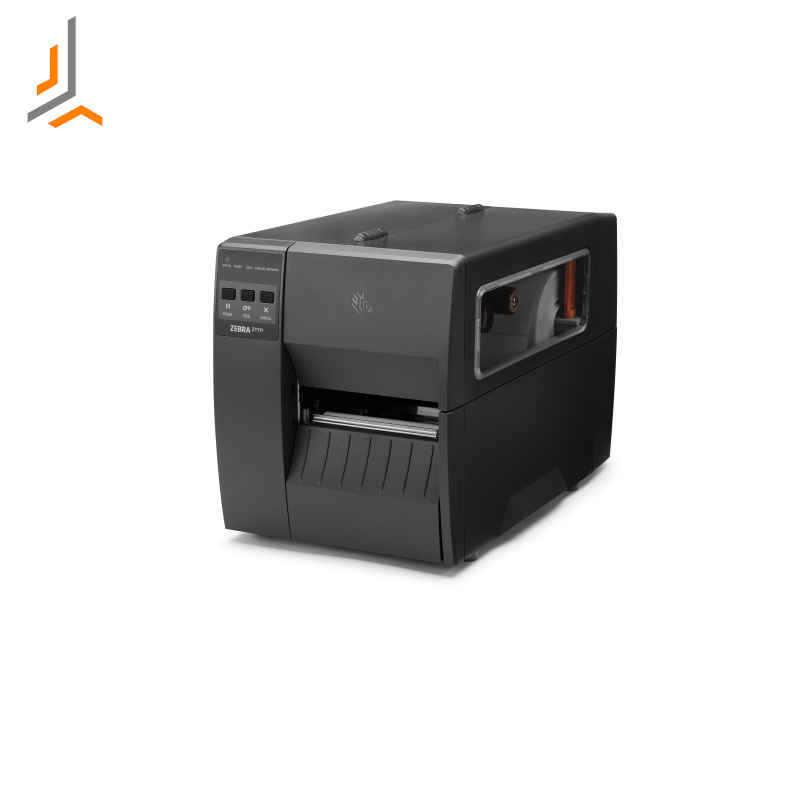 Zebra ZT111 is a semi-industrial thermal or thermal transfer label printer with a 104 mm print width. It is built for companies that have outgrown a desktop printer: those printing labels in series and across several shifts in warehousing, logistics and production. It has a metal frame but a plastic housing, which is the trade-off in this class. In return, it takes large label rolls and long ribbons. Printing up to 254 mm/s at 203 dpi, up to 152 mm/s at 300 dpi: a batch of shipping or product labels prints without waiting at the printer. Label rolls up to 203 mm in diameter on a 76 mm core, ribbons up to 450 m: labels and ribbon are changed far less often than in desktop printers, and long runs print without interruption. Metal frame, plastic housing and a bi-fold cover with a large window: the structure is stable, although the housing is plastic, which is worth knowing for harsh conditions. The bi-fold cover needs less clearance above the printer, and the window shows how many labels are left on the roll. Side loading with color-coded touch points and adjustable media sensors: the roll and ribbon are loaded without training. The printer handles continuous, die-cut, notched and black-mark labels from 19.4 to 114 mm wide. Simple operation and maintenance: 3 buttons and 5 status LEDs, platen roller and printhead replaced without tools. Built-in analytics and a printhead element sensor let you plan maintenance in advance. USB, RS-232, Ethernet, USB host and Bluetooth Low Energy as standard: the printer connects to the network without extra cards. The NFC Print Touch tag pairs it with a phone or tablet with a single tap. ZPL and EPL languages and emulation of other printer brands: the ZT111 can replace an older printer without changing label formats or writing new code on the system side. Secure Boot, Protected Mode and a decommissioning process: settings cannot be changed by accident, and before the printer is moved its configuration and files are wiped in a single process. Print technology. Direct thermal needs no ribbon and suits short-life labels such as shipping labels. Thermal transfer with a ribbon gives a durable print for product and warehouse labels that must last for months. The direct thermal version operates from 0°C, thermal transfer from 5°C. Resolution. 203 dpi is enough for logistics labels and prints fastest (up to 254 mm/s). Choose 300 dpi for small labels, fine text and dense 2D codes, at the cost of speed (up to 152 mm/s). EPL is available only on 203 dpi models. Connectivity. The standard ports are enough on a wired network. An 802.11ac Wi-Fi card or a second Ethernet card are options that can also be added later, without replacing the printer. Media handling. Tear-off is standard. The peeler presents the label separated from the liner, ready for manual application, and the guillotine cutter cuts continuous media and labels to length. Standalone printing. The ZKDU keyboard display unit lets you print stored label formats without a computer.
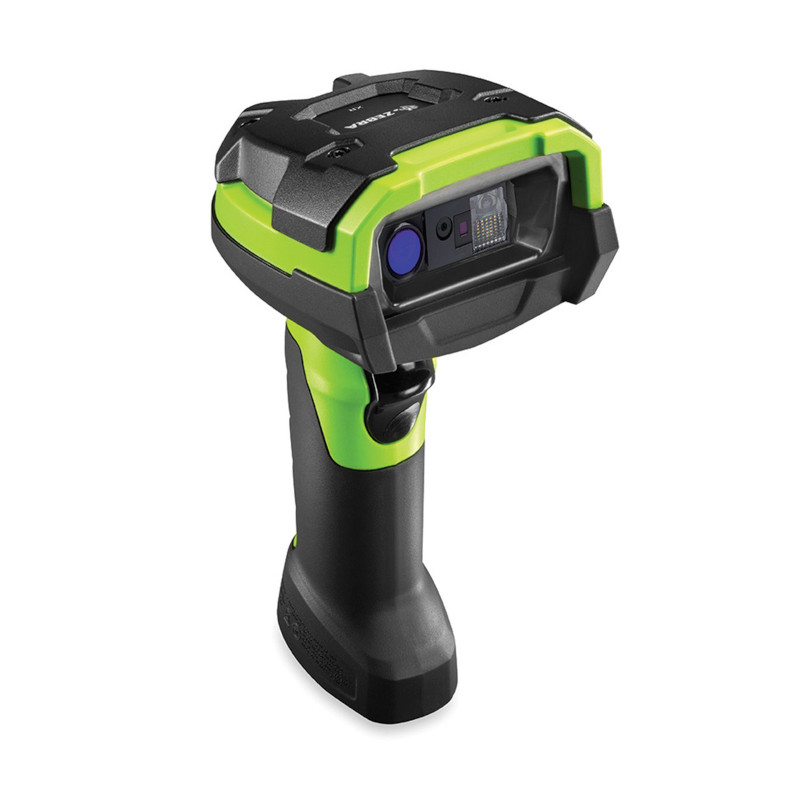 Zebra DS3608 and DS3678 are ultra-rugged 1D and 2D barcode scanners from the DS3600 series for production halls, warehouses and cold stores. They survive drops to concrete, tumbles and being thrown around the workstation, so they work where ordinary scanners do not last. DS3608 is the corded version, DS3678 the cordless Bluetooth version for forklifts and rack work. The series includes several optics versions: from standard range, through very long range, to reading DPM codes marked on parts. 2.4 m drops to concrete across the full operating temperature range: at room temperature the manufacturer specifies 3 m, plus 7500 tumbles from 1 m. The scanner handles everyday drops from the workstation and forklift without downtime. IP65 and IP68 sealing: dust, water and jet washing do not take the scanner out of service. Operation from −30°C for the corded version, from −20°C for the cordless one: for cold stores and freezers. When moving between a freezer and the hall, the manufacturer recommends a heated holder to reduce condensation. Class 1 Bluetooth on the DS3678: at least 100 m range in open air, so the forklift operator scans labels on racks and pallets without getting off. Wi-Fi Friendly mode limits interference with the warehouse network, and Virtual Tether alerts when the scanner goes out of range. PowerPrecision+ 3100 mAh battery: over 100,000 scans per charge, and over 80,000 on the XR version. A gauge on the scanner shows the charge level, and the cradle contacts are rated for 250,000 insertions. PRZM technology and up to 20 codes in one scan: damaged, dirty and poorly printed labels are read on the first try. A read is confirmed by LEDs, a beep, vibration and illumination of the barcode. USB, RS-232 and keyboard wedge: the scanner connects to a PC, mobile computer or POS. One cradle serves up to 7 cordless scanners. Industrial Ethernet through Network Connect: with the manufacturer's adapter the scanner sends data to the machine network over EtherNet/IP, Profinet, Modbus TCP or TCP/IP, without third-party converters. FeatureDS3608DS3678ConnectioncableBluetooth 4.0, corded cradleOperating temperature−30 to 50°C−20 to 50°CPowerthrough the cable3100 mAh batteryFreedom of movementcable lengthat least 100 m in open airWeight305 g407 gKeypad and displaynoneon KD variants Corded or cordless. DS3608 for a fixed production station and the lowest temperatures. DS3678 for forklifts and wherever the operator moves away from the station. SR and HP. SR is enough for typical labels: it reads a 20 mil Code 128 from up to about 71 cm. HP reads the same code from about 114 cm, and also captures photos, documents and text (OCR). XR, very long range. XR reads codes from a few centimeters to tens of meters: a 15 mil Code 128 from about 4 m, and large 100 mil codes from more than 26 m. The green laser aimer stays visible across the whole decode range. XR is the successor to the ER version and according to the manufacturer offers over 40% more range. HD and DP. HD is for very small, dense codes. DP reads DPM codes that are dot-peened, laser-etched, chemically etched or ink-marked on parts, including shiny and curved surfaces, as well as regular labels. KD, keypad and display. DS3678 variants with 19 keys and a color display let the operator key in data such as a quantity without walking to a PC. Kit. Some variants are the scanner only, and some are kits with a cable, cradle and power supply. In kits, check the AC line cord: it may be a US cord or missing altogether, in which case we add a European one. Line integration. At automated stations choose a kit with the Ethernet adapter, in the Profinet or EtherNet/IP version. The manufacturer provides a 36-month warranty on the scanner and cradle and 12 months on the battery.
 Zebra ZD220 and ZD230 are small desktop label printers for direct thermal or thermal transfer printing with a 104 mm print width. They work well where label volumes are low and budget matters: fixed asset tagging, offices, small warehouses, shipping and production workstations with few prints. ZD220 is the basic USB model, while ZD230 prints faster, takes a longer ribbon and can be factory-fitted with Ethernet or Wi-Fi. For large runs and multi-shift work, a semi-industrial printer such as the Zebra ZT111 is a better fit. Printing up to 102 mm/s (ZD220) or 152 mm/s (ZD230), 203 dpi: labels are ready on demand, and the resolution is enough for 1D and 2D barcodes, text and simple logos. OpenACCESS clamshell design: the printer opens like a lid and the roll is loaded without training, which matters more than speed for occasional printing. Rolls up to 127 mm in diameter on 12.7 or 25.4 mm cores, media width from 25.4 to 112 mm: die-cut and continuous labels, black-mark media, tags, wristbands and fan-fold media. 74 m ribbon, and on the ZD230 also 300 m: the longer ZD230 ribbon means roughly four times fewer changes. ZPL II, EPL 2 and XML: the printer works with software prepared for Zebra printers, so it can replace an older model without changing label formats. One button and one status LED: operation comes down to loading the roll and printing, with no menus or settings on the device. Compact size and a weight of 1.1 kg (direct thermal) or 1.7 kg (thermal transfer): the printer fits on an ordinary desk or a shelf at the workstation. 2-year manufacturer warranty and ENERGY STAR: the warranty runs from the shipping date, and low power consumption matters when the printer stays on all day. ZD220 or ZD230. The ZD220 is enough for occasional printing over USB. Choose the ZD230 when the printer must work on the network (factory Ethernet or 802.11ac Wi-Fi with Bluetooth 4.1), print faster or use the 300 m ribbon. The ZD230 also has more memory for formats and fonts (256 MB Flash vs 128 MB). Print technology. The direct thermal version is smaller, lighter and needs no ribbon, but the print fades over time, so it suits short-life labels such as shipping labels. The thermal transfer version gives a durable print, needed for example on fixed asset labels. Media handling. Both printers can have a factory peeler that presents the label ready to apply. The ZD230 can also have a factory cutter. Connectivity. Ethernet and Wi-Fi on the ZD230 are factory-installed, so they must be chosen at purchase. When to choose another printer. The ZD220/ZD230 operates from 4.4 to 41°C, so it is not suitable for cold stores or unheated halls. For large runs and multi-shift work, the semi-industrial ZT111 is a better choice: it takes rolls up to 203 mm and a 450 m ribbon.
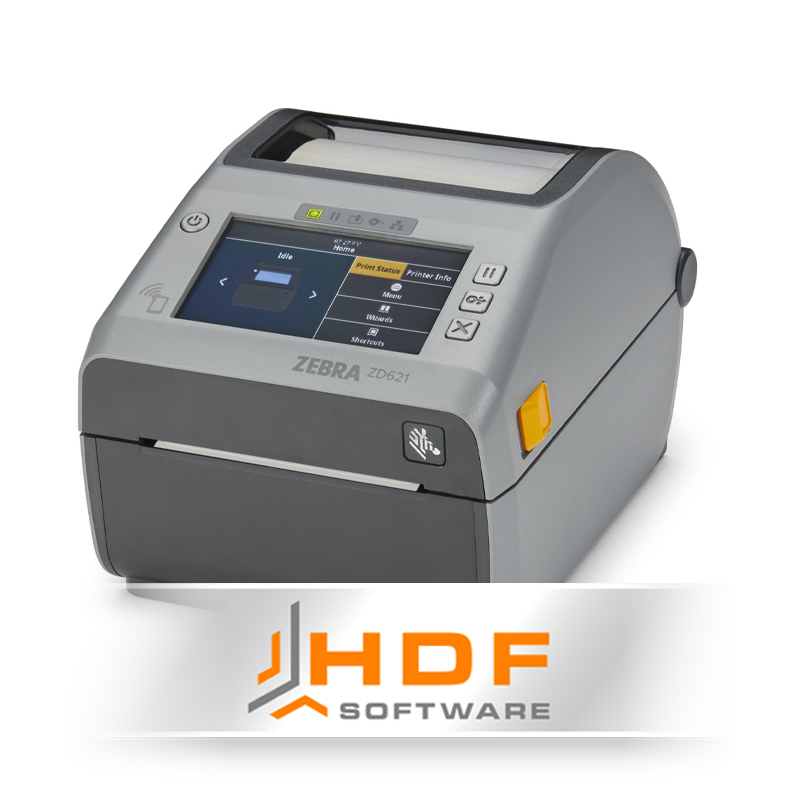 Zebra ZD621 and ZD621R are premium desktop label printers for direct thermal or thermal transfer printing, with a print width of up to 104 mm (203 dpi) or 108 mm (300 dpi). They fit the same places as the lower-cost ZD220/ZD230, but do better when labels are small and dense, the printer must be networked from day one, or it has to print without a PC. ZD621R also prints and encodes UHF RFID labels. The series is the successor to the ZD620 printers. Printing up to 203 mm/s at 203 dpi or up to 152 mm/s at 300 dpi: 300 dpi gives sharp fine text and readable dense 2D codes on small product labels. Ethernet, RS-232, USB 2.0 and USB host as standard: the printer works on the network out of the box. Bluetooth Low Energy is used for setup from a phone. Optional Wi-Fi 6 with Bluetooth 5.3: the module is factory installed or added later, without replacing the printer. Older variants come with Wi-Fi 5 (802.11ac) and Bluetooth 4.2. 4.3-inch color touch display with setup wizards: optional on the ZD621, on every ZD621R variant. The base version has 3 buttons and 5 status icons. Printing without a PC: on models with the display the operator selects a stored format on the printer and enters data with a scanner or keyboard connected to the USB host port. Optional 2750 mAh battery: according to the manufacturer it lasts a shift of printing at full speed and works with the cutter and peeler. The printer can sit on a cart and print labels where they are needed. ZPL and EPL plus emulations of other brands: the printer can replace an older Zebra and, with the Printer Emulations app, printers from other manufacturers too, without changing label formats. It also prints PDF files directly. Rolls up to 127 mm, 74 m or 300 m ribbon: plus a peeler with label-present sensor and a cutter, factory installed or added later. PrintSecure blocks unauthorized access to the networked printer. FeatureDirect thermalThermal transferRibbonnot needed74 m or 300 mPrint durabilityfades over timedurable, depending on the ribbonLabel width15 to 108 mm15 to 118 mmDimensions221 × 177 × 151 mm267 × 202 × 192 mmWeight1.6 kg2.5 kgLinerless labelson linerless variantsnoneRFID (ZD621R)noneyes ZD621 or ZD621R. The ZD621R has a built-in Zebra RE40 RFID reader/encoder (UHF EPC Gen 2 V2.1, RAIN RFID) and the touch display. Choose it when labels must carry an RFID tag. Otherwise the ZD621 is enough. Resolution. 203 dpi for address and logistics labels, and the fastest printing. 300 dpi for small product labels, fine text and 2D codes. Label handling. The base version has a tear-off edge. The peeler presents the label separated from the liner, ready to apply, and the cutter cuts labels and continuous media to size. Both options can also be added later. Connectivity. If the printer sits next to a network socket, Ethernet is enough. Choose a Wi-Fi variant for mobile stations and places without cabling. Display. If the printer is to work without a PC or is used by different people, choose the version with the color touch display. When to choose another model. For occasional USB printing the lower-cost ZD220/ZD230 is enough. For large runs and multi-shift work the semi-industrial ZT111 with 203 mm rolls and 450 m ribbons is a better fit. The ZD621 operates at 4.4 to 41°C. The box includes a power supply, power cords and a USB cable. The manufacturer provides a warranty of at least 2 years.
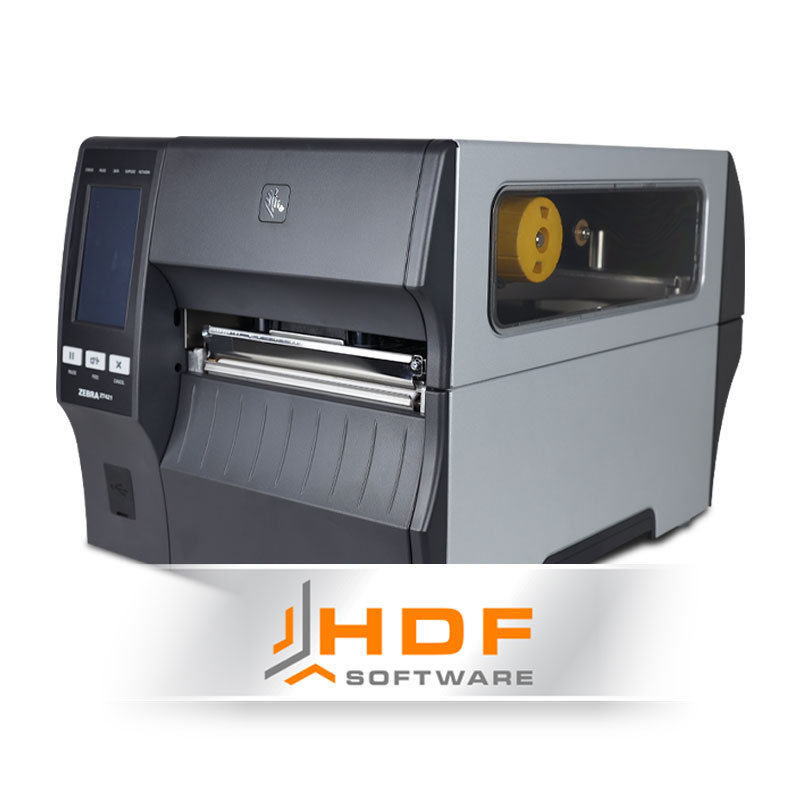 Zebra ZT421 is the wide, 6-inch model of the ZT400 series: a semi-industrial thermal and thermal transfer label printer with a metal frame and metal cover and a print width of up to 168 mm. It is the choice when a label does not fit into the standard 104 mm: large logistics labels, labels for shipping cases, pallets and bulky products. It runs continuously at production lines and in warehouses, with the same operation as the narrower ZT411. Print width up to 168 mm on media up to 178 mm: a full set of logistics data, several barcodes and readable text fit on one label without shrinking the font. Speed up to 305 mm/s: even large labels are printed on demand, at the pace of the line or the shipping area. 203 or 300 dpi resolution: 203 dpi is enough for large logistics labels, 300 dpi gives sharper text and dense 2D codes. Metal frame and bi-fold metal cover: the printer weighs about 18 kg and is built for multi-shift shop-floor work. The gears are reinforced with carbon fiber, and the cover folds to the sides, so little clearance is needed above the printer. 4.3-inch color touch display with an icon-based menu: language, settings and connectivity are changed without a manual, and color status alerts are visible from across the workstation. Backlit, color-coded media path and side loading: the wide label roll (up to 203 mm in diameter on a 76 mm core) and ribbon up to 450 m are loaded reliably even in dim light. Two USB host ports alongside USB, RS-232, Ethernet and Bluetooth: a scanner and a keyboard can be connected at the same time, and the configuration is copied to other printers with a USB drive. Link-OS and Zebra DNA: remote fleet management, integration with SOTI MobiControl and AirWatch, and the Network Connect option for direct connection to an industrial Ethernet network. ZT421 or ZT411. Choose the ZT421 for labels wider than 104 mm. When 4-inch labels are enough, the ZT411 is faster (up to 356 mm/s) and offers options not available on the ZT421: 600 dpi, on-metal RFID, linerless printing and the automated labeling kit. Resolution. 203 dpi for logistics and pallet labels, 300 dpi for product labels with fine text. EPL works only on 203 dpi models. Media handling. Tear-off is standard. Options: guillotine cutter with catch tray, peeler (media up to 171 mm), liner take-up and a factory-installed full-roll rewinder for printed labels. Connectivity. The two open slots take a Wi-Fi 6 (802.11ax) card with Bluetooth 5.3 or a Wi-Fi 5 (802.11ac) card with Bluetooth 4.2, a second Ethernet port, a parallel port or an applicator interface. RFID. UHF RFID (EPC Gen2 v2.1, ISO/IEC 18000-63) is available factory-fitted in the ZT421 RFID model or as a module installed on site in a standard ZT421. The printer selects the optimal encoding settings automatically.
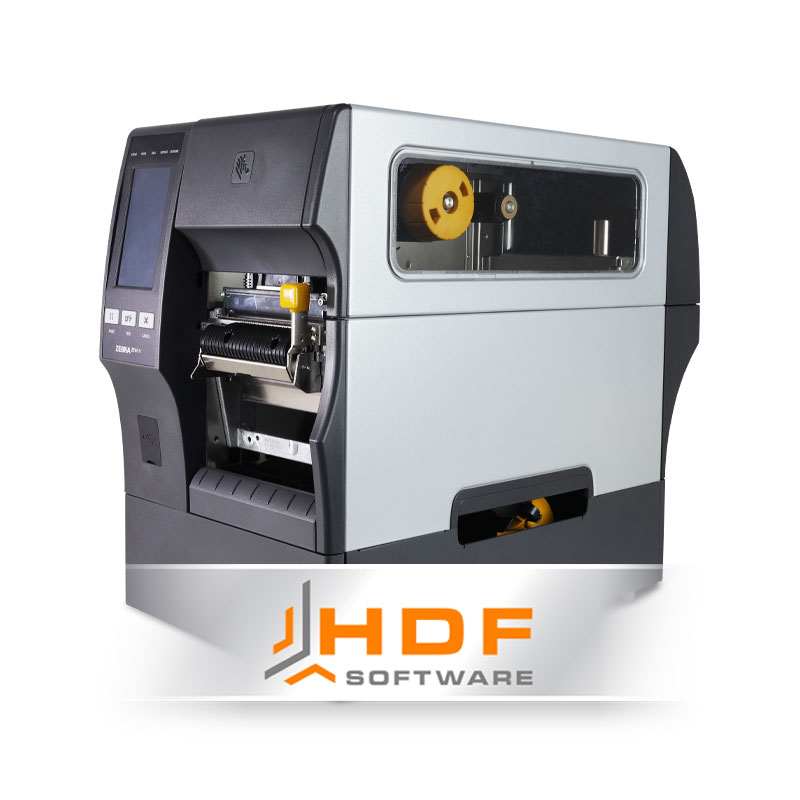 Zebra ZT411 is a semi-industrial thermal and thermal transfer label printer with a metal frame and metal cover and a 104 mm print width. It is built for continuous operation at production lines, in warehouses and logistics centers, where labels are printed in series around the clock. What sets it apart from simpler semi-industrial printers such as the ZT111 is its metal housing, speeds up to 356 mm/s, resolution up to 600 dpi, a color touch display and upgrade options for RFID, linerless printing and print-and-apply. Metal frame and bi-fold metal media cover with a large window: built for multi-shift work on the shop floor and in the warehouse. The gears are reinforced with carbon fiber, and the high-retention USB cable is hard to pull out by accident. The window shows how many labels are left on the roll. Printing up to 356 mm/s with a short time to first label: the label is ready the moment the operator needs it, and large batches do not block the workstation. 203, 300 or 600 dpi resolution: from logistics labels to very small labels with fine text and dense 2D codes. 4.3-inch color touch display: settings, language and connectivity are changed from an icon-based menu without a manual. Color-coded status and error alerts are visible from a distance, so it is clear right away what the printer needs. Side loading with a backlit, color-coded media path: the label roll (up to 203 mm in diameter on a 76 mm core) and ribbon (up to 450 m) are loaded quickly, even in poorly lit areas. USB, RS-232, Ethernet, Bluetooth and two USB host ports as standard: a scanner and keyboard can be connected at the same time, and a USB drive can copy the configuration to other printers. Two open slots take additional connectivity cards. Protective printhead coating and printhead element detection: the coating reduces printhead wear in direct thermal mode, and element detection helps maintain print quality. Link-OS and Zebra DNA tools: networked printers are managed remotely, one by one or as a fleet (Printer Profile Manager Enterprise as an option), also from SOTI MobiControl or AirWatch. The Network Connect option connects the printer directly to an industrial Ethernet network without extra hardware. Resolution. 203 dpi is enough for logistics and pallet labels. 300 dpi gives sharper small product labels. Choose 600 dpi for miniature labels. EPL is available only on 203 dpi models. Width. The ZT411 prints up to 104 mm. For wider labels there is the ZT421 with up to 168 mm. Media handling. Tear-off is standard. Options include a guillotine cutter with catch tray, a peeler, a liner take-up and a factory-installed full-roll rewinder for printed labels. Connectivity. Two slots take a Wi-Fi 6 (802.11ax) card with Bluetooth 5.3 or a Wi-Fi 5 (802.11ac) card with Bluetooth 4.2, a second Ethernet port, a parallel port or an applicator interface. RFID. The UHF RFID module (EPC Gen2 v2.1, ISO/IEC 18000-63) is installed on site, also later. For the ZT411 there is also a version for thicker on-metal RFID labels for metal containers and assets (not on 600 dpi models). Linerless printing. According to the manufacturer, ZeroLiner fits up to 50% more labels per roll and leaves no liner waste. It is available as a factory model (direct thermal only) or as an upgrade kit for existing ZT411 printers. Automation. A field-installable kit (extended peel mechanism, take-up spindle and applicator interface card) prepares the ZT411 for automated labeling systems.
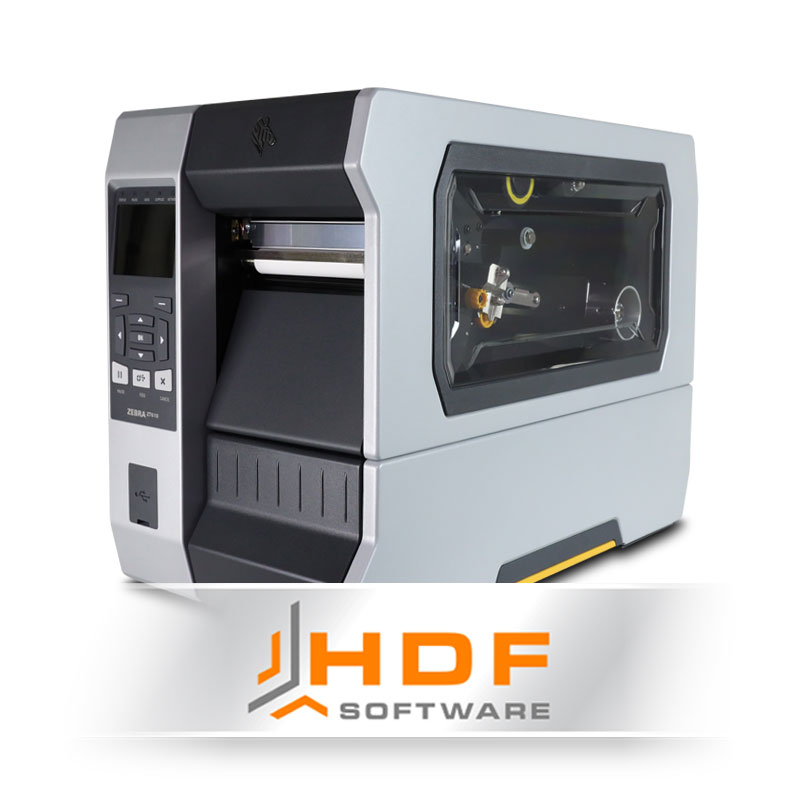 Zebra ZT610 is an industrial label printer for the heaviest workloads and the successor to the 110Xi4: all-metal construction, printing up to 356 mm/s, rolls up to 203 mm and a 450 m ribbon. It is built for large distribution centers and warehouses where labels are printed in series around the clock, many people operate it across shifts, and there is dust and dirt around. Where print volumes are lower, the lower-cost semi-industrial ZT411 is enough. Metal construction with no vents or cooling fans: a built-in thermal management system keeps dust and debris out. The metal frame and bi-fold metal cover are designed for years of 24/7 operation. Printing up to 356 mm/s at 203 dpi, 300 dpi or 600 dpi: shipping and pallet labels never wait for the printer, even at order peaks, and higher resolutions handle small labels with fine text. 4.3-inch color touch display that turns red on error: the operator sees the problem from across the zone, and the icon-based menu is simple for every shift. The marked media path changes color when there is a media problem, and QR codes link to videos that show how to fix the error. Label rolls up to 203 mm in diameter on a 76 mm core and a 450 m ribbon: media is changed rarely, and side loading with a lit path shortens changes and training for new staff. Fast maintenance: the printhead is replaced without disconnecting cables, printhead pressure is set on a scale with color-coded indicators, and the manufacturer states longer printhead life, meaning lower replacement costs. USB 2.0, RS-232, Gigabit Ethernet, Bluetooth and two USB host ports as standard: two open slots take Wi-Fi 6 (802.11ax) with Bluetooth 5.3 or Wi-Fi 5 (802.11ac) with Bluetooth 4.2, a parallel port, an extra Ethernet port or an applicator interface. 1 GB RAM and 2 GB Flash: four times the RAM of the ZT411 (256 MB). Room for many formats, fonts and graphics, and fast processing of complex labels under a constant stream of jobs from the system. Zebra DNA and Link-OS: Printer Profile Manager Enterprise for monitoring the whole fleet from a browser, integration with Workspace ONE and SOTI Connect, and Cloud Connect for encrypted connections to on-premise or cloud servers. Resolution. 203 dpi gives the highest speed for shipping and pallet labels. Choose 300 dpi for smaller product labels. 600 dpi is available only on the ZT610, including the ZT610 Microlabel version that prints labels as small as 3 mm on media from 12 mm, with more precise print registration, at up to 152 mm/s. Width. The ZT610 prints up to 104 mm on media from 20 to 114 mm. For wider labels there is the ZT620 with up to 168 mm. Media handling. Media options are user-installable thanks to built-in connectors: rewinder, peeler with liner take-up, guillotine cutter and an applicator interface for automated labeling. RFID. For UHF RFID encoding there is the factory ZT610 RFID model, and the RFID module can also be easily added to a printer already in service. Operating conditions. The ZT610 operates from 5 to 40°C in thermal transfer mode and from 0 to 40°C in direct thermal mode, so it needs a heated hall. It weighs 22.7 kg and needs a stable table or workstation.
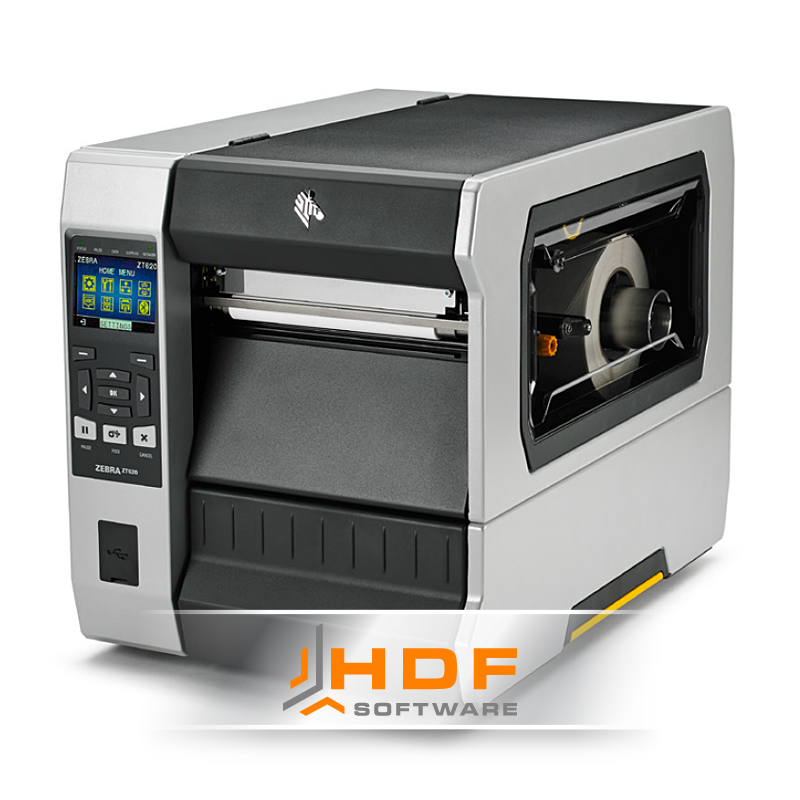 Zebra ZT620 is the wide, 6-inch model of the industrial ZT6 series and the successor to the 170Xi4: it prints labels up to 168 mm wide on media up to 180 mm, continuously around the clock. It is the choice for large pallet and shipping labels, labels for shipping cases and documents that travel with a shipment, for example in A5 format (148 x 210 mm). It shares the metal, fanless construction of the narrower ZT610, so it handles dusty warehouses and many operators across shifts well. Print width up to 168 mm and print length up to 2032 mm: a full set of logistics data, several barcodes and text readable from a distance fit on one label without shrinking the font. Printing up to 305 mm/s at 203 or 300 dpi: even large labels print at the pace of the shipping area, with no job queue. Metal housing with no vents or fans: heat is handled by a built-in thermal management system, so dust does not reach the mechanism. The construction is built for years of 24/7 operation. 4.3-inch color touch display that turns red on error: printer status is visible from a distance, and the menu icons are clear to any operator. The media path changes color when there is a media problem, and QR codes open how-to videos. Rolls up to 203 mm on a 76 mm core and 450 m ribbons up to 170 mm wide: wide media is loaded from the side along a lit path, and changes are rare. Printhead replaced without disconnecting cables: with a wide printhead, easy replacement and pressure adjustment on a scale shorten downtime, and the manufacturer states longer printhead life. USB 2.0, RS-232, Gigabit Ethernet, Bluetooth and two USB host ports: the two open slots take Wi-Fi 6 (802.11ax) with Bluetooth 5.3 or Wi-Fi 5 (802.11ac) with Bluetooth 4.2, a parallel port, a second Ethernet port or an applicator interface. 1 GB RAM, 2 GB Flash and Zebra DNA: large, complex labels are processed quickly, and the printer fleet is managed remotely via Printer Profile Manager Enterprise, Workspace ONE or SOTI Connect. ZT620 or ZT610. Choose the ZT620 for labels wider than 104 mm. When 4-inch labels are enough, the ZT610 is faster (356 mm/s), lighter (22.7 kg vs 26 kg) and is the only one with 600 dpi and a micro-label version. Resolution. 203 dpi for pallet and shipping labels, 300 dpi for labels with fine text or dense 2D codes. Media handling. Rewinder, peeler with liner take-up, guillotine cutter and applicator interface are user-installable thanks to built-in connectors. RFID. For UHF RFID encoding there is the factory ZT620 RFID model, and the RFID module can also be added to a printer already in service. Operating conditions. 5 to 40°C for thermal transfer, 0 to 40°C for direct thermal. The printer weighs 26 kg, so it needs a stable table.
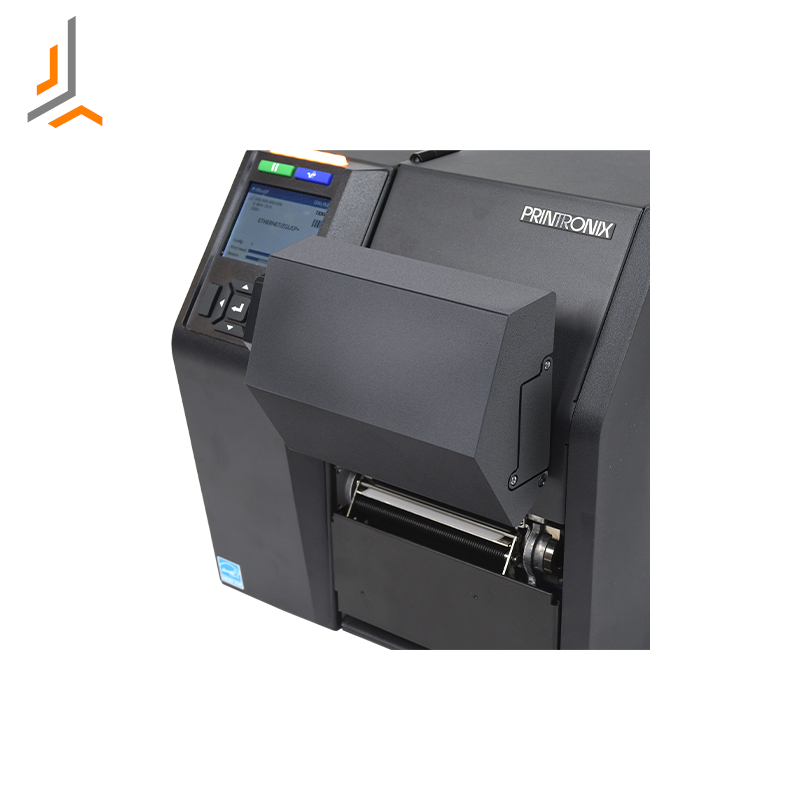 Printronix ODV-2D industrial printers of the T8000 series have two versions: 4-inch (T8000 4' ODV-2D) and 6-inch (T8000 6' ODV-2D) maximum print width. These printers are distinguished primarily by their built-in barcode verifier, which evaluates barcodes and examines their correctness, already during the printing process. If the printed barcode is incorrect, the printer will print the incorrect label with a distinctive pattern (such as a checkerboard), and then print the label again, this time with a correctly printed barcode. When the printer detects an incorrectly printed code, it sends a message to the 3.4-inch color LCD display. In addition, it stores all reports of detected errors. The verifier checks up to 50 1D and 2D barcodes at the same time while printing the label. Not only is the correctness and quality of the print verified, but also the code's compliance with ISO standards. In addition to verifying code compliance, data validation is also carried out, all during the label printing process. The device has navigation buttons that make using the intuitive menu even easier. It has as many as two motors, which allow the Printromix ODV-2D T800 printer to work continuously, 24 hours a day, 365 days a year. Thanks to automatic heat control, the printer supports longer head life. In addition, the T8000 ODV-2D provides high print quality - 203 dpi (model T8204) and 300 dpi (model T8304). It prints by thermal and thermal transfer, and has wired (Ethernet, GPIO, Parallel, RS-232, USB) and wireless (Wi-Fi standard 802.11ac) interfaces. The rugged design will work well both on the production floor and in the warehouse.
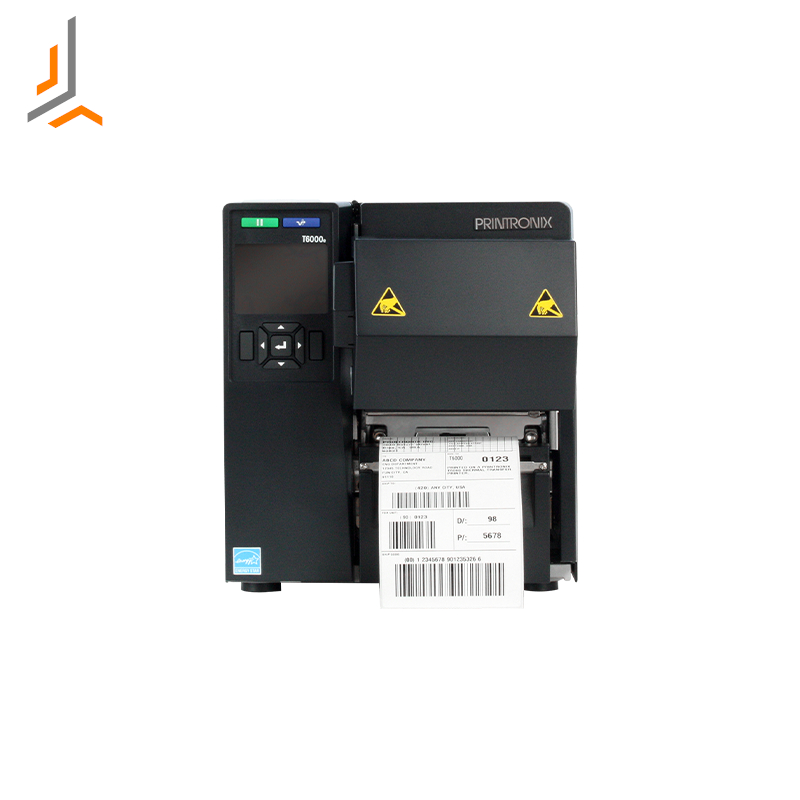 The ODV-2D T6000e barcode label printer prints labels with a maximum width of up to 4.1' (104 mm). What sets it apart is its built-in verifier, which checks the validity of barcodes, evaluates their quality and performs data validation, during the label printing process. Thanks to the built-in barcode verifier, you get 100% assurance that incorrectly printed codes will not reach the customer, because after detecting a misprinted code, the printer prints the entire label, and then prints it again, this time with the correct version of the code. All this happens without the help of an employee, which also gives you 100% automation. The device creates detailed reports based on the errors it detects, so you always know the cause. The T6000e also has the ability to print, encode and verify RFID tags, all at the same time. Each of the 3 models prints at a different resolution: T6204e - 203 dpi, T6304e - 300 dpi and T6604e - 600 dpi. It uses thermal and thermal transfer printing methods, is equipped with an LCD display with helpful buttons, and has a reinforced construction and steel cover, indicating its intended use for the industrial sector. The ODV-2D T600e supports 1 and 2D codes and is compatible with most printer programming languages. It has a built-in barcode GPS that immediately detects barcodes on the label. The verifier is capable of detecting and examining up to 50 codes simultaneously.
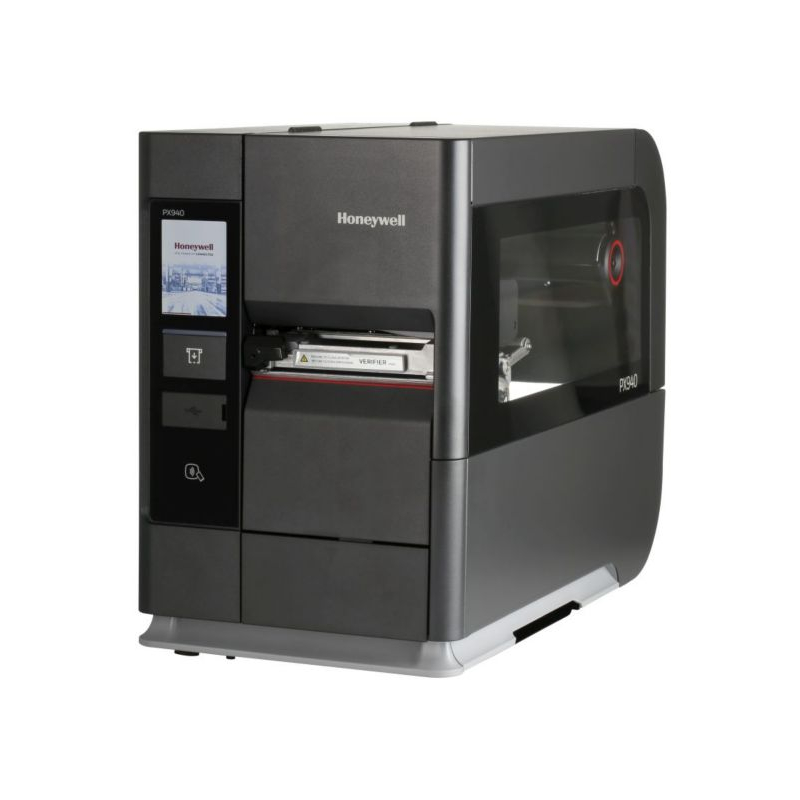 Honeywell PX940 is an industrial label printer with built-in barcode verifier. It is a state-of-the-art printing device, which, thanks to the built-in barcode quality verifier, is able to independently detect the code and assess whether it was printed correctly and to what extent. If the barcode was printed incorrectly, the Honeywell PX940 printer will print the label, imprinting a characteristic grid on it, indicating that the label is not suitable for shipping. This is particularly facilitating for businesses where every barcode must be of the highest quality. This helps avoid costly errors associated with incorrectly printed barcodes on the label, which generates increased savings. The printer detects both 1D and 2D barcodes. The verifier reads labels with a maximum width of up to 108 mm. The Honeywell PX940 barcode verifier printer is characterized by its robustness, as it is made of durable metal, ensuring its durability in industrial conditions. It is compatible with many printer programming languages, including ZPL-II. It uses Smart Printing technology, which does not require a computer connection. It has a color touchscreen display that is extremely easy to use. The device provides precise label printing, with an accuracy of up to 0.2mm, and prints labels at speeds reaching up to 35 cm/s! It has dimensions of 50.6cm x 39.87cm x 26.1cm and weighs 23.5kg. It prints labels by thermal and thermal transfer in resolutions: 203 dpi, 300 dpi or 600 dpi. It allows wireless communication via Bluetooth LE or NFC and has a 10/100 Mbps Ethernet network. It is just what you need for 100% accuracy of your logistics labels.
 The REA VeriMax barcode verifier, matrix code verification systems is a state-of-the-art device for verifying both 1D and 2D matrix bar codes that can be used in all industrial sectors. The verifier is specially designed for fully integrated installation in production lines, REA VeriiMax can also be tripod mounted as a stand-alone bar code verification system. Thanks to its two operating modes it is suitable for individual work in the production line as required, but also for manual random verification. The measurement system is based on a high-precision CMOS camera system and the design minimizes the influence of ambient light, resulting in accurate and reproducible measurement results and quality evaluation according to ISO/IEC standards. The REA VeriMax can reliably verify up to five complex bar codes per second, thanks to its small dimensions and its individually programmable software, the verifier has a place in every plant.
 The REA PC-Scan LD4 is a 1D barcode verifier, designed with the highest precision to test the quality of barcodes with a laser beam. It was developed in compliance with the international standards for barcode printing and verification. The verifier consists of a red laser diode and a special motor, which ensures a constant speed of movement of the scanning head. The code quality verification takes place in two stages. In the first stage, ISO/IEC compliance is checked. In the second, compliance with Symbology specifications and standards is checked. The display on the verifier indicates the final statement in the form of success or failure and details of the printout, which allows an immediate and accurate analysis of the barcode quality and thus the optimization of the code quality. The REA PC-Scan LD4 is equipped with an automatic contrast calibration function before each scan, allowing the performance to remain constant in relation to changes in light. The REA PC-Scan LD4 combines the latest technology, process reliability and intuitive operation.
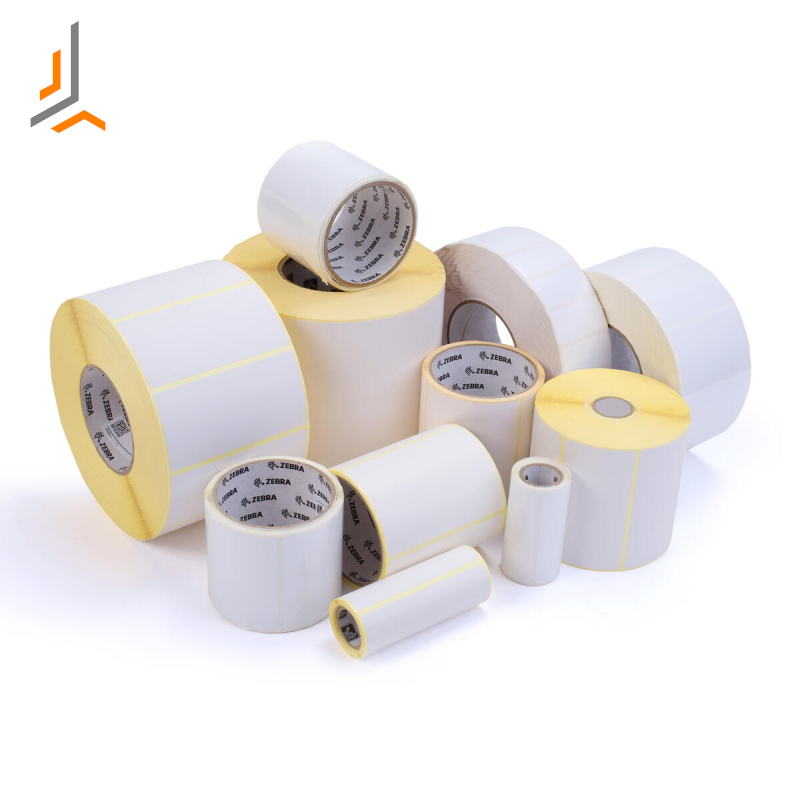 Zebra labels are genuine supplies for Zebra label printers: paper labels for direct thermal and thermal transfer printing, and polyester labels for places where the label must withstand water, chemicals, abrasion or outdoor use. The range covers rolls for desktop, industrial and mobile printers, plus receipt rolls. The material is chosen by how long and in what conditions the label needs to stay readable. Z-Perform 1000T, economical thermal transfer paper: matte uncoated paper printed with a wax ribbon. Zebra expects more than a year of indoor use from −20 to 80°C. Typical uses are cartons, pallets, shipping and work-in-progress labels. Z-Perform 1000D, direct thermal paper without a ribbon: the simplest way to print, with no ribbon at all. Zebra expects up to a year of indoor use and does not recommend this paper for moisture, long sun exposure, high heat or PVC surfaces. It suits short-lived shipping and warehouse labels. Z-Select 2000D, direct thermal paper with a protective topcoat: the topcoat improves resistance to moisture and oils and protects the printhead. The label works from −40 to 50°C, so it handles cold stores and food labelling well. Z-Ultimate 3000T, polyester for harsh conditions: a gloss film resistant to water, tearing, smearing and scratching, with good chemical resistance when printed with 5095 or 5100 resin ribbon. It works from −40 to 150°C, indoors and outdoors, and is UL recognised. Available in white and silver. Food contact: Z-Perform 1000T, Z-Perform 1000D and Z-Select 2000D papers meet EC 1935/2004 requirements for dry and moist non-fatty foods. The direct thermal papers are BPA free. Tested on Zebra printers: the manufacturer tests its materials on its own printers at various speeds and darkness settings and controls production under an ISO 9001 process. The result is consistent barcode printing from batch to batch. Sizes from 25×13 mm to A5: from small labels for parts and electronics to 102×152 mm and 148×210 mm formats for shipping and pallet labelling. Print technology. A direct thermal printer prints only on direct thermal labels (Z-Perform 1000D, Z-Select 2000D). A thermal transfer printer handles both types, but Z-Perform 1000T and Z-Ultimate 3000T require a ribbon. Conditions and durability. For short use in a dry room Z-Perform 1000D is enough. With moisture, oils or in a cold store choose Z-Select 2000D. When the label must last longer in a hall or warehouse, Z-Perform 1000T does the job. Water, chemicals, abrasion, high heat or outdoor use call for Z-Ultimate 3000T. Printer class. Desktop printer rolls have a 25 mm core and a 127 mm outside diameter, industrial printer rolls a 76 mm core and a 200 mm diameter, which gives about twice as many labels per roll, e.g. 5180 instead of 2580 for the 76×25 mm format. For mobile printers there are rolls on a 19 mm core, some with a black mark. Ribbon. Z-Perform 1000T prints with Zebra 2300 or 2100 wax ribbon, and Z-Ultimate 3000T with 5095 or 5100 resin ribbon. Direct thermal labels need no ribbon. Colour. Z-Ultimate 3000T comes in white and silver, the papers in white.
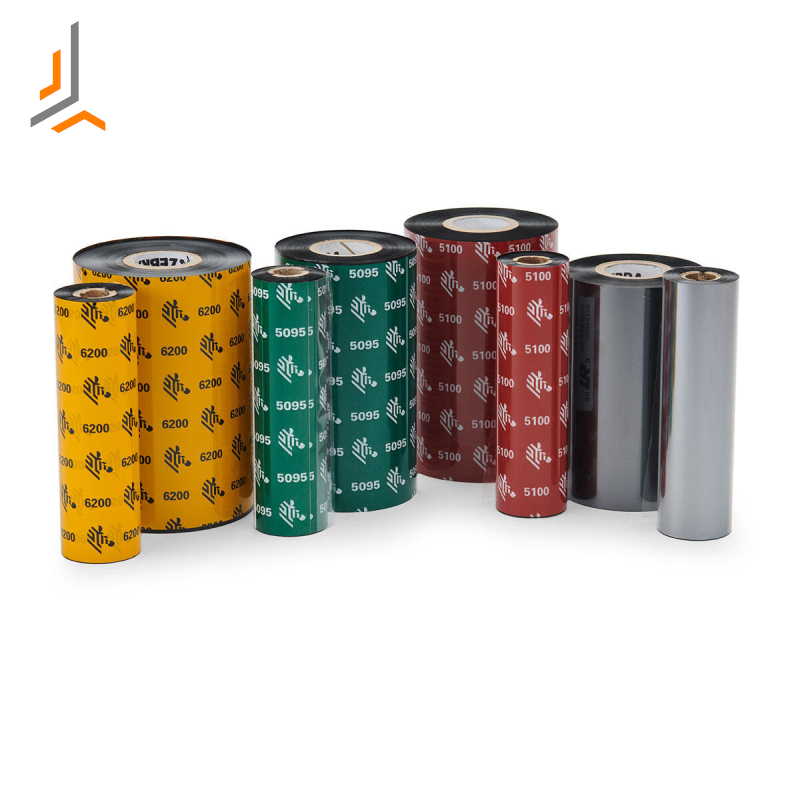 Zebra ribbons for thermal transfer printers are genuine supplies for Zebra label printers in three types: wax, wax-resin and resin. The range covers rolls for desktop and industrial printers, from 33 to 174 mm wide. The ribbon is chosen by the label material and by what the print must withstand: from a standard shipping label to polyester exposed to chemicals. 2300, standard wax ribbon: for coated and uncoated paper labels. The most common choice for logistics, warehouse and product labels on paper. 2100, high-performance wax: prints on paper and many matte synthetics, and according to Zebra resists smearing and scratching better than other wax ribbons. It supports print speeds up to 304.8 mm/s on coated paper. Designed for industrial printers. 3200, premium wax-resin: for paper and matte synthetics, with good resistance to smearing, scratching and many everyday chemicals. It suits moderate abrasion and exposure to steam and solvents. Available in rolls for desktop and industrial printers. 3400, high-performance wax-resin: for paper and matte synthetics when the label faces abrasion, friction, heat and steam. Designed for industrial printers. 5095, high-performance resin: for matte and gloss synthetics, including polyester. The print withstands moisture, abrasion, extreme temperatures and many chemicals, such as isopropyl alcohol, motor oil and degreasers. Available in rolls for desktop and industrial printers. 4800, resin: for matte and gloss synthetics and selected Zebra topcoated papers, with very good chemical and scratch resistance. Designed for industrial printers. 74, 300 and 450 m rolls: 74 m rolls on a 12.7 mm core are for desktop printers, while 300 m and 450 m rolls on a 25.4 mm core are for printers with a larger ribbon capacity. A longer roll means fewer changes during a shift. Label material. Paper prints with 2300 or 2100 wax ribbon. When paper or matte film needs more resistance to abrasion and chemicals, choose 3200 or 3400 wax-resin. Polyester and other gloss films require 5095 or 4800 resin ribbon. Label conditions. In a dry warehouse wax is enough. Friction, steam, oils and solvents call for wax-resin or resin ribbons. Even resin has limits with aggressive chemicals: Zebra does not recommend 5095 or 4800 for contact with acetone and xylene. Printer. Length and core must match the printer: the model's specification gives the maximum ribbon length. The 2100, 3400 and 4800 series come only in 450 m rolls. Width. The ribbon should be at least as wide as the label to cover the whole print area. Widths in the range: from 33 to 110 mm in 74 m rolls and from 40 to 174 mm in 300 and 450 m rolls. Print speed. For fast printing on coated paper, 2100 supports 304.8 mm/s, 3200 254 mm/s and 3400 203 mm/s.
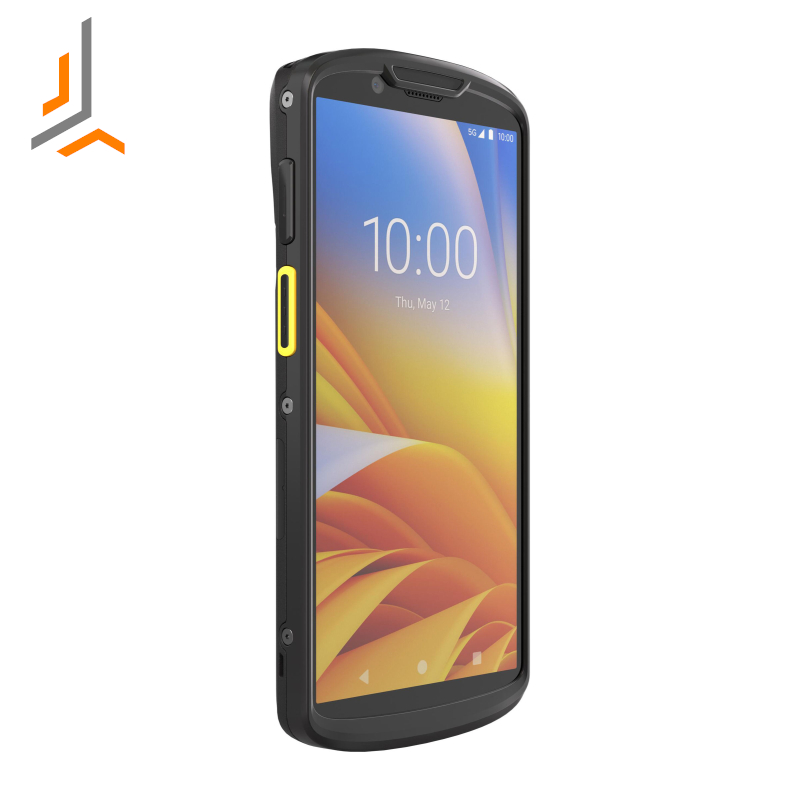 Zebra TC53 and TC58 are rugged Android mobile computers in a smartphone form factor with a bright 6-inch display, successors to the TC51, TC52 and TC57. They sit in the middle class: sturdier than lightweight devices such as the TC22/TC27, lighter and slimmer than the ultra-rugged TC73/TC78. They work well for stocktaking, quality control, in the warehouse and in the field. TC53 works on Wi-Fi, while TC58 adds 5G with voice calls, nano SIM and eSIM slots and GPS. Qualcomm 6490 (octa-core, 2.7 GHz), up to 8 GB RAM and 128 GB storage, upgradeable to Android 16: the most powerful platform in the TC5x family, with headroom for apps that will keep growing for years. 6-inch Full HD+ display with 600 nits, optically bonded to the touch panel: readable outdoors and under strong shop-floor lighting. SE4720 or SE55 scan engine with IntelliFocus technology: the SE4720 for fast close-range scanning, the SE55 reads barcodes from in hand to labels on high racks more than 12 m away. The device has two side scan buttons. 16 MP autofocus rear camera with flash and 8 MP front camera: sharp photos of labels, damage and non-conformities without a separate camera. IP65 and IP68, 1.8 m drops to concrete with the protective boot, operation from −20 to +50°C: the device withstands rain, dust, a loading dock in winter and a typical drop from hand. 4680 mAh or 7000 mAh battery: premium models support hot swap without switching off, standard models swap after a short sleep (warm swap). Wi-Fi 6E, Bluetooth 5.2, NFC: fast, stable on-site networking and pairing with printers and headsets. 293 g and 16.75 mm thick: the device fits in the hand and in a pocket, so it can be carried all shift. TC53 or TC58. TC53 is enough within company Wi-Fi coverage. Choose TC58 for field staff or when the device should also be a phone: it has 5G with voice, two SIMs (nano SIM and eSIM), GPS and an optional wireless charging battery. Memory. 4 GB / 64 GB for a single app, 8 GB / 64 GB or 8 GB / 128 GB for several apps, photos and future Android versions. Scan engine. SE4720 for close-range scanning in offices, stores or workstations, SE55 when barcodes are also far away or high up. Battery swap. If stocktaking or inspection runs all shift without breaks, choose a premium model with hot swap and the 7000 mAh battery. Device tracking. The 4680 mAh BLE battery, combined with a Device Tracker license, lets you locate a lost device even when it is switched off. Worth considering for a large fleet.
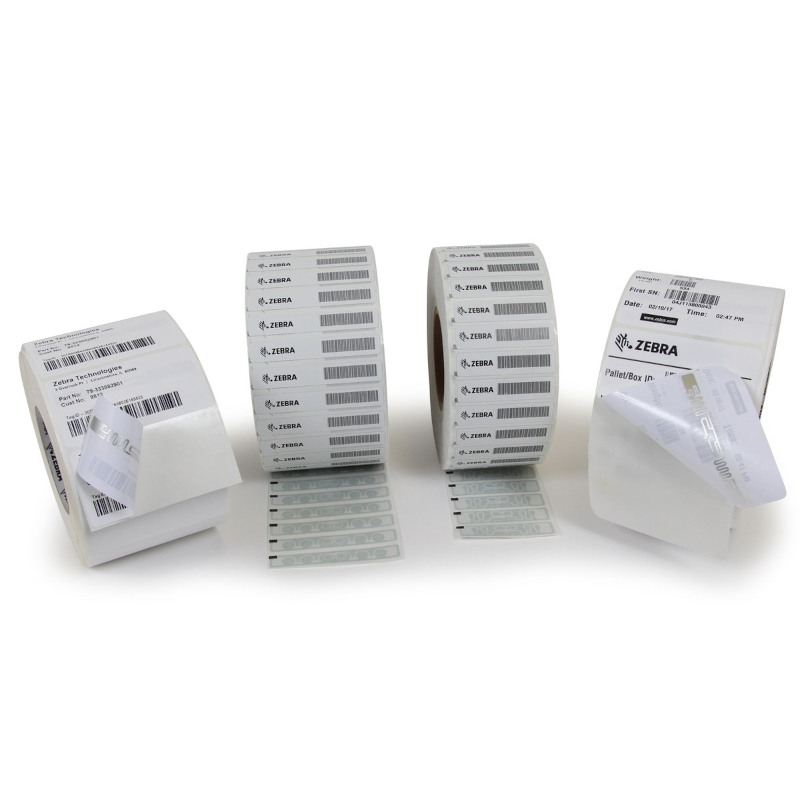 Zebra RFID labels are UHF labels with an embedded inlay, an antenna with a chip, that a Zebra RFID printer prints and encodes in a single pass. They are used to tag cartons, pallets, containers, parts and fixed assets, including metal ones. Zebra produces them to order: the typical lead time is 4–6 weeks, and they are sold in full rolls or boxes only. Tested with Zebra printers and readers: inlay placement is matched to Zebra RFID printers, which reduces the number of labels voided during encoding. Zebra still recommends testing in the target application, because reading depends on the item and the environment. ZBR2200, ZBR2100, ZBR2000, ZBR4000 and BT781 inlays: the theoretical read range on cardboard is from 10 m (BT781) to 18 m (ZBR2200 with the Impinj M830 chip). These are laboratory measurements in the 865–868 MHz band. Actual range depends on the reader, the antenna and what the label is applied to. Advanced version (ZBR4000) for glass and plastics: on glass and some plastics it reads noticeably further than general purpose labels, theoretically 16 m on glass versus 9 m for ZBR2100. Silverline II for metal: polyester labels read directly on metal, theoretically from 3 m (Micro II, 45×13 mm) to 15 m (Classic II, 100×40 mm). They withstand washing, water, motor oil, salt water, sulphuric acid and caustic soda. They print only on the ZT410 or ZT411 On-Metal. Paper or synthetic material: Z-Select 2000T coated paper suits logistics labels, while matte PP film and gloss polyester suit products and parts where the label needs to last longer. 96- or 128-bit EPC memory: 128 bits means 32 hexadecimal characters instead of 24, leaving room for a longer identifier. Silverline Micro II and Slim II add 32 bits of user memory. Large rolls for industrial printers: a ZT roll has a 76 mm core and a 200 mm outside diameter, which gives up to 5000 labels of 44×19 mm. ZBR2200 labels are perforated between labels and packed 2 rolls per box. Printer. Most variants are for the ZT231R, ZT411R, ZT421R, ZT610R and ZT620R industrial printers. For the ZD621R and ZD611R desktop printers there is a separate 44×19 mm variant on 127 mm diameter rolls, packed 2 rolls per box. Silverline II labels require a ZT410 or ZT411 On-Metal printer. Surface. General purpose labels are designed for cardboard and non-metal plastics. For glass and more demanding plastics choose Advanced (ZBR4000). For metal, including IT equipment, tools, cages and returnable containers, only Silverline II is designed for the job. Size. 102×152 mm and 102×51 mm are shipping and pallet labels. 102×25 mm and 76×25 mm fit cartons, containers and parts. 44×19 mm is a label for smaller products and parts. Material and ribbon. Paper labels print with Zebra 2300 wax ribbon, while PP film, polyester and Silverline print with Zebra 5095 resin ribbon. The ribbon number for each label is listed below. Memory. 96 bits gives 24 hexadecimal characters in the EPC number, 128 bits gives 32. The choice depends on the identifier your system writes.
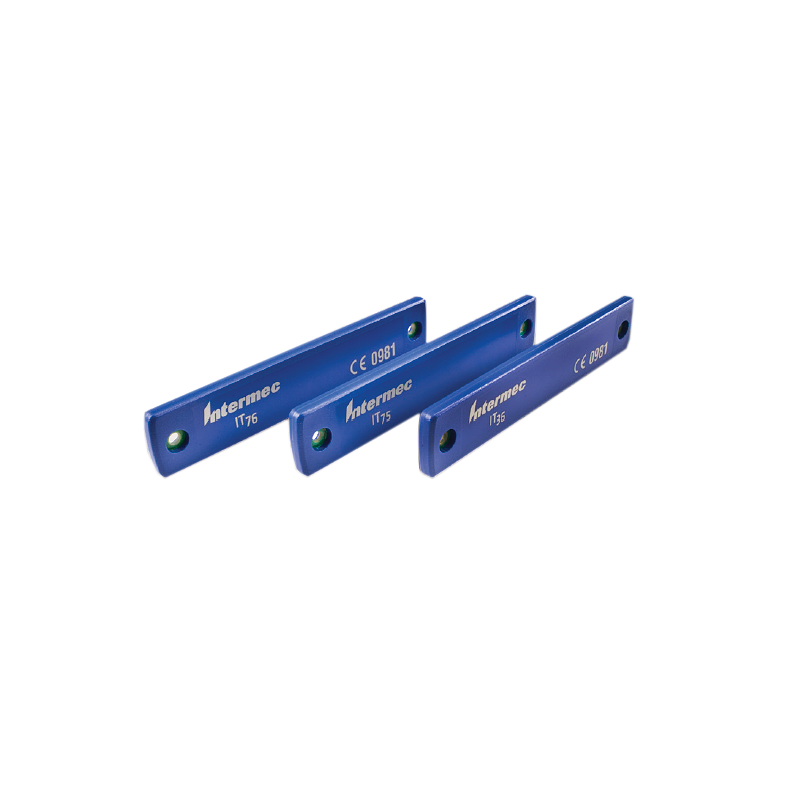 Intermec IT36 to tag RFID określane również jako znacznik mienia. IT36 wykonane zostało w technologii nadruku scalonych mikroukładów na cienką silikonową taśmę i wtopione w zewnętrzny materiał. Odczyt możliwy jest za pomocą skanera kompatybilnego z normą EPCglobal UHF Class 1 Gen 2/ISO 18000-6C. Tag IT36 posiada 512bitów pamięci użytkowej i pozwala na wielokrotny zapis. Ten model taga pracuje w zakresie 860-870 MHz, a więc w standardach ETSI i FCC i nawet do 16 m odległości odczytu. IT36 przeznaczone jest do umieszczenia na powierzchniach niemetalowych, ale drewnianych lub plastikowych, np. palety czy wózki.
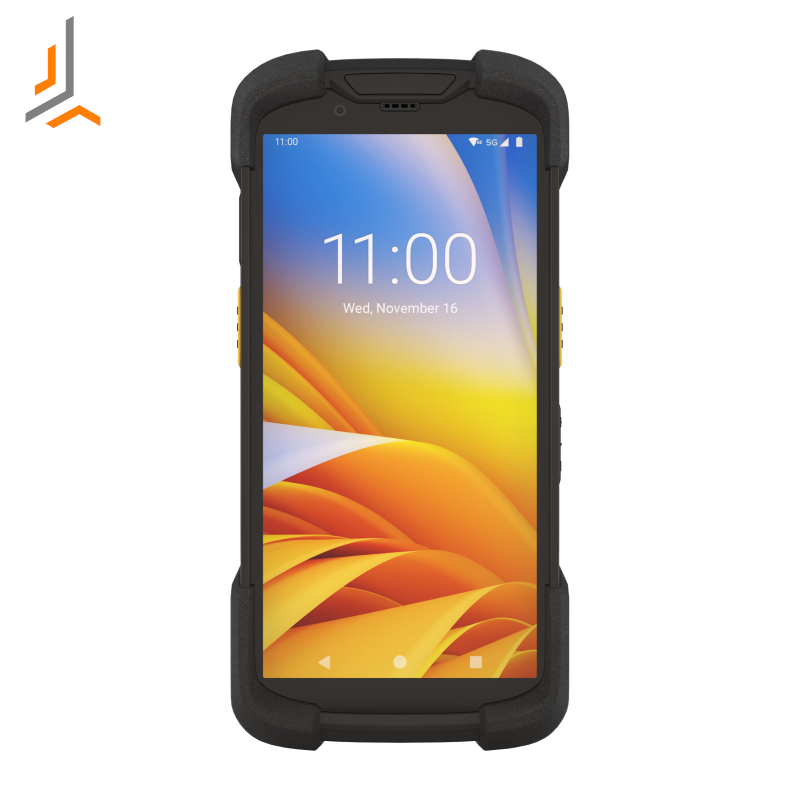 Zebra TC73 and TC78 are ultra-rugged Android mobile computers in a smartphone form factor with a 6-inch display, successors to the TC70/TC72 and TC77. They are built for production halls, warehouses and field work, where the device is dropped on concrete and works in dust, moisture and temperatures down to −20°C. TC73 connects over Wi-Fi and works indoors, while TC78 adds 5G, nano SIM and eSIM slots and GPS for outdoor work. 2.4 m drops to concrete across the full operating temperature range, 3.05 m at room temperature: plus 2000 tumbles from 1 m and IP65 and IP68 sealing. The device survives a drop from a forklift, dusty environments and washing. SE55 scan engine with IntelliFocus up to 12.2 m or SE4770 up to about 60 cm: the SE55 reads barcodes in hand and on high racks, the SE4770 is enough for close-range scanning. The device has two side scan buttons. 6-inch Full HD+ display, 28% larger than on the predecessors: more app data without scrolling, while the grip is nearly 20% thinner. Qualcomm 6490 (octa-core, 2.7 GHz), 4 GB / 64 GB or 8 GB / 128 GB, upgradeable to Android 16: performance for years of work with demanding apps. 4400 mAh or 6600 mAh battery: the extended battery covers long shifts. Premium TC78 models support hot swap without switching off, other models swap the battery after a short sleep (warm swap). 16 MP autofocus rear camera and 8 MP front camera: document damage and non-conformities with photos and make video calls from the same device. Wi-Fi 6E, Bluetooth 5.2, NFC, USB-C and an extra USB host port on the back: fast shop-floor networking, accessory pairing and the option to connect peripherals. Long lifecycle: according to the manufacturer, 5 years of product availability and 10 years of service support, which makes fleet planning and expansion easier. TC73 or TC78. TC73 is enough when the device stays within the company Wi-Fi network. Choose TC78 for yards, field work and routes: it has 5G, two SIMs (nano SIM and eSIM) and GPS. Memory. 4 GB / 64 GB is enough for a single production or warehouse app. 8 GB / 128 GB gives headroom for several apps at once and future OS versions. Scan engine. SE55 for scanning at a distance and on high racks, SE4770 for close-range scanning at a workstation. Battery. Standard 4400 mAh, extended 6600 mAh for longer shifts, or 4400 mAh with a BLE beacon for locating lost devices. For the TC78 there is also a wireless charging battery. Battery swap during work. If the device must run non-stop around the clock, choose a premium TC78 model with hot swap.
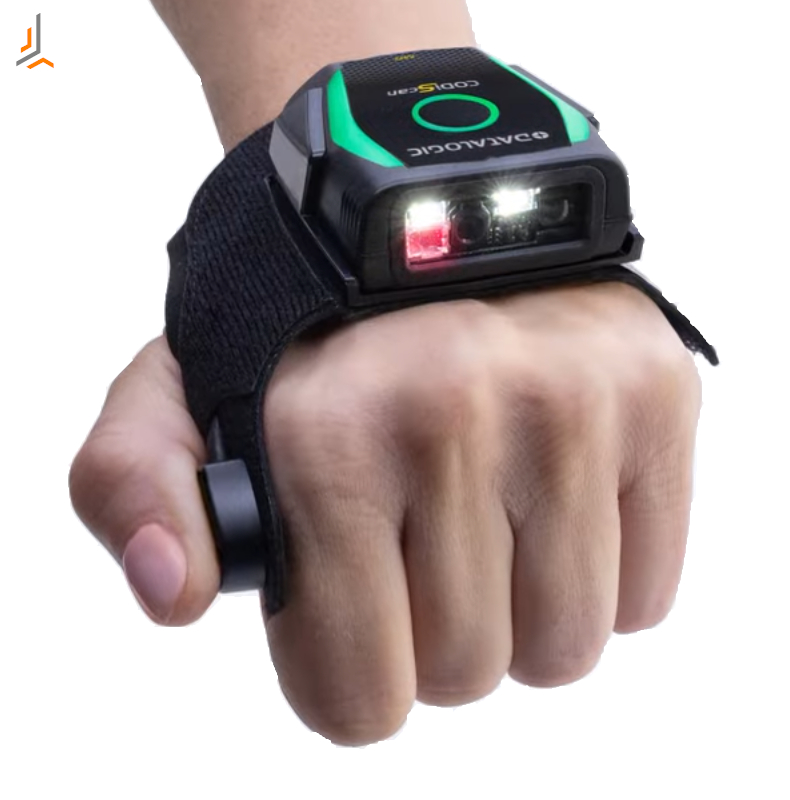 Datalogic CODiScan is a lightweight, portable barcode scanner that enables hands-free scanning of 1D and 2D barcodes. It allows warehouse, production workers to work faster, improving the quality of their work. It is equipped with an intelligent targeting system that recognizes the barcode before it is scanned. Vibration and clear multi-colored LEDs further improve interaction with operators. It is ideal for multi-shift establishments, as after a single charge, the scanner can operate for as long as 16 hours, making as many as 12,000 scans in that time. Other important parameters: Weight 44 g, WiFi, Bluetooth 5.2, IP54, Audio 85 dbA, 1D/2D reading up to 1.5 m, 12-month warranty
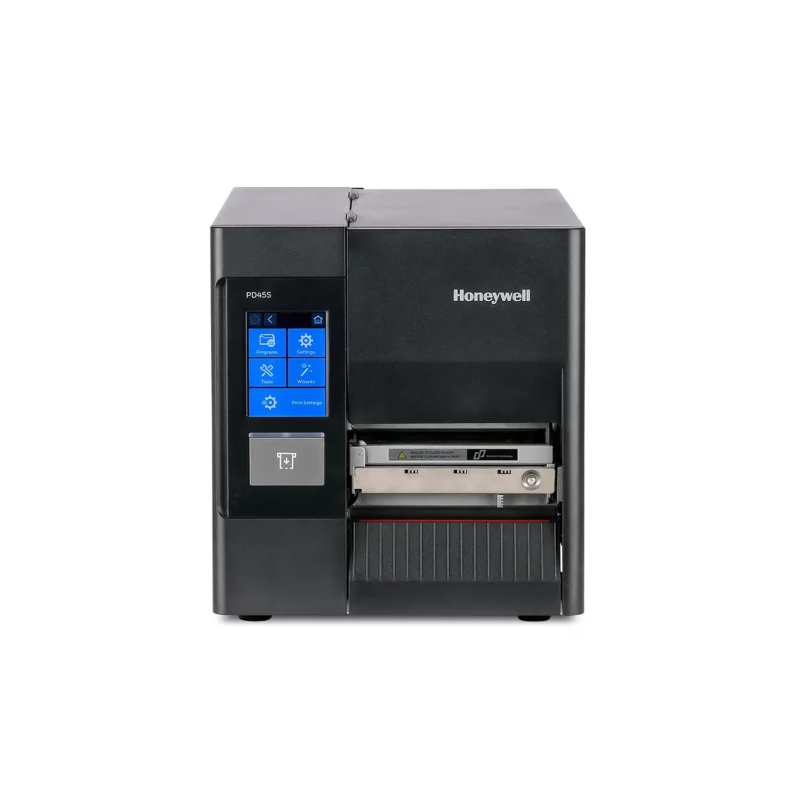 Honeywell PD45S/PD45 industrial printers are devices that are able to operate even in a dust-filled factory floor, thanks to their reinforced metal housing. It is rugged yet compact. It uses thermal and thermal transfer printing methods, prints labels up to 250 mm/sec, and has a choice of label printing resolution, either 203 dpi or 300 dpi. It is capable of operating at temperatures between 5°C and 40°C, and you can connect to it wired (via 10/100 Mbps Ethernet) or wirelessly (using 802.11 a/b/g/n/ac Wi-Fi). You can use the RS-232 interface to connect to the printer. It supports all linear (1D), and two-dimensional (2D) codes, in addition to being compatible with the ZPL-II programming language. The Honeywell PD45S or PD45 industrial printer is very easy to use, which gives you the confidence that it will not cause difficulties for your employees, and even the opposite - it will increase their productivity and make the printing of your logistics labels even faster. This printing device will perform well in harsh conditions, as evidenced by its industrial head, which will convince you that label printing can be of great quality (print accuracy of up to +/-5mm), even at a considerable printing speed, all thanks to the dynamic printing function. Where will it find use? The Honeywell PD45S/PD45 will prove useful in the industrial sector, in industries such as logistics, industry, warehouse, automotive, retail, or healthcare - that is, anywhere you need impeccable, fast printing of a large number of labels, for which the Honeywell PD45S/PD45 is just made.
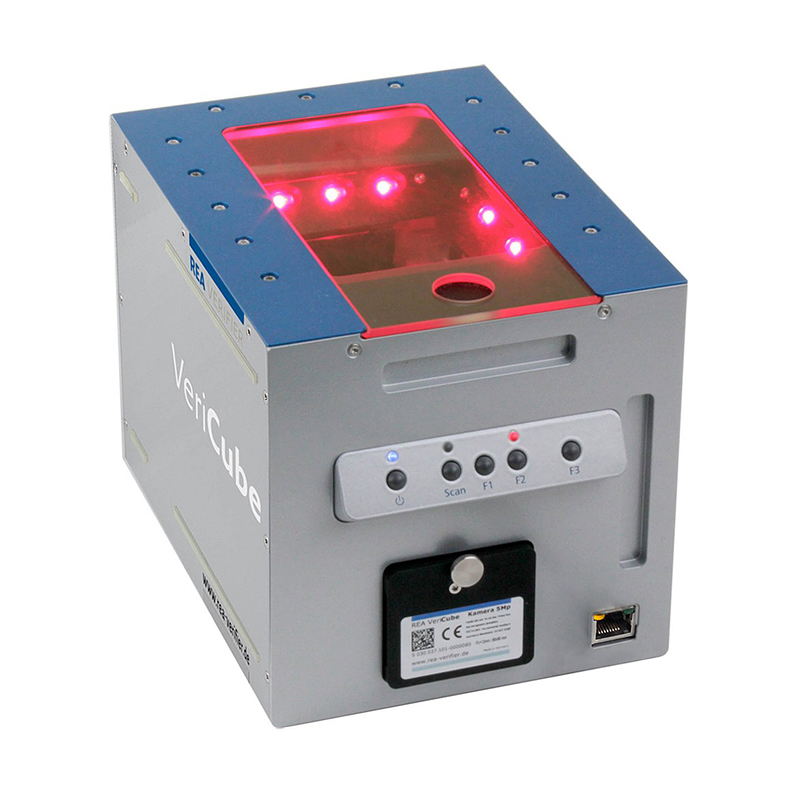 REA VeriCube to innowacyjne urządzenie do weryfikacji kodów matrix i kodów kreskowych zaprojektowane, aby sprostać wymaganiom wszystkich sektorów przemysłu. Urządzenie umożliwia najbardziej optymalną, bezdotykową weryfikację kodu niezależnie od pozycji w jakiej pracuje. System pomiaru kodów wykorzystany w weryfikatorze REA VeriCube został oparty na precyzyjnym module optycznym z chipem CMOS, aby eliminować wpływ światła z otoczenia na proces skanowania i weryfikacji kodu. Dodatkowym atutem zastosowanego rozwiązania jest wymienny moduł kamery, co pozwala dostosować urządzenie do pracy z kodami o różnych rozmiarach. VeriCube współpracuje z dowolnym komputerem – stacjonarnym lub laptopem – z zainstalowanym oprogramowaniem do oceny poprawności kodów REA TransWin32. Urządzenie przesyła wyniki pomiaru do programu, w którym są one porównywane z wartościami wzorcowymi. Poza weryfikacją poprawności kodu REA TransWin32 umożliwia optymalizację parametrów druku kodów, a w konsekwencji poprawę jakości ich wydruku, poprzez dostarczanie dokładnych wyników weryfikacji.
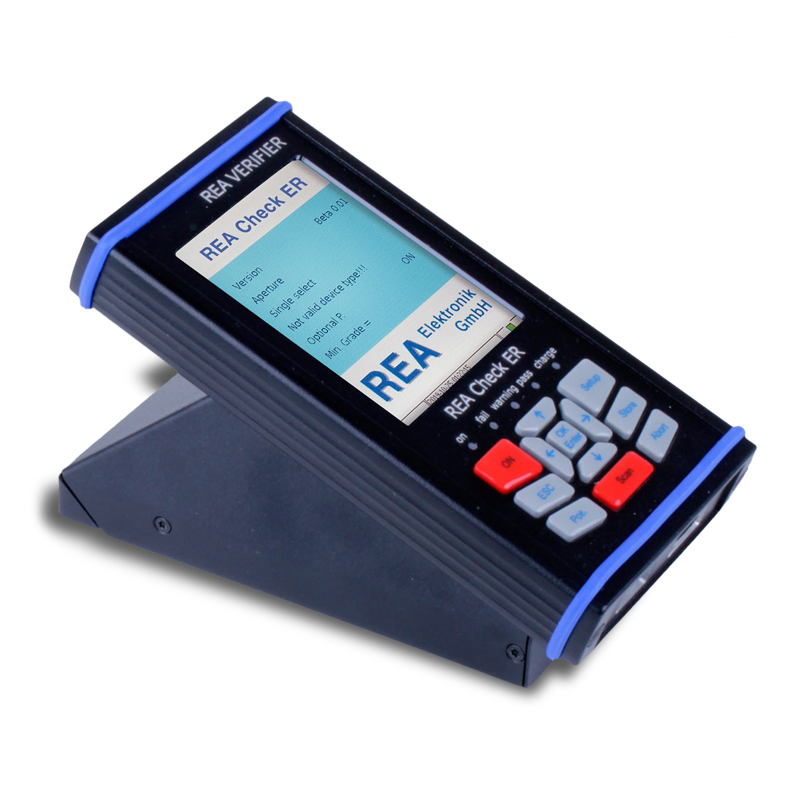 Przenośny weryfikator kodów kreskowych REA Check ER zaskakuje niewielkim rozmiarem, który idzie w parze z bogatą funkcjonalnością i wygodą użytkowania. Poręczny rozmiar i kształt urządzenia wraz z solidną, odporną na uszkodzenia mechaniczne konstrukcją sprawia, że Check ER idealnie sprawdza się w wymagających środowiskach pracy. Urządzenie jest zasilane baterią, umożliwiając pracę mobilną bez konieczności każdorazowego podłączania weryfikatora do źródła zasilania. To czyni je niezastąpionym w każdym magazynie i centrum dystrybucyjnym, w którym przemieszczanie towarów do stacjonarnego stanowiska weryfikacji kodów jest nieopłacalne, lub wręcz niemożliwe. Wśród innych cech decydujących o wyjątkowym charakterze i bezkonkurencyjności REA Check ER należy wskazać: duży kolorowy wyświetlacz, wbudowaną pamięć umożliwiającą przechowywanie do 1000 raportów, port USB umożliwiający połączenie urządzenia z drukarką mobilną, niezawodne połączenie Ethernet oraz system automatycznej konfiguracji DHCP. Ogromną zaletą Check ER jest prosta obsługa, dzięki czemu nawet niedoświadczony użytkownik może w szybki i łatwy sposób zweryfikować poprawność wydrukowanego kodu kreskowego.
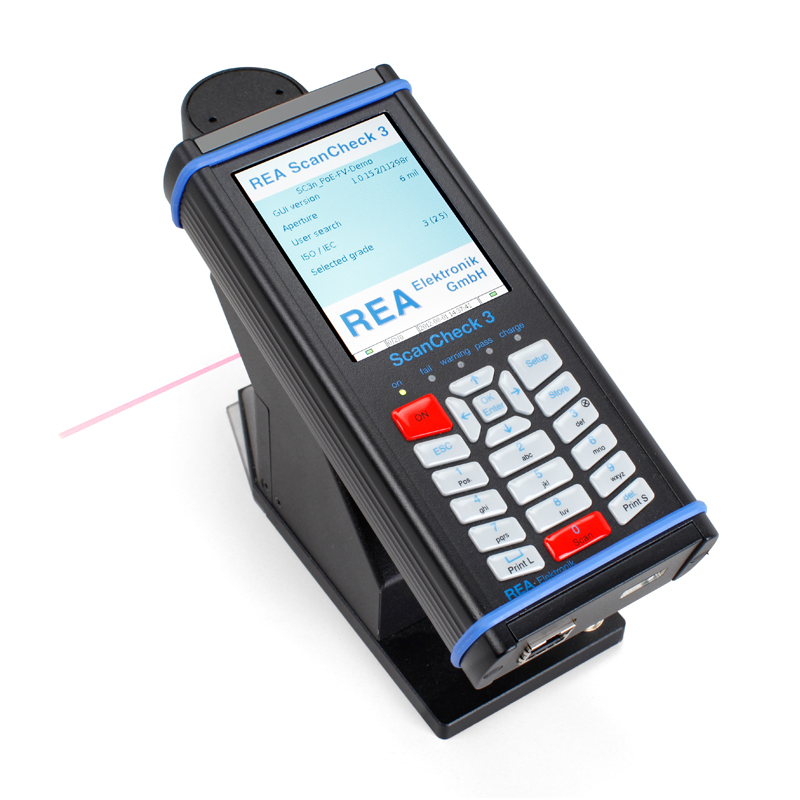 REA ScanCheck 3 to uniwersalne, wysokowydajne urządzenie do weryfikacji kodów kreskowych zaprojektowane, aby umożliwiać szybką i rzetelną weryfikację kodów oraz optymalizację parametrów ich wydruku. ScanCheck 3 jest urządzeniem przeznaczonym przede wszystkim do pracy stacjonarnej. Zaletą stacjonarnej weryfikacji kodów kreskowych jest fakt, iż pozwala ona na jeszcze dokładniejsze pomiary, które nie byłyby możliwe bez wyeliminowania czynnika ludzkiego. Czynniki takie, jak drżenie ręki, czy ustawienie weryfikatora pod niewłaściwym kątem mogą w znaczący sposób wpływać na jakość procesu skanowania, a w konsekwencji na wyniki weryfikacji. Atutem REA ScanCheck 3 jest samowystarczalność. Urządzenie działa na baterie, dzięki czemu może pracować bez konieczności podłączenia do stałego źródła energii. Ponadto ScanCheck 3 to także system operacyjny wspierający wiele języków, co ułatwia integrację urządzenia z już istniejącą siecią. Urządzenie działa zgodnie z bieżącymi standardami.
Frequently asked questions
How do I order equipment in the HDF shop?
Choose a category and a model, then a specific variant on the model page. Variants carry the full manufacturer part number and can be ordered directly. If you are not sure which variant to choose, contact us and we will match it to your process.
Do you help choose equipment?
Yes. We match mobile computers, printers and scanners to working conditions, print volumes and the software they will run, so you do not overpay for capabilities you will not use.
Do you supply equipment with software?
Yes. We deploy equipment together with HDF WMS, HDF MES, HDF QA, HDF Labels and HDF Inwentaryzacja, as well as custom systems. We also supply labels and ribbons for printers.