How a label is made
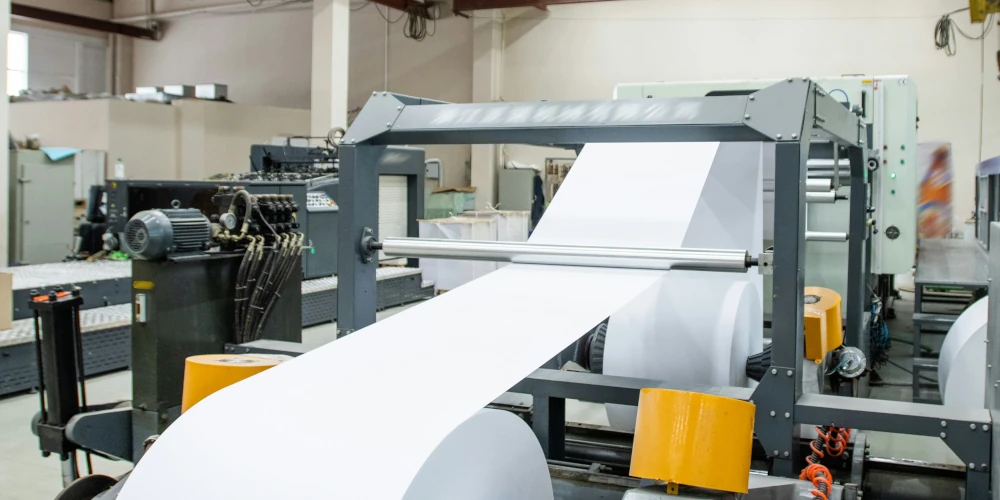
- Raw material. We buy material in large (jumbo) rolls from label stock manufacturers such as Avery Dennison and UPM Raflatac. If a material is in their range, we can make labels from it.
- Die cutting. The machine cuts labels from the jumbo roll. One run produces several rolls of finished labels at once.
- Printing. Variable data (numbering, barcodes, dates) is printed on barcode printers, colour print on our colour press.
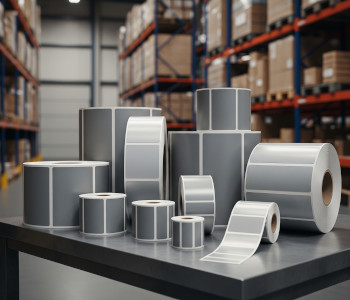
- Converting. Labels are rewound onto a core in rolls sized for your printer or applicator.
- Quality control and packing.
That is why we do not make single rolls, and the minimum order depends on the material and adhesive.
What lead time and minimum order depend on
- A size we have a die for, standard material and adhesive: the simplest route, with the shortest lead time and lowest minimum. We have dies in many widths.
- Non-standard size or shape: we order a new cutting die.
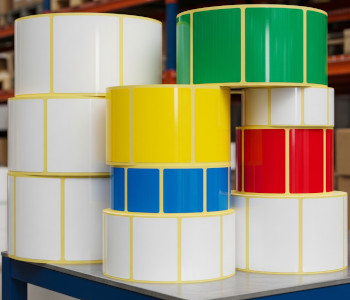
- Colour print: we prepare a printing plate for the colour press.
- Variable data (numbering, barcodes, dates): printed on barcode printers or directly on the colour press.
- Special adhesive (chiller, freezer) or film of unusual thickness: the minimum is a full roll of raw material, because the leftover cannot be used for other orders.
- Material outside our regular range: lead time depends on availability from the raw material manufacturer.
Cutting die and printing plate. For smaller orders the customer covers the cost and owns the tool; for larger orders we cover it. The tool stays with us and is used for later deliveries until it wears out.
Materials and adhesives
We work with materials from label stock manufacturers such as Avery Dennison and UPM Raflatac. The most common groups are below. Materials outside this list are possible too, with the minimum described above.
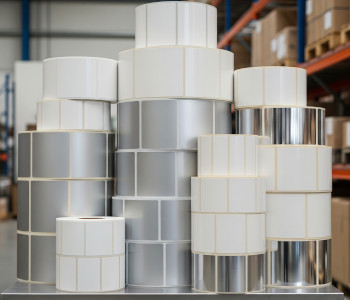
- Papers: direct thermal paper, coated and uncoated thermal transfer paper, gloss paper for colour print. For logistics, shipping, warehouse and product labels.
- Films: PP (polypropylene), PE (polyethylene, flexible), PET (polyester, rigid and durable), transparent and metallised film. For labels resistant to water, oil and chemicals: bottles, canisters and parts.
- Adhesives: permanent, removable, chiller, freezer, high-tack for rough surfaces. For freezer and removable labels, recycled cardboard and returnable packaging.
- Finishing: laminate, varnish. They protect the print against abrasion and chemicals.
- Special labels: void (tamper-evident) labels, drum and canister labels. For packaging security and industrial chemicals.
What to prepare before you ask
- What the label is for: shipping, product, pallet, part, fixed asset.
- Surface: cardboard, film, glass, metal, plastic; flat, curved or rough.
- Conditions: chiller, freezer, moisture, chemicals, oils, outdoor use; how long the label must stay readable.
- Print method: direct thermal or thermal transfer; printer or applicator model.
- Size and roll: label size, core diameter, maximum roll diameter, winding (print side out or in).
- Print: blank label, colour design or variable data.
- Usage: how many labels per month or year.
Harsh conditions
Aggressive chemicals, oils, technical fluids, high temperature: not every material and adhesive will survive them, and a data sheet does not replace a test on your surface.
Regular deliveries
We work best in long-term cooperation: labels on an agreed schedule, the same material, size and quality in every batch, and the die and printing plate waiting with us for the next delivery. No need to order from scratch every time.
Labels, ribbons, printers and software in one place
We will match a ribbon, a printer and the label design software HDF Labels to your labels. Standard Zebra label formats are available in our shop.